Walmart Subway Restaurant Delivery Unveils Major Expansion
Walmart Subway restaurant delivery expands beyond in store locations, letting customers combine sandwiches with groceries in one Express Delivery order.
 RUKAIYA KADIWAL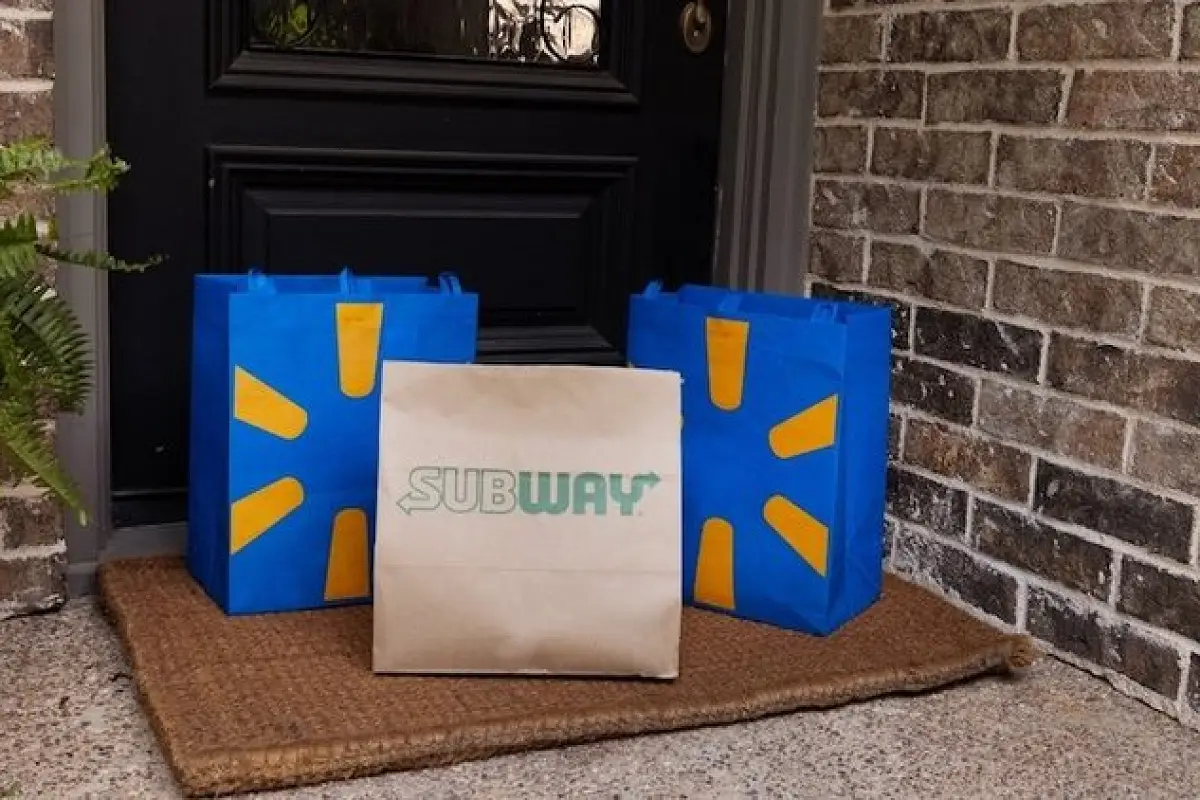
A front porch scene tells the whole story without a single word needed, two blue Walmart bags standing shoulder to shoulder beside a familiar green and yellow Subway sack, all three resting together on a woven doormat as though they had always belonged side by side. That small tableau, groceries and a sandwich arriving in one trip, captures exactly what Walmart has spent the past several months building. Walmart Subway restaurant delivery has now expanded well beyond its original footprint, and the retail giant is betting that convenience, once experienced, becomes very hard to give up.
The expansion builds on a pilot that launched this past June, when Walmart began enabling customers in select locations to order Subway directly through its app or website and receive their meal in as little as 30 minutes, either on its own or bundled alongside an existing Walmart Express Delivery order. That initial rollout marked Walmart's first restaurant integration within Express Delivery, part of a broader ambition to bring groceries, household essentials, fashion, prescriptions and restaurant meals together within a single shopping experience.
From In Store Pilot to Broader Rollout
What began as a modest test has now grown considerably. Greg Cathey, SVP of Digital Fulfilment Transformation at Walmart, explained the original thinking behind the launch, noting that when the company introduced restaurant delivery with Subway earlier in the summer, the idea was simple, make it easier for customers to get a meal alongside the groceries and everyday items they already turn to Walmart for.
After four months of what Cathey described as successful deliveries, Walmart is now taking the next step by expanding restaurant delivery beyond Subway restaurants located inside Walmart stores themselves. That shift means customers can increasingly turn to Walmart for meals sourced from locations both inside and outside its stores, while still retaining the option to combine that meal with a broader Walmart order in a single delivery.
What the Early Data Actually Shows
The numbers behind this expansion offer a clearer picture of exactly how customers have used the service since its June debut. Cathey noted that since launch, nearly 65% of restaurant orders were delivered alongside items from Walmart that customers needed quickly, whether that meant sandwiches for dinner paired with groceries for the next morning, or lunch bundled with a handful of household essentials.
That pattern suggests something more significant than a simple convenience feature bolted onto an existing delivery platform. Cathey described the result as a new kind of shopping occasion for customers, one that brings together a meal and the everyday items people need from Walmart within one single delivery trip rather than two separate ones.
A Gateway Into Broader Express Delivery Habits
Perhaps the most striking finding from Walmart's early data concerns what happens after a customer's very first restaurant order. Cathey said the company has learned a great deal about how customers are using the new service, including the discovery that restaurant delivery is introducing an entirely new customer base to Express Delivery more broadly.
He pointed specifically to one detail he found particularly compelling, noting that one in five orders combining both Subway and Walmart items represents a customer's first time using Express Delivery that year, and nearly 30% of those customers return within 30 days of that initial order. Cathey framed that repeat behavior as a strong indicator that once customers experience the convenience of Express Delivery, they find additional reasons to use it for other moments in their lives.
Positioning Against DoorDash and Uber Eats
Walmart's restaurant delivery ambitions place it in increasingly direct competition with established delivery platforms like DoorDash and Uber Eats, companies that have long dominated the on demand food delivery space. Rather than simply matching those platforms feature for feature, Walmart's approach leans into its existing retail infrastructure, positioning restaurant meals as a natural extension of grocery and household delivery rather than a standalone offering competing purely on speed or restaurant selection.
That strategy reflects a broader industry shift toward omnichannel retail, where companies increasingly blur the lines between categories customers once treated as entirely separate errands. Full details on the expansion and Walmart's broader digital fulfilment strategy are available on the official Retail Technology Innovation Hub website.
A Twenty Year Partnership Finding New Relevance
Cathey closed his remarks on the expansion by acknowledging the teams behind the collaboration, thanking both the Walmart and Subway staff who helped bring the experience to life. He noted that twenty years into the relationship between the two companies, it remains exciting to keep finding new ways to serve customers together, a comment that frames this expansion less as a sudden pivot and more as a natural evolution of an already established partnership.
That kind of long running brand relationship finding fresh relevance through new delivery technology reflects a pattern increasingly visible across hospitality and retail more broadly, where established partnerships adapt to meet evolving customer expectations rather than being replaced outright, a dynamic also present in how dining destinations continue reworking their own value propositions for budget conscious diners, as seen in recent coverage of DC's Summer Restaurant Week and its focus on affordability across the DMV dining scene.
What a Doorstep Can Reveal About Retail's Future
Back on that front porch, the blue Walmart bags and the paper Subway sack sit together as a quiet, almost mundane snapshot of where retail delivery appears headed, fewer separate errands, fewer separate deliveries, and increasingly, fewer separate apps required to accomplish what once took multiple trips across a single afternoon. Whether that convenience ultimately reshapes how millions of households think about dinner, groceries and everything in between remains an open question, but the doorstep itself already offers a clear answer about what customers, once given the choice, seem willing to embrace.