12 Complete Guide to Hotel Room Cleaning procedure: Housekeeping Training
Learn the complete hotel room cleaning procedure with this professional housekeeping training guide.
 Altama khan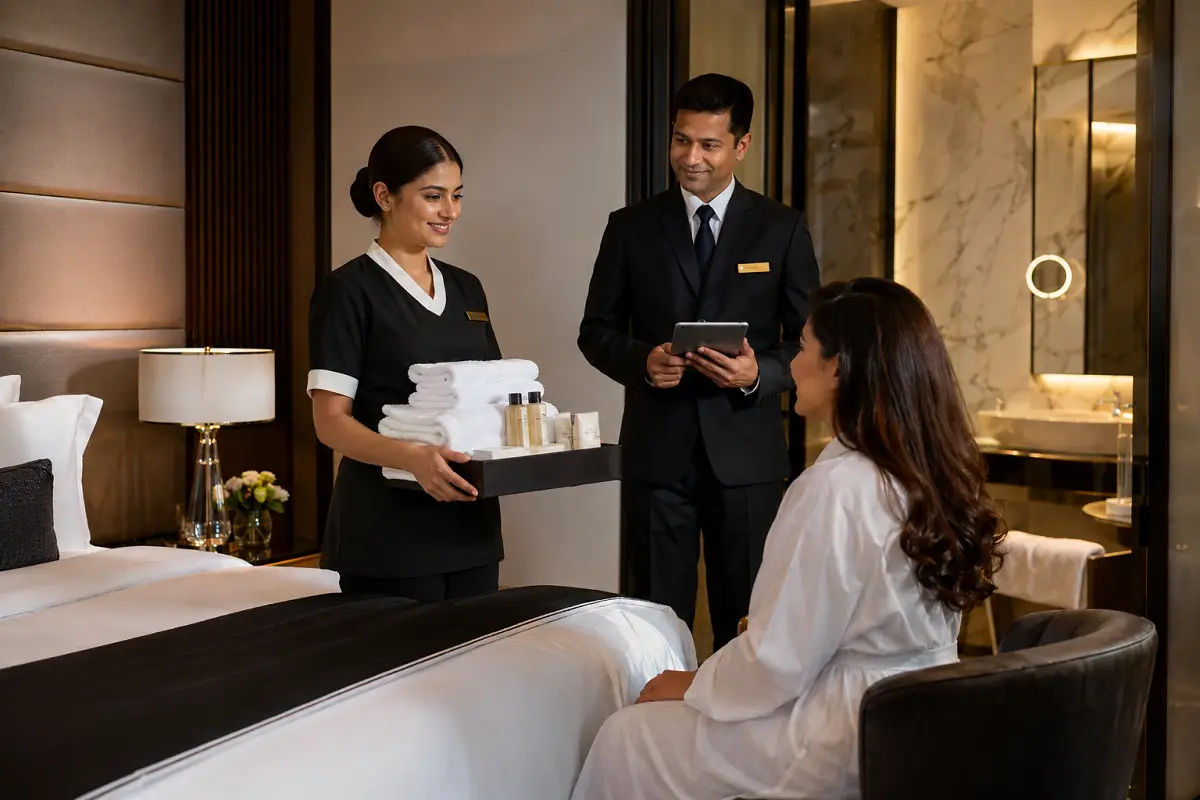
Hotel Room Cleaning Procedure: Professional Housekeeping Training Guide
A. Personal Introduction
If you've ever walked into a perfectly made hotel room crisp white sheets, a spotless bathroom, and that fresh, welcoming scent you already know the power of great housekeeping. That experience doesn't happen by chance. It's the result of a well-trained room attendant following a consistent, professional hotel room cleaning procedure every single day.
Whether you're just starting your housekeeping career or you're a supervisor looking to sharpen your team's skills, this training guide walks you through everything you need to know from the moment you knock on the guest's door to the final inspection before you leave the room guest-ready.
Housekeeping is often called the heart of the hotel. And honestly? That's exactly what it is. Let's get started.
B. What Makes This Training Special
Most cleaning guides give you a generic checklist. This training is different. It's built around real hotel SOP logic the same procedures used by four- and five-star properties around the world. You'll learn not just what to do, but why each step matters and how it directly impacts the guest experience, your hotel's reputation, and your own professional growth.
By the end of this training, you'll clean a guest room with confidence, consistency, and the kind of attention to detail that guests notice and remember.
C. Tools & Equipment Overview
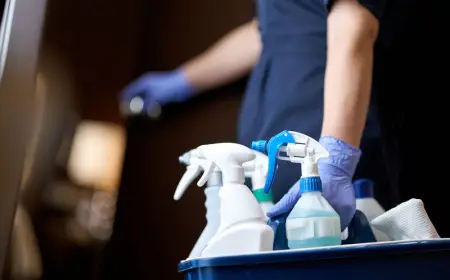
A room attendant is only as effective as their trolley. Before you enter any guest room, your housekeeping trolley should be fully stocked and organized. Here's what you'll need:
- Housekeeping trolley / cart stocked with linen, amenities, and supplies
- Color-coded microfiber cloths separate cloths for bathroom, bedroom, and glass surfaces
- Vacuum cleaner with attachments for corners and upholstery
- Mop and bucket for hard floor areas
- Toilet brush and holder dedicated to each room during cleaning
- Spray bottles labeled with approved cleaning agents (glass cleaner, multi-surface, disinfectant)
- Rubber gloves color-coded (typically red for toilet, yellow for bathroom surfaces, blue for general areas)
- Linen bag and trash bag for soiled linen and waste removal
- Room amenity basket pre-stocked with toiletries, coffee sachets, and stationery
- Do Not Disturb (DND) log sheet for tracking skipped rooms
Always inspect your trolley at the start of each shift. A disorganized trolley slows you down and creates the risk of entering rooms unprepared.
D. Training Process Overview
The hotel room cleaning procedure follows a logical, top-to-bottom, clean-to-dirty sequence. This approach prevents cross-contamination, saves time, and ensures nothing gets missed. The process is divided into five main phases:
- Phase 1: Entry, assessment, and ventilation
- Phase 2: Stripping and waste removal
- Phase 3: Bathroom deep cleaning
- Phase 4: Bedroom and living area cleaning
- Phase 5: Final setup, inspection, and departure
Each phase has a defined purpose. Skipping or rushing any phase affects the overall quality of the room and ultimately, the guest's experience.
E. Professional Tips for Best Results
Seasoned room attendants develop habits that make them faster, more thorough, and more consistent. Here are some of the most valuable professional tips used across leading hotel brands:
- Always work in a systematic pattern. Move clockwise or counterclockwise around the room never randomly. This prevents missed spots.
- Never re-enter a cleaned area with a dirty cloth. Once a surface is cleaned, move forward don't go back.
- Let cleaning products dwell. Spray disinfectants and let them sit for the recommended contact time before wiping. This is especially important for toilets and high-touch surfaces.
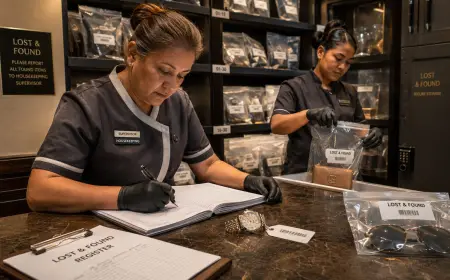
- Check every drawer, under the bed, and behind doors. Guests leave items behind more often than you'd think and finding lost property reflects professionalism.
- Use your senses. Smell for odors. Look for stains in light from different angles. Feel surfaces for dust or moisture. A great room attendant uses all five senses.
- Position your trolley to block the doorway. This protects your safety and signals to guests that the room is being serviced.
F. Department Coordination
Housekeeping doesn't operate in isolation. Effective room cleaning depends on smooth communication with other departments. Here's how coordination works in a well-run hotel:
- Front Office: Provides room status updates check-outs, early arrivals, VIP rooms, and DND flags. Always check your room assignment sheet before starting your floor. [INTERNAL LINK: Front Office and Housekeeping Coordination]
- Maintenance / Engineering: Report any defects broken fixtures, faulty AC units, leaking taps, or burnt-out bulbs immediately via your supervisor or property management system (PMS).
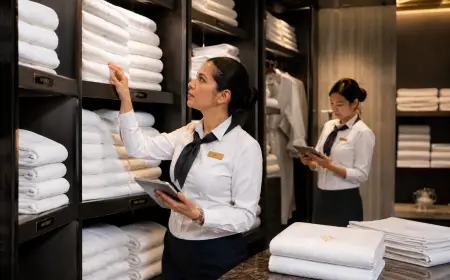
- Laundry Department: Soiled linen is sent to laundry in sealed bags. Always count and record linen accurately to prevent losses.
- F&B / Room Service: Report any uncollected trays, leftover food, or minibar items consumed so billing can be updated.
G. Safety & Hygiene Standards
Your health and safety and your guests' come first. Every room attendant must follow these non-negotiable hygiene and safety standards:
- Always wear appropriate PPE (Personal Protective Equipment) gloves, closed-toe shoes, and back support belts where required.
- Never mix cleaning chemicals. Read all COSHH (Control of Substances Hazardous to Health) labels carefully.
- Store all cleaning products in labeled, original containers on the lower shelf of your trolley.
- Dispose of sharps (needles, broken glass) using the hotel's sharps disposal protocol never with bare hands.
- Follow your hotel's blood and body fluid spill procedure if you encounter any biological hazards.
- Wash hands thoroughly after bathroom cleaning, after removing gloves, and before handling any food or amenities.
- Report any injury, slip, or near-miss to your supervisor immediately and complete an incident report.
For reference on global cleaning and hygiene benchmarks, you can review standards published by the World Health Organization (WHO)
H. Variations & Industry Applications
The core room cleaning procedure applies across the hospitality industry, but specific steps and standards vary depending on the property type:
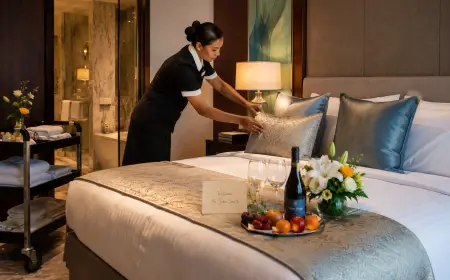
- Luxury / 5-Star Hotels: Turndown service, pillow menu setup, personalized amenity arrangement, detailed butler-style presentation.
- Business Hotels: Fast, efficient cleaning cycles (often under 25 minutes), emphasis on desk and connectivity setup.
- Resorts: Extended cleaning times for suites and villas, outdoor area maintenance included.
- Budget / Economy Hotels: Streamlined checklists, focus on core hygiene standards within shorter time frames.
- Serviced Apartments: Full kitchen cleaning added to standard procedures; weekly deep cleans for long-stay guests.
I. Preparation Method
Preparation is where professional housekeeping begins long before you knock on the first door. Here's how to prepare for your shift:
- Attend the morning housekeeping briefing and collect your room assignment sheet.
- Check for VIP arrivals, special requests, allergy notes, or service preferences flagged by the front office.
- Collect and sign for your master key or key card and never lend it to anyone.
- Stock your trolley fully before going to your floor returns to the linen room mid-shift waste valuable time.
- Put on your full uniform and PPE before entering any guest floor.
- Review any maintenance or defect reports from the previous shift for rooms on your floor.
J. Standard Operating Procedure (SOP)
The following is the hotel room cleaning SOP used across professional hotel operations. Follow each step in sequence for consistent, high-quality results.
Step 1: Approach & Entry
- Check the room status on your assignment sheet (Check-Out, Occupied, or Vacant Clean).
- Look for a Do Not Disturb (DND) sign before approaching.
- Knock three times and announce clearly: "Housekeeping!" Wait 10 seconds, then knock again.
- If there's no response, use your key card and re-announce before entering.
- Position your trolley to block the door once inside.
- Switch on all lights to assess the room's full condition.
Step 2: Ventilation & Initial Assessment
- Open windows or adjust AC to ventilate the room.
- Do a quick visual check for any guest belongings (for occupied rooms), damage, hazards, or unusual items.
- Report anything suspicious to your supervisor before proceeding.
Step 3: Stripping the Room
- Collect all waste bins and empty into your linen bag.
- Remove all used glassware, cups, and trays and place them on the trolley's soiled section.
- Strip the bed remove pillowcases first, then duvet cover, then sheets rolling inward to contain any debris or stains.
- Check all linen for staining or damage before placing in the soiled linen bag.
- Remove used towels from the bathroom in the same way.
Step 4: Bathroom Cleaning
- Apply toilet bowl cleaner inside the toilet bowl and let it dwell while you clean other bathroom surfaces.
- Clean the shower or bathtub spray, scrub, and rinse from top to bottom.
- Clean the sink, taps, and surrounding countertop.
- Wipe mirrors using a glass cleaner and a lint-free cloth in circular motions.
- Clean and disinfect the toilet exterior first (tank, sides, base), then seat, then bowl.
- Mop the bathroom floor last, working from the back toward the door.
- Replace all towels in hotel-standard folds, replenish all amenities, and replace toilet paper with a neat fold or band.
Step 5: Bedroom & Living Area Cleaning
- Dust all surfaces top to bottom ceiling fixtures, wardrobes, headboards, bedside tables, desk, and television unit.
- Wipe all hard surfaces with appropriate cleaner and microfiber cloth.
- Clean mirrors, window glass, and any glass surfaces.
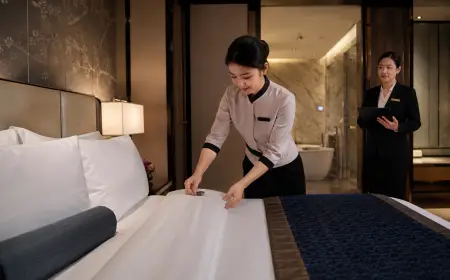
- Make the bed using the hotel's standard linen-making procedure tight corners, centered pillows, smooth surface.
- Replenish all in-room amenities stationery, menus, coffee/tea station, minibar (if applicable).
- Vacuum the entire floor area including under the bed and along skirting boards.
- Mop hard floor areas if applicable.
Step 6: Final Touches
- Adjust all curtains or blinds to the hotel's standard position.
- Set the air conditioning or heating to the property's standard guest temperature.
- Turn off all unnecessary lights and leave only the welcome light on (if applicable to property standard).
- Place any welcome card, turndown chocolate, or room gift per VIP or special request instructions.
K. Grooming & Presentation Standards
A room attendant represents the hotel's brand every time they step onto a guest floor. Your personal presentation matters just as much as the quality of your cleaning.
- Wear a clean, pressed uniform at all times during your shift.
- Hair must be neat long hair tied back securely; no loose hair on guest floors.
- Minimal, natural makeup (where applicable) and no strong perfume or cologne.
- Nails must be clean, trimmed, and unpolished (for hygiene compliance).
- Name badge must be visible and worn on the correct side of the uniform.
- Closed-toe, non-slip, polished shoes no trainers or open sandals.
- No personal mobile phone use on guest floors during working hours.
[INTERNAL LINK: Housekeeping Grooming Standards]
L. Final Inspection & Service Standards
Before you leave any room, perform a structured final inspection. This is your quality check and it's what separates a good room attendant from a great one.
- Stand at the door and scan the entire room from left to right.
- Check that the bed is perfectly made no creases, crooked pillows, or uneven duvet.
- Confirm all amenities are replenished and correctly positioned.
- Verify the bathroom is spotless no watermarks, no hair, no streaks on mirrors.
- Check for any forgotten items, missed spots, or maintenance issues.
- Smell the room it should be neutral to fresh, with no lingering odors.
- Update your room status on the assignment sheet or via your PMS/radio as "Room Ready."
M. Call To Action
You've just completed the full hotel room cleaning procedure training. Now it's time to put it into practice. The best room attendants aren't born they're trained, consistent, and proud of the work they do.
Every room you clean is a guest's home away from home. When you get it right, they feel it even if they can't explain exactly why. That's the quiet power of professional housekeeping.
Ready to go deeper? Explore our full housekeeping training library for guides on
Read more:- vip room setup
Keep cleaning with pride. Your work makes every stay memorable.