Event Bartending Builds the Next Generation of Hotel Leaders
Event bartending career path equips professionals with leadership and hospitality skills that prepare them for hotel management careers. Read more.
 Prajakta Sanjay Warwadkar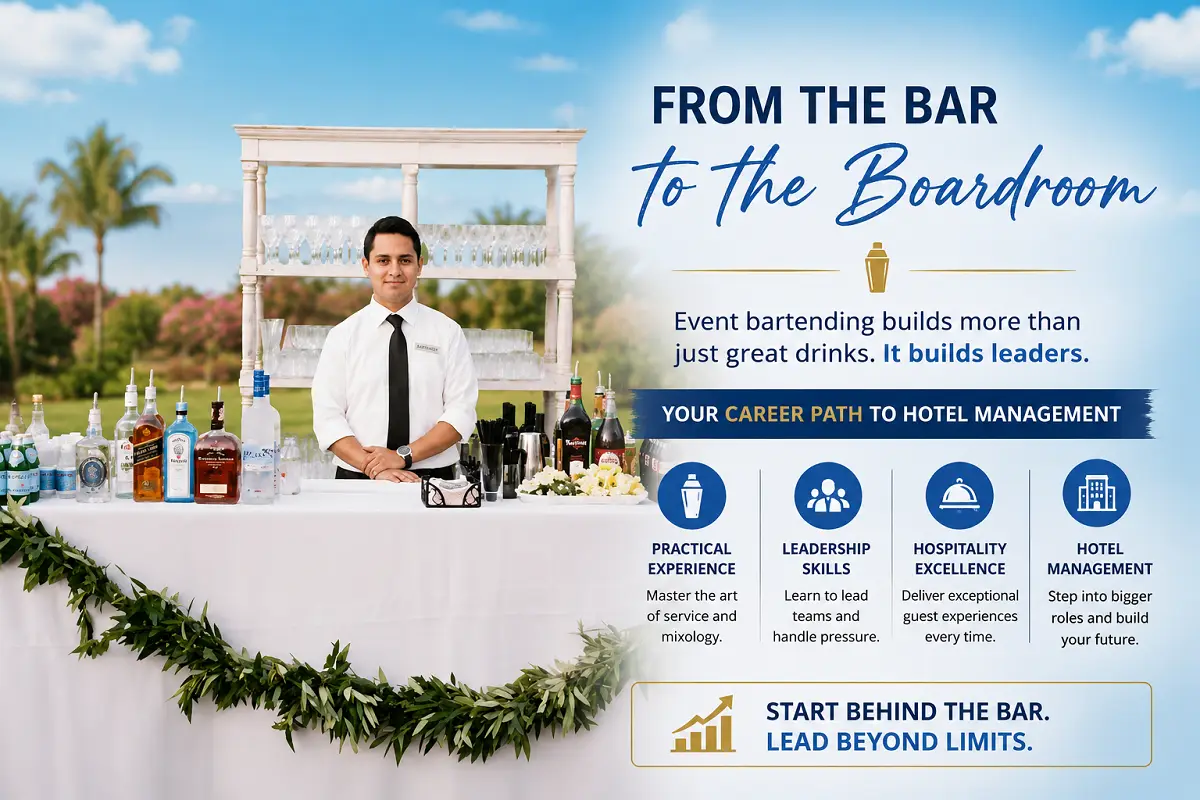
Event bartending is increasingly emerging as an overlooked pathway into hotel leadership, offering professionals real-world experience in guest service, operations and team management. Industry experts say the frontline role develops practical leadership skills that translate directly into hotel, resort and restaurant management careers.
As hospitality businesses continue investing in workforce development, professionals with experience in event bartending are finding greater opportunities to move into supervisory and management positions across hotels, resorts, catering companies, and food and beverage operations, according to research conducted by the Local Bartending School.
Event Bartending Career Path Creates Hospitality Leaders
The hospitality industry has traditionally viewed hotel management degrees and departmental training as the standard route to leadership. However, operational experience gained through event bartending is proving equally valuable for professionals seeking long-term careers.
Working at weddings, festivals, corporate events and private celebrations requires bartenders to deliver fast, efficient service while coordinating with caterers, planners, venue managers and service teams. These responsibilities expose them to multiple aspects of hospitality operations.
Frontline Experience Strengthens Hotel Management Skills
Event bartenders regularly balance customer service, inventory management, time-sensitive operations and responsible beverage service under pressure. These daily responsibilities help professionals build communication, organization and decision-making abilities.
Hospitality employers often value candidates who understand guest expectations firsthand. Professionals who have managed demanding service environments are generally well prepared for leadership roles within hotels and restaurants.
Guest Service Builds Emotional Intelligence
Managing guest expectations remains one of hospitality's most important responsibilities. Event bartenders frequently resolve complaints, explain venue policies and respond calmly during high-pressure situations.
These experiences strengthen emotional intelligence, conflict resolution and professional communication—qualities that hotel supervisors and managers rely on every day to maintain guest satisfaction.
"Strong hospitality leaders often develop their management style through direct guest interaction before moving into supervisory positions."
Sales and Revenue Awareness Support Career Growth
Event bartenders also gain experience in revenue generation by recommending beverages, understanding guest preferences and improving customer experiences through personalized service.
This commercial awareness becomes increasingly valuable as professionals advance into food and beverage management, banquet operations and hotel leadership, where revenue performance and guest satisfaction go hand in hand.
Operations Experience Extends Beyond the Bar
Unlike permanent hotel bars, temporary event bars require professionals to manage logistics from setup to breakdown. Bartenders coordinate equipment, supplies, staffing and service flow while adapting to changing event conditions.
These operational responsibilities closely mirror the planning and coordination required in hotels, resorts and convention venues where multiple departments must work together efficiently.
Teamwork Creates Future Hospitality Managers
Large-scale events depend on collaboration between bartenders, servers, chefs, planners, security teams and venue staff. Learning to communicate effectively within multidisciplinary teams prepares professionals for future leadership responsibilities.
Industry professionals note that successful managers often begin as strong team members who understand frontline challenges before supervising larger hospitality operations.
Hospitality Employers Recognize Transferable Skills
Hotels, resorts and catering businesses are increasingly recognizing event bartending experience as a valuable foundation for management development. Candidates often bring proven customer service, operational awareness, adaptability and leadership potential.
The American Hotel & Lodging Association (AHLA) continues to highlight hospitality as an industry offering long-term career mobility through practical experience and ongoing professional development.
Career Progression Continues Across Hospitality
A typical progression may begin as an event bartender before advancing into lead bartender, event supervisor, banquet manager, food and beverage manager and eventually hotel operations or general management.
As hotels continue investing in leadership development, professionals with practical event experience remain well positioned to build rewarding careers across the hospitality industry.
Source: Industry insights by Duncan MacNally (localbartendingschool), hospitality workforce development research and the American Hotel & Lodging Association (AHLA).