India Pakistan Naval Ship Collision Sparks Diplomatic Protest
India Pakistan naval ship collision in the North Arabian Sea on September 15 prompts New Delhi to summon Pakistan's Charge d'Affaires over unprofessional conduct.
 RUKAIYA KADIWAL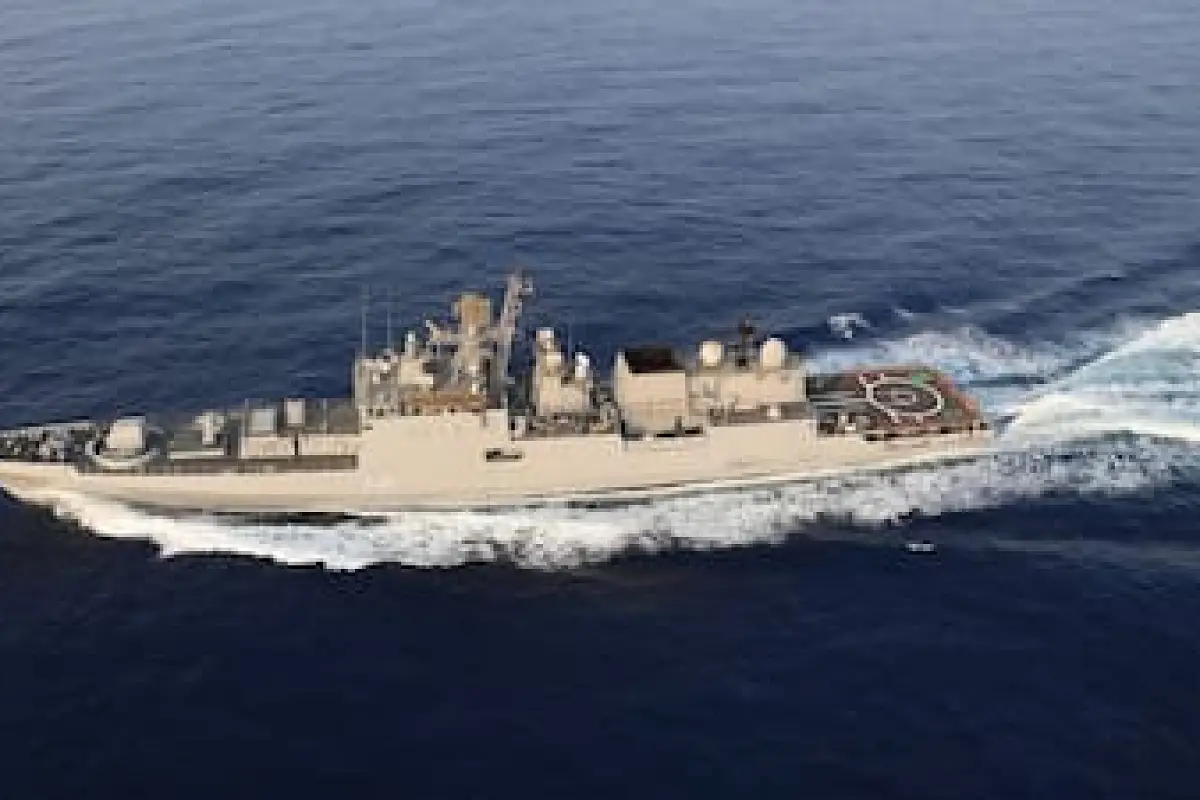
The seas in the North Arabian Sea on the evening of September 15 were rough. An Indian frontline warship was on a routine surveillance mission approximately 220 kilometers east of Oman when a Pakistani vessel approached at high speed. Sources described what followed as a maneuver that was unprofessional, unsafe, and ultimately consequential: the Pakistani ship grazed past the Indian vessel, making contact in international waters in an encounter that neither side would have chosen to publicize, and that both governments now cannot avoid addressing.
The India Pakistan naval ship collision of September 15, 2026 moved quickly from a maritime incident into a diplomatic one. By the following day, New Delhi had summoned Pakistan's Charge d'Affaires Saad Ahmad Warraich to the Foreign Ministry's Janpath office, where he remained for approximately thirty minutes, receiving a formal and strongly worded protest over what India's Foreign Ministry described as unacceptable and unprofessional conduct by Pakistani naval units in international waters.
What the Foreign Ministry Said and Why the Language Matters
India's Foreign Ministry did not soften its characterisation of the incident. Its statement described the conduct of the Pakistani naval ship as being in direct contravention of Article 10 of the 1991 agreement between India and Pakistan, the bilateral arrangement governing advance notice of military exercises, manoeuvres, and troop movements. Citing a specific article of a specific agreement places the incident within a legal and historical framework rather than treating it as an isolated act, and the precision of that framing signals a diplomatic response calibrated for the record rather than simply for the moment.
The ministry's statement went on to direct the Charge d'Affaires to convey to Pakistani authorities the need for all military units to observe due care and respect the provisions of relevant agreements between the two sides. India's Charge d'Affaires in Islamabad was simultaneously instructed to lodge a parallel protest with Pakistan's Ministry of Foreign Affairs, ensuring that the complaint was registered through both capitals rather than only from one direction.
What Sources Describe of the Encounter
The vessel involved on the Pakistani side has been identified by sources as a Hunain-class corvette. The Indian vessel is described as a frontline warship conducting routine surveillance. Sources said the Pakistani ship came at high speed, maneuvering in a manner that was aggressive, intimidatory, and unsafe, with no apparent attempt to slow down in the rough seas that characterised conditions on the night of the incident. The contact that resulted was described as a graze rather than a full collision, and no significant damage was reported on either vessel.
The operational context matters for understanding the significance of the encounter. A frontline Indian warship on a surveillance mission in the North Arabian Sea occupies waters through which significant maritime traffic moves, including shipping lanes of commercial and strategic importance to multiple regional powers. A Pakistani naval vessel approaching such a ship at high speed and failing to give way is not a routine navigation error. It is a failure of the kind that has established protocols specifically designed to prevent it.
The 1991 Agreement and What It Was Built to Prevent
The agreement India cited in its protest dates to 1991, a period in the relationship between the two countries when both governments were working to establish formal mechanisms that would reduce the risk of accidental escalation between their military forces. Article 10, governing advance notice of exercises and manoeuvres, was designed precisely for moments like the one that occurred on September 15, creating a framework within which each side's military activities would be communicated in advance to reduce the likelihood of unintended encounters that could be misread as provocative.
The fact that India chose to cite this agreement in its protest rather than relying solely on the language of unprofessional conduct suggests a deliberate decision to elevate the incident from a bilateral complaint about naval behaviour to a question of treaty compliance. That framing creates a different kind of accountability and a different kind of expectation about what Pakistan's response should address.
A Second Incident in Fifteen Years
The September 15 encounter was not the first of its kind. In June 2011, the Pakistani Navy's vessel Babur and the Indian Navy's INS Godavari were involved in a similar incident. Two encounters in fifteen years does not constitute a pattern in the statistical sense, but the existence of a precedent gives the current incident a context that neither side can entirely set aside. A first incident might be attributed to navigation error, weather conditions, or a misreading of the other vessel's intentions. A second incident, occurring after the same bilateral agreement was already in place during the first, raises questions that the diplomatic exchange will not fully resolve but that it can no longer defer.
Sources familiar with the September 15 incident were specific about the Pakistani naval behaviour in terms that went beyond the Foreign Ministry's formal language. The Pakistani Navy was described as being both aggressive and intimidatory, as well as failing to show professional seamanship in rough conditions. That combination of characterisations, official diplomatic protest alongside more direct sourced description, paints a picture of an incident that New Delhi viewed seriously enough to communicate through multiple channels simultaneously.
What the Diplomatic Response Communicates
Summoning a Charge d'Affaires to a foreign ministry to receive a formal protest is a graduated diplomatic action. It is more serious than a communique delivered through normal channels and less serious than recalling an ambassador, placing the response within the range of tools that governments use to signal significant displeasure without triggering an escalation that neither side has indicated it is seeking. The thirty minutes that Warraich spent at the Janpath office were long enough to deliver a substantive message and short enough to avoid the symbolic weight of a prolonged meeting.
The parallel instruction to India's own Charge d'Affaires in Islamabad to lodge a simultaneous protest with Pakistan's Foreign Ministry ensures that the complaint is formally registered in both directions, a procedural step that matters for the diplomatic record even when the substance of both protests is identical. New Delhi was ensuring that the incident could not subsequently be characterised as a communication failure or a misunderstanding by placing its objection in both capitals at the same time.
Waters That Have Carried This History Before
The North Arabian Sea on the night of September 15 was rough, as seas in that part of the world can be in any season when weather conditions move against the surface. Two naval ships, one on a surveillance mission and one approaching at high speed, occupied the same stretch of international water and came close enough that contact occurred. No one was reported injured. No significant damage was confirmed. The ships were moved apart and the diplomatic machinery began its own movement, summoning envoys, drafting statements, lodging protests in two capitals at once.
What the night left behind was a formal record of a second incident in fifteen years between two navies that share a maritime boundary and a fraught history and an agreement that was written specifically to prevent exactly what happened. Whether the agreement is reviewed, whether the maritime protocols between the two countries are revisited, whether this incident becomes a reference point in a future bilateral conversation or a footnote absorbed into the longer account of India-Pakistan relations, none of that will be determined by the thirty minutes Saad Ahmad Warraich spent at the Janpath office on September 16. But those thirty minutes have been recorded. The protest has been lodged. And the waters off Oman continue moving, as they always have, indifferent to the ships that pass through them and the diplomatic language that follows in their wake.
Related reading: World Athletics Championships 2029: Nairobi, Kenya to host historic Africa first