Public Debate Erupts After Minneapolis Hilton Cancels ICE Agent Bookings
Cancellation of reservations for federal immigration agents at a Hilton Minneapolis hotel sparks public debate and highlights hospitality policy challenges.
 Munni Khatun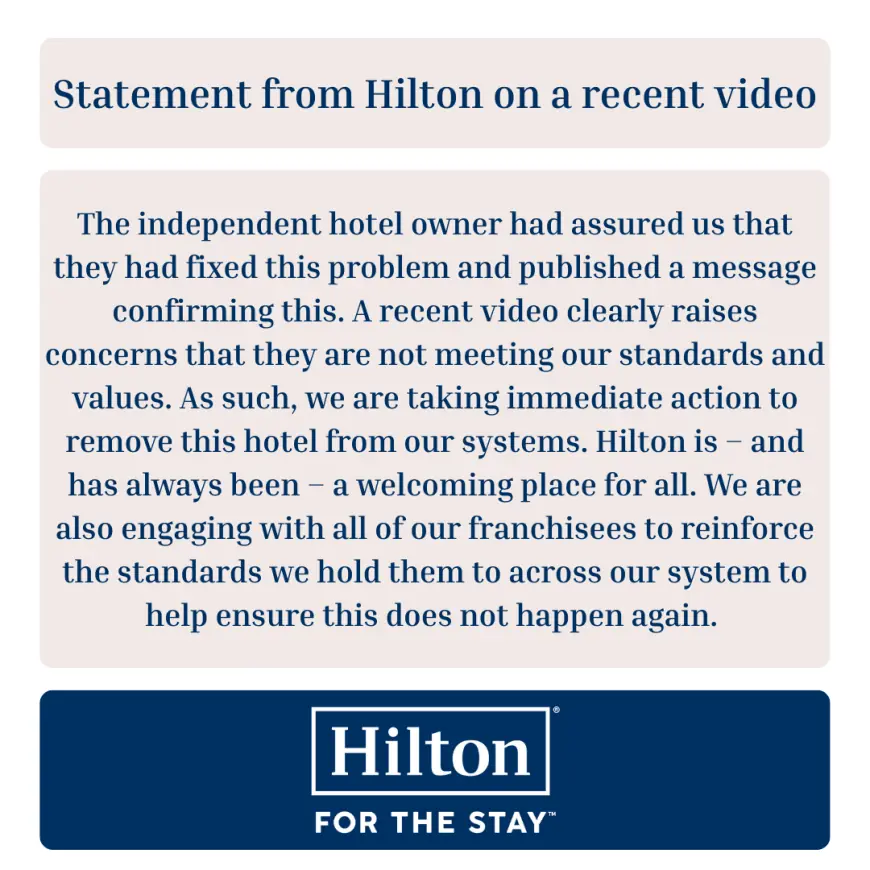
A public debate has intensified after a franchised Hilton hotel in Minneapolis canceled existing reservations made by federal immigration enforcement personnel, raising questions about hotel policy, service standards and brand governance within the hospitality industry.
The incident began when a group of reservations linked to agents from a federal law enforcement agency were reportedly canceled once the hotel identified the affiliation. The action sparked reactions from across the public and business communities, with some endorsing the hotel’s decision and others highlighting obligations tied to non-discriminatory service expectations.
Hilton corporate clarified that the property was independently owned and operated, and that its actions did not represent company policy or values. The global brand emphasised its commitment to welcoming all guests and upholding non-discrimination principles across its portfolio.
The controversy has drawn attention to the challenges hotel brands face in ensuring consistent standards across franchised properties that operate under local management while maintaining alignment with broader corporate expectations.
Industry analysts note that hospitality companies typically enforce clear guest service policies designed to avoid selective treatment based on occupation, nationality or other identifiers. Deviations from these standards can prompt reputational risk and operational repercussions.
In the midst of public debate, voices within business circles have both criticised and supported the hotel’s actions, reflecting wider societal conversations about service neutrality, employee discretion and the intersection of hospitality operations with politically charged issues.
The episode underscores the importance of robust training, communication and policy enforcement within franchise systems to ensure uniform guest experience and adherence to company standards despite individual incidents.
As discussions continue, hospitality leaders are watching closely to understand how such high-profile controversies may influence future policy guidance, staff training and brand protection strategies within global hotel networks.