Boeing E-7 Wedgetail: Why the USAF Scaled Back Its Order
The United States Air Force reduced its Boeing E-7 Wedgetail order while replacing the Boeing E-3 Sentry airborne warning and control system (AWACS).
 Shahnazavira Kanahaya Putri Humairo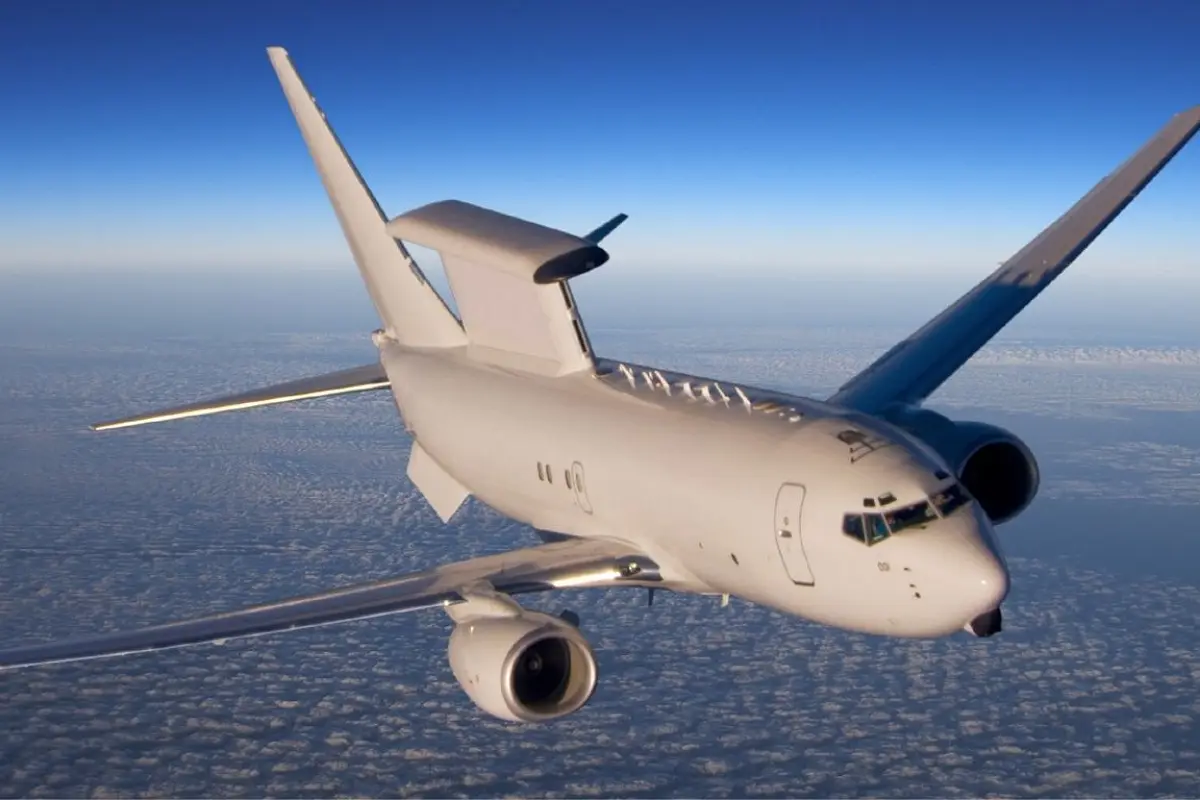
Why the USAF Scaled Back Its Boeing E-7 Wedgetail Order
The U.S. Air Force has drastically reduced its planned purchase of the Boeing E-7 Wedgetail, trimming the program from 26 aircraft to just seven. The decision reflects a significant change in the military’s strategy for maintaining its future airborne early warning capabilities.
For years, the Wedgetail was seen as the natural successor to the aging Boeing E-3 Sentry. But rising costs and durability concerns have prompted planners to seek a different combination of solutions. This shift in direction has also raised questions about whether the Wedgetail can still meet the Air Force's long-term operational needs.
The Aging Boeing E-3 Sentry Fleet
Built on the 707-320B airframe, the Boeing E-3 Sentry has served the Air Force since the late 1970s. Currently, only 14 of these jets remain in service, and many are showing signs of aging. Maintenance demands have steadily increased over the past decade, along with reliability issues that are beginning to affect mission readiness in some regions.
Also known as the Airborne Warning and Control System (AWACS), the aging Boeing E-3 Sentry has long served as a critical surveillance asset for the United States Air Force and allied nations. A total of 68 aircraft were produced between 1977 and 1992, with operators including France, the United Kingdom, and Saudi Arabia.
Over the years, most non-U.S. fleets have transitioned to the CFM56-2 engine, while the growing need for modernization has prompted the Pentagon to consider newer platforms, such as the Wedgetail, as its long-term replacement.
Wedgetail Origins and Capabilities
The Boeing E-7 Wedgetail traces its origins to the Royal Australian Air Force, which began exploring new airborne warning and control system (AWACS) platforms in the late 1980s. Boeing secured the contract in 1999, and the aircraft officially entered service in 2012. Built on the Boeing 737-700ER platform, the Wedgetail is currently operated by Australia, South Korea, Turkey, and the United Kingdom. While also emerging as a potential replacement for the aging Boeing E-3 Sentry fleet of the United States Air Force.
One of its defining features is the advanced Multi-role Electronically Scanned Array (MESA) radar mounted along the aircraft’s dorsal fin. Unlike the iconic rotating radar dome found on the Boeing E-3 Sentry, this fixed array enables continuous 360-degree surveillance through overlapping electronic scanning zones.
The system can detect airborne targets from hundreds of miles away, making it one of the most advanced AWACS solutions currently in service.
Budget Pressures Behind the Wedgetail Cuts
Despite its strong technical record, the Boeing E-7 Wedgetail program now faces challenges as the Pentagon re-evaluates its broader defense strategy. Officials within the Air Force are increasingly concerned about delivery timelines extending through 2027.
At the same time, development costs continue to rise beyond initial projections. Concerns over the aircraft’s long-term survivability have also become a major factor in reassessing the future of the Wedgetail program.
Rather than maintaining a large fleet, the Air Force now prioritizes systems that can support global operations.
This shift reflects a broader modernization strategy taking shape across the service. The KC-10 is scheduled for retirement, while the A-10 fleet continues to be rapidly phased out.
Wedgetail Uncertainty Pushes Space-Based Surveillance Plans
The uncertainty surrounding the Boeing E-7 Wedgetail signals a major turning point for the United States Air Force as it rethinks the future of airborne surveillance. While the Boeing E-3 Sentry and other airborne warning and control system (AWACS) platforms have long defined military early warning operations, evolving threats and rising procurement costs are reshaping defense priorities.
As questions continue to surround the long-term role of the Wedgetail, the Pentagon is increasingly looking toward space-based surveillance technologies. It reflects a broader shift toward next-generation systems designed to deliver greater global coverage and stronger operational resilience in future conflicts.