FitsAir Cuts Routes and Jobs After Rapid Expansion
FitsAir went from three routes to a seven-destination international network in just a few years. Now the Sri Lankan airline is cutting routes and jobs.
 Jishan Khan
FitsAir Went From Seven International Destinations to Layoffs in Under Six Months, Here's the Expansion That Outran the Airline's Own Fleet
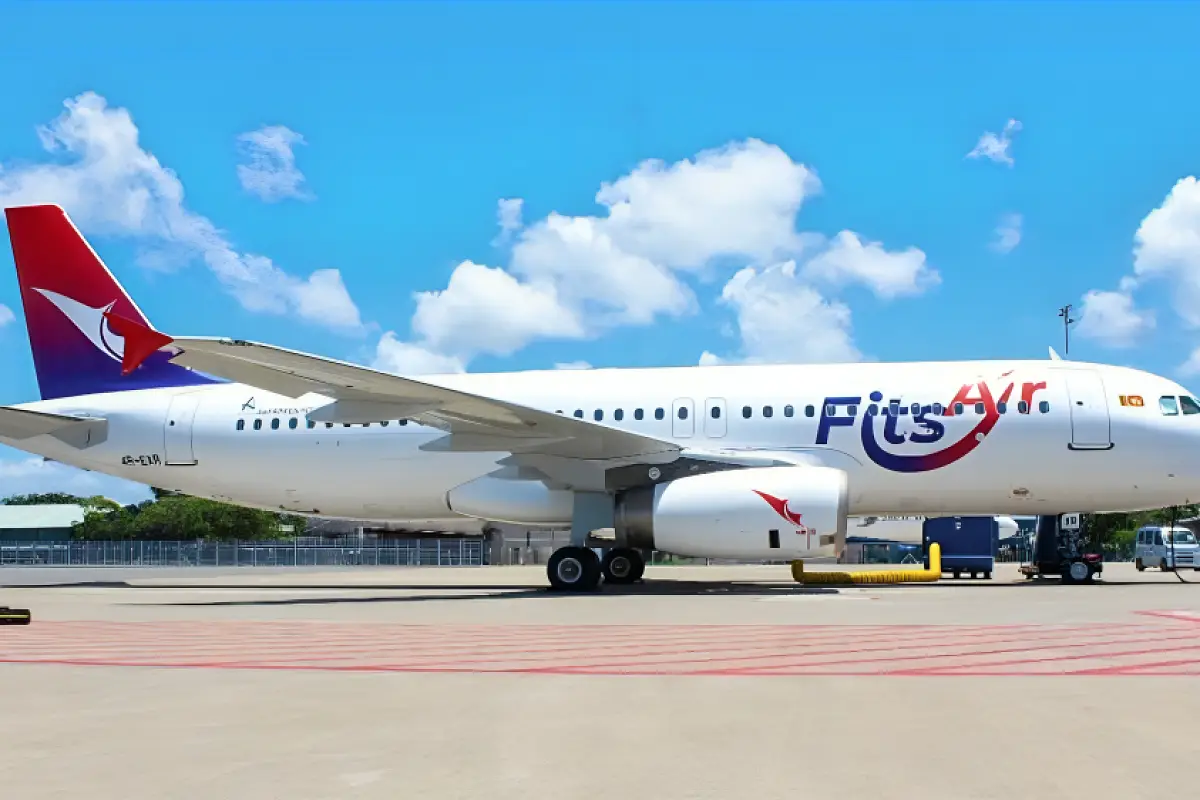
Sri Lankan low-cost carrier FitsAir is cutting routes and beginning layoffs as it scales back a network that, as recently as March 2026, spanned seven international destinations across eight countries plus seven domestic points, a footprint the airline had built through an almost uninterrupted sequence of new route launches stretching back to 2022. The retrenchment marks a sharp reversal for a carrier that spent the better part of three years in expansion mode, adding Kuala Lumpur, expanded Dhaka frequencies, a new Lahore route, and an Ahmedabad service explicitly marketed as bypassing chaos at India's major hub airports, all within the twelve months preceding these cuts.
An airline that was still announcing new routes in June 2026 is laying off staff by August. That compression is the real story here.
A Growth Pace That Never Matched the Fleet Behind It
FitsAir's expansion since re-entering passenger service in October 2022 was genuinely remarkable for a carrier of its size. Starting from three initial routes to Dubai, Malé and Trichy, the airline layered on Chennai in early 2023, crossed 50,000 passengers within its first seven months, then kept adding: Kuala Lumpur in March 2025, expanded Dhaka frequencies in February 2025, a new Colombo-Lahore route launching January 2026, and an Ahmedabad route in June 2026 timed specifically to capture demand diverted by disruption at major Indian hub airports. That is eight distinct network expansion announcements in roughly three and a half years, an extraordinarily aggressive cadence for an airline that, per employment data, operated with a total headcount of just 135 people as recently as mid-2026.
The fundamental problem with that pace is one this feed has documented repeatedly across other small and mid-sized carriers this year, route announcements are cheap to make and commercially meaningless until the aircraft, crew and ground infrastructure exist to sustain them profitably. FitsAir's core fleet has remained a small handful of Airbus A320s throughout this entire expansion, the same narrowbody type used to launch Dubai and Malé back in 2022 was still the backbone of the airline's fleet when it added Lahore and Ahmedabad in 2026. Adding a new international destination roughly every four to five months without a corresponding, proportional increase in fleet size means each new route was necessarily draining frequency, aircraft utilisation or crew availability from routes the airline had already established, a zero-sum capacity game that becomes unsustainable the moment demand on any single route softens.
Why a Carrier With FitsAir's Fleet Size Has No Room to Absorb a Bad Route
The mathematics of small-fleet economics are unforgiving in a way that rarely applies to larger carriers. When an airline like IndiGo or flynas, both extensively covered elsewhere in this feed as they add hundreds of aircraft to their orderbooks, finds a route underperforming, it can simply reduce frequency on that one route while redeploying the freed capacity elsewhere across a fleet of dozens or hundreds of aircraft, with minimal disruption to the network as a whole. FitsAir, operating a fleet that has likely never exceeded single digits of A320s at any point in its passenger-operating history, has no equivalent slack. A single underperforming route can consume a meaningful share of the airline's entire available aircraft-hours, and a single aircraft going unscheduled for heavy maintenance can force the suspension of an entire route rather than a manageable frequency reduction.
That structural fragility means FitsAir's rapid-fire expansion strategy was always going to face a reckoning the moment any combination of routes underperformed simultaneously, precisely the scenario that appears to have materialised through 2026, as broader regional aviation headwinds this feed has extensively documented (the Iran conflict's fuel cost shock, weakened South Asian outbound demand, and intensifying competition on exactly the India-Sri Lanka and Gulf corridors FitsAir was chasing) compressed margins across smaller regional carriers with none of the balance sheet depth that larger competitors like flynas or IndiGo can draw on to ride out a difficult year.
The Cargo Heritage That May Determine Whether FitsAir Survives This
What differentiates FitsAir from many of the other struggling regional carriers this feed has covered, Air Anka's permit collapse, Serene Air's repeated failed restarts, Fly Baghdad's two-year sanctions ordeal, is that passenger operations were never FitsAir's original or sole business. The airline traces its roots to 1997 as ExpoAviation, later ExpoAir, operating almost exclusively as a cargo carrier across Asia, Europe, Africa and Oceania for a quarter-century before launching scheduled passenger services in October 2022. That cargo operation has continued running throughout the passenger network's entire rise and current retrenchment, giving FitsAir a revenue base and operational infrastructure that a pure passenger startup attempting the same aggressive international expansion would not have had as a fallback.
That distinction matters enormously for how these cuts should be read. A route reduction and staff layoff at a carrier whose only business is the passenger network it is cutting reads as existential. The same cuts at a carrier with nearly three decades of cargo operating history underneath the passenger business read more plausibly as a strategic retreat to a sustainable core, shedding the passenger routes that overextended a small fleet while preserving both the cargo operations that predate the entire expansion and whichever passenger routes have actually proven profitable enough to justify the aircraft hours they consume.
What This Means for Sri Lanka's Broader Aviation Ambitions
FitsAir's retrenchment lands at a moment when Sri Lanka's aviation sector is being watched closely for entirely different reasons, this feed's recent coverage of SriLankan Airlines' Transwell "zero-treasury" turnaround proposal and the unresolved Airbus corruption case against the national carrier's former administrator both point to a country trying to rebuild aviation credibility and investor confidence after years of financial distress at its flag carrier. FitsAir mattered to that broader narrative specifically because it represented something SriLankan Airlines could not currently claim: a privately-owned, commercially-driven Sri Lankan carrier expanding on its own initiative rather than requiring government intervention or bailout.
A pullback at FitsAir does not doom that broader ambition, but it does remove one of the few genuinely positive private-sector aviation growth stories Sri Lanka had to point to through 2025 and early 2026. Whether the carrier's current cuts represent a temporary correction back to a sustainable network size, or the beginning of a longer decline for a carrier that expanded faster than its balance sheet could support, will likely become clear over the next two to three quarters, specifically whether the routes FitsAir chooses to keep after this restructuring can sustain the fleet utilisation and load factors that the airline's rapid multi-year expansion never fully achieved.