Fly Baghdad Lost 96% of Its Flights Overnight
Fly Baghdad has been removed from the US sanctions list after losing 96% of its flights. Rebuilding its network will be far harder than getting delisted.
 Jishan Khan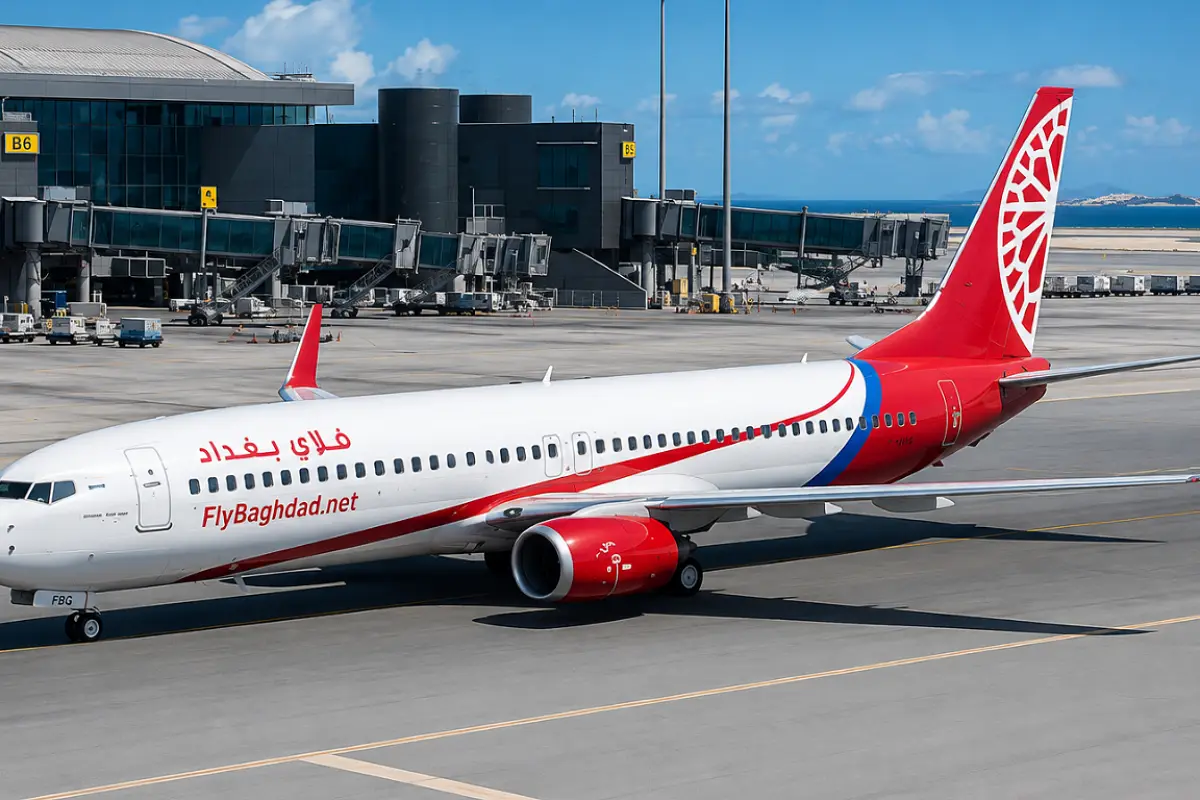
Fly Baghdad Lost 96% of Its Flights Overnight in 2024, Getting Off a US Sanctions List Doesn't Bring Any of That Back Automatically
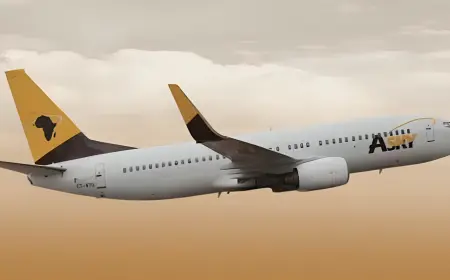
Iraq's Fly Baghdad was removed from the US Treasury's OFAC Specially Designated Nationals list on August 5, 2026, ending a sanctions regime that had gutted the airline's network for more than two years. The numbers behind that gap are stark, 224,048 two-way seats across 1,207 flights on 35 airport pairs in August 2023, five months before sanctions hit, collapsed to just 8,602 seats on 46 flights across three routes by August 2026, a 96.2% reduction in both capacity and frequency that left the carrier clinging to a single surviving route, Baghdad-Istanbul, by 2025.
Getting delisted was the easy part, relatively speaking. Rebuilding an airline from three routes back to thirty-five is an entirely different problem, and it is one that no regulator's signature can solve.
What Actually Triggered the Collapse
OFAC sanctioned Fly Baghdad and its then-CEO Basheer Abdulkadhim Alwan al-Shabbani in January 2024, alleging the carrier provided material support to Iranian-backed militias, with al-Shabbani specifically listed as linked to the Islamic Revolutionary Guard Corps-Qods Force. The airline denied wrongdoing at the time. Within days of the designation, Fly Baghdad suspended all commercial operations entirely and grounded its fleet, not a gradual wind-down, but a complete halt to scheduled service on January 25, 2024, disappearing from global booking systems and distribution platforms overnight.
That instant, total shutdown is the critical detail for understanding why recovery is so difficult now. A sanctions designation under counterterrorism authorities does not just block a company's own transactions, it makes every bank, insurer, lessor, fuel supplier and maintenance provider anywhere in the world that might otherwise deal with Fly Baghdad legally exposed to secondary sanctions risk simply for doing business with a designated entity. Airlines run on precisely those relationships. An aircraft cannot legally fly without valid insurance. A lessor cannot continue leasing airframes to a sanctioned counterparty without risking its own access to US financial markets. The moment OFAC's designation was published, every one of those relationships became a liability that Fly Baghdad's counterparties had every incentive to sever immediately rather than risk.
Two Years of Compliance Work Just to Get Back to Square One
Fly Baghdad's chairman Ahmad Asad framed the two-year process bluntly: "When we began this work two years ago, we made one commitment: Fly Baghdad would meet the highest standards of compliance and governance, or it would not fly." That framing matters because it signals the delisting was not a negotiated settlement or a diplomatic favour, OFAC's own reasoning, according to sanctions attorney Erich Ferrari's colleague Jonathan Blinderman, was explicit: "Sanctions are designed to compel a positive change in behavior. The airline completed those positive changes and earned the relief which OFAC granted."
Achieving that required Fly Baghdad to rebuild its screening infrastructure, ownership transparency and internal compliance systems from the ground up, under Treasury's scrutiny, for two full years while generating essentially no revenue from the international routes that had previously anchored its business. The delisting also formally corrected the record on al-Shabbani himself, OFAC's August 5 action amended his SDN entry to remove any reference linking him to Fly Baghdad, and the airline has stated he never held equity in the company and has no current role in its ownership, management or operations. Separating the individual designation from the corporate entity was itself part of the two-year rebuild, demonstrating to Treasury that whatever conduct triggered the original sanctions was not structurally embedded in the company's ongoing ownership or governance.
Why the Restart Timeline Just Got More Complicated, Not Less
Here is the detail that makes this story more interesting than a straightforward "sanctions lifted, airline resumes" narrative: Fly Baghdad had already been rebuilding gradually before this delisting, adding routes to Karachi and Lahore in Pakistan that lifted its summer 2026 capacity to 44,506 seats, up 38.2% year-over-year, modest growth, but genuine growth, achieved while still technically under US sanctions by working around the restriction through non-US-exposed counterparties in markets like Pakistan. Then, separately from the sanctions issue entirely, Fly Baghdad suspended all flights again in February 2026 due to geopolitical instability in the region, almost certainly connected to the wider Iran conflict and regional airspace disruptions that this feed has covered extensively affecting Gulf carriers, Cathay Pacific's Dubai and Riyadh suspensions, and dozens of other operators throughout 2026.
That means Fly Baghdad is not simply resuming from where it left off in January 2024. It is restarting from a second, more recent shutdown caused by regional security conditions that have nothing to do with sanctions compliance and everything to do with the same instability that has disrupted Middle East aviation broadly this year. The airline's fleet, a Boeing 737-700, 737-800, 737-900ER, a Bombardier CRJ200LR and a Raytheon B1900D, per CAPA data, has effectively sat through two separate disruption events layered on top of each other.
Why Baghdad-Istanbul Is the Logical Anchor, Not Just the Convenient One
Istanbul was the single route Fly Baghdad managed to sustain throughout the entire sanctions period, which makes it the obvious foundation for rebuilding rather than a fresh commercial decision. Turkish Airlines and Turkey more broadly have positioned Istanbul as the connecting hub of choice for exactly this kind of Middle Eastern regional traffic, this feed's coverage of Turkish Airlines' record-breaking August 2 passenger day and Istanbul's emergence as the beneficiary of Gulf carrier disruption during the Iran conflict both point to the same underlying dynamic. A route that already survived Fly Baghdad's darkest two years, connecting to an aviation hub currently absorbing displaced Gulf traffic at record volumes, is the single safest bet in the airline's entire potential network to build the recovery around.
Iraq's aviation market has meanwhile been shaped by Fly Baghdad's absence in ways that will not simply reverse now that sanctions are lifted. Passengers in Baghdad, Najaf and Erbil lost a budget option to cities including Damascus, Beirut and Istanbul, forcing tour operators who had relied on Fly Baghdad for seasonal charters to shift to competitors at short notice, competitors who, over two years, have had every opportunity to build loyalty and market share that Fly Baghdad cannot simply reclaim by re-entering routes it once dominated. Iraq's flag carrier, state-backed Iraqi Airways, and various foreign competitors have absorbed demand that Fly Baghdad previously served, and winning that traffic back requires competing on price, schedule and reliability against operators who never had to rebuild from zero.
What Actually Determines Whether This Recovery Succeeds
Fly Baghdad's own statement invites banking, leasing, insurance and commercial partners to reconnect, with its compliance team standing ready to support counterparties through due diligence and onboarding, language that reflects genuine awareness that removal from the SDN list is a necessary but not sufficient condition for rebuilding. Every lessor, insurer and bank that severed ties in January 2024 now has to independently satisfy its own compliance department that re-engaging with Fly Baghdad carries no residual reputational or regulatory risk, a process that can take months even after a formal delisting, particularly for large institutions with conservative risk appetites in a region still affected by broader geopolitical instability.
Baghdad International Airport itself has undergone expansion efforts and, despite periodic security incidents and a brief war-linked closure earlier in 2026, is again handling regular civilian traffic, Iraqi authorities are positioning the airport as a competitive hub between the Levant, Gulf and Turkey, a strategy that explicitly benefits from having multiple home carriers rather than depending solely on Iraqi Airways. That national interest in Fly Baghdad's recovery gives the airline institutional tailwinds that a purely private-sector recovery effort might lack. Whether two years of demonstrated compliance transformation is enough to convince the international commercial ecosystem, banks, lessors, insurers and codeshare partners, to extend the same trust that OFAC ultimately did will determine whether Baghdad-Istanbul becomes the first route of many, or the ceiling Fly Baghdad struggles to build meaningfully beyond.