Marriott Bonvoy and Japan Airlines Launch Reciprocal Elite Partnership
Marriott Bonvoy and Japan Airlines have launched a reciprocal elite partnership, introducing status matching, loyalty benefits and enhanced travel rewards.
 Jishan Khan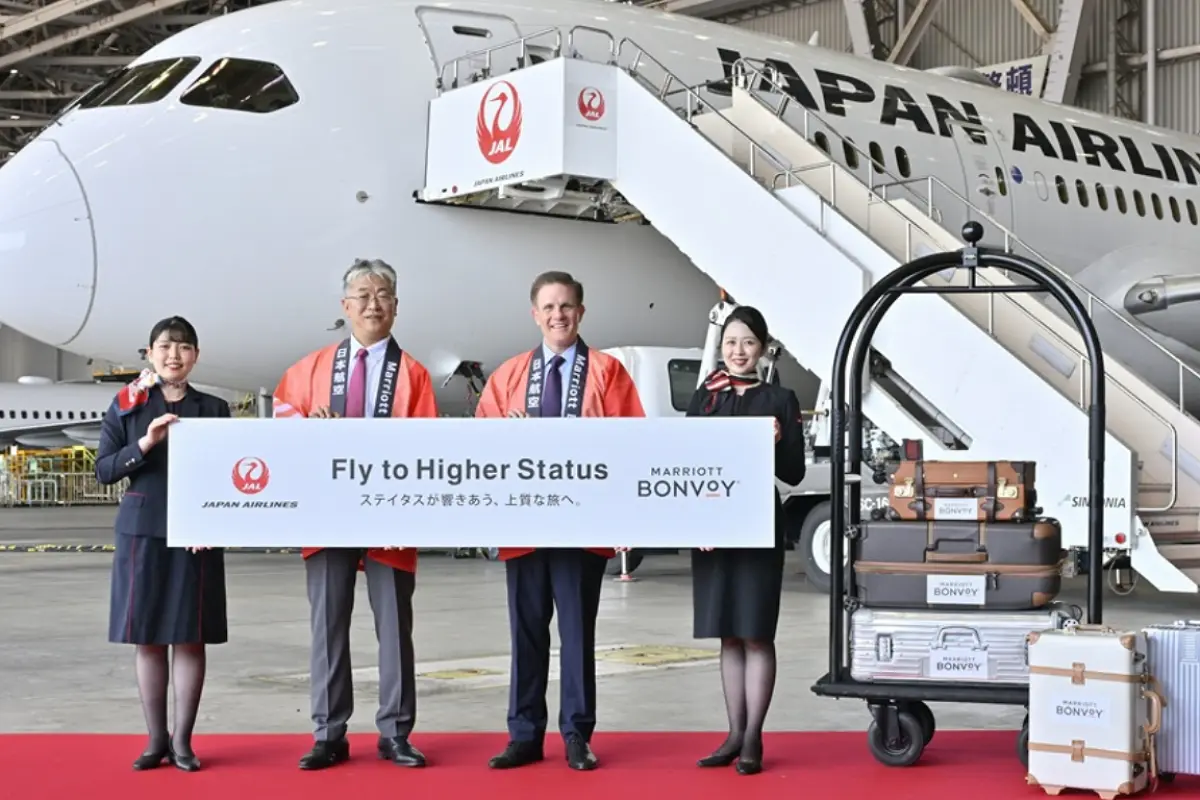
Marriott Bonvoy and Japan Airlines Just Launched a Loyalty Partnership That Goes Further Than Points Conversion
Marriott Bonvoy and Japan Airlines have launched a strategic loyalty partnership that introduces reciprocal elite status matching between the JAL Mileage Bank and Marriott Bonvoy programs. The alliance, which builds on an existing points conversion relationship, marks the first comprehensive hotel-airline loyalty collaboration for both organisations, Marriott's first with a Japanese carrier and JAL's first with a global hospitality group.
Status matching between an airline and a hotel chain sounds routine. This one is structured differently.
What the Partnership Actually Does
Most airline-hotel loyalty tie-ups stop at points conversion, you transfer miles to hotel points or vice versa, usually at unfavourable rates, and that is the extent of the relationship. This goes further. JMB Sapphire members and above automatically receive equivalent Marriott Bonvoy elite status without needing to meet stay requirements. Basic and Crystal JMB members receive Marriott Bonvoy Silver Elite when they meet stay thresholds. Going the other way, Marriott Bonvoy Titanium and Ambassador members receive Crystal status or above with JAL.
The detail that stands out most is the FLY ON Points credit for Marriott Bonvoy members simply for linking accounts, no flight required. FLY ON Points are the currency JAL uses to determine elite tier qualification, meaning a frequent Marriott guest who links their account can advance through JAL's membership tiers faster without necessarily flying more. That is a meaningful structural benefit, not just a marketing badge.
Why Japan Is the Right Market for This
Marriott's own Loyalty Trends Report 2026 found that Japanese travellers are among the most deliberate optimisers of loyalty program stacking globally, actively seeking to extract combined value across hotel and airline memberships rather than treating them as separate accounts. Japan's domestic travel culture, where business travellers frequently combine long-haul JAL international flights with Marriott-brand hotel stays in destination cities, creates a natural overlap in membership that this partnership is designed to monetise.
Marriott frames the deal as part of its hyperlocal strategy in Asia Pacific, building deep alliances with dominant local brands rather than applying a single global partnership template. JAL, which carries around 34 million passengers annually and operates to over 90 international destinations, gives Marriott access to a loyalty base that skews toward high-frequency, high-spending travellers who are exactly the members most likely to stay at full-service Marriott properties.
What It Means for the Loyalty Market
Air-hotel loyalty partnerships are not new, Delta and Hilton, United and Marriott, Singapore Airlines and a string of hotel chains have all built versions of this. What differentiates the JAL-Marriott deal is the depth of the status integration and the automatic nature of the benefits, which removes the friction that has historically limited uptake in similar programmes. Members do not need to apply, submit documentation or wait for a manual review. Link the accounts and the benefits flow.
With Marriott Bonvoy covering more than 10,000 properties worldwide and JAL operating one of Asia's most respected long-haul networks, the combined addressable membership base is substantial. The partnership is live now.