Japan Airlines Battles Soaring China Airspace Charges
Japan is reducing China flights as rising airspace charges and diplomatic tensions pressure Asian and European route profitability.
 Jishan Khan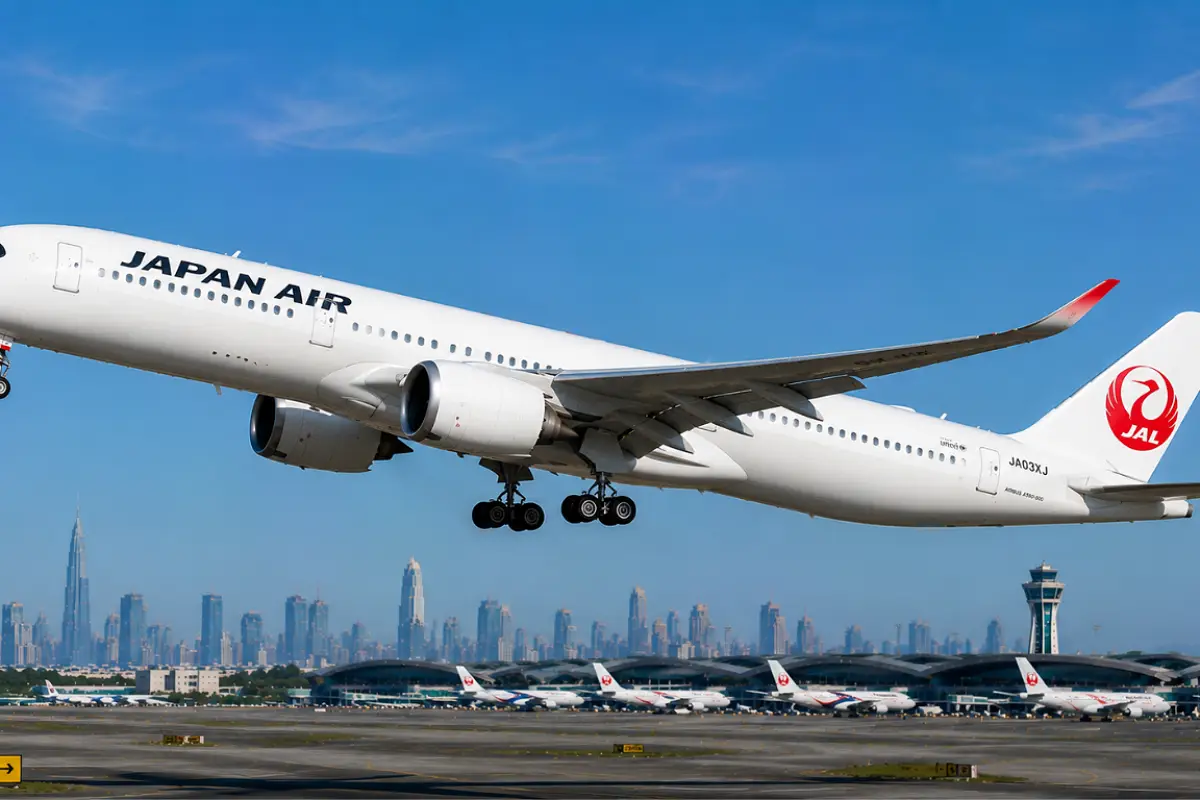
Japan Is Pulling Back China Flights, And the Reason Why Should Worry Every Airline That Flies Over Asia
Rising airspace charges. Diplomatic tensions. Rerouting costs that could rival what happened when Russia closed its skies. Japan and China's aviation relationship is fracturing quietly but consequentially, and the rest of Asia is watching very carefully.
The story of what Russia's airspace closure did to European aviation economics is still unfolding two years later. Airlines rerouting around Russian territory, adding hours to journeys, burning more fuel, losing competitive advantage on routes they had operated profitably for decades. The damage was immediate, visible, and in some cases permanent.
What is beginning to develop between Japan and China in aviation terms has the potential to follow a similar script, and in some ways a more complicated one, because the relationship between these two countries and their airspace is more economically intertwined than Europe's relationship with Russia ever was.
Japan is reportedly scaling back summer flight operations to China as rising Chinese airspace charges and worsening diplomatic tensions push the economics of China-bound services into territory that airlines can no longer ignore. The pullback is not yet dramatic. But the direction it signals, and the broader implications for Northeast Asian aviation if the trajectory continues, is serious enough that it deserves to be understood properly before it becomes a crisis rather than a warning.
What Rising Airspace Charges Actually Do to Airline Economics
Overflight charges, the fees that countries collect from airlines transiting their airspace, are one of those aviation cost line items that passengers never see and rarely think about but that can fundamentally reshape the economics of a route.
For Japan Airlines and All Nippon Airways, Chinese airspace is not just relevant for flights to Chinese destinations. It is relevant for flights to Europe. The most fuel-efficient routing for Japanese carriers flying to European cities has historically run westward over China, Central Asia, and then into European airspace, a path that Chinese airspace makes dramatically shorter and cheaper than the alternatives.
When China raises its airspace charges, every Japanese carrier operating European routes pays more. Not just on China flights. On every flight that transits Chinese territory regardless of its destination. That cost increase does not disappear into thin air. It shows up either in compressed margins or in higher fares, and on long-haul routes where Japanese carriers are already competing against Gulf carrier connecting options, compressed margins are a serious competitive problem.
The diplomatic dimension adds a layer of uncertainty that is arguably more damaging than the charge increases themselves. An airline can model and absorb a known cost increase. What it cannot model reliably is an environment where Beijing might tighten airspace access further, introduce new restrictions without warning, or use aviation access as a lever in a bilateral dispute that has nothing directly to do with the airline industry.
That uncertainty is already changing how Japanese carriers approach route planning, and that behavioural change has economic consequences that begin well before any actual airspace closure happens.
The China-Japan Diplomatic Context Cannot Be Separated From the Aviation Story
Understanding what is happening in Northeast Asian aviation right now requires understanding the diplomatic environment in which it is happening.
Japan and China's relationship in 2026 carries the weight of historical grievances, contemporary territorial disputes, trade friction, and the broader pressure of a regional order that is being actively contested. The specific flashpoints shift over time but the underlying tension has been a consistent feature of the relationship for years.
Aviation has historically been treated as a domain insulated from geopolitical friction, a practical necessity of connectivity that both sides maintained even when other dimensions of the relationship deteriorated. That insulation is no longer holding as reliably as it once did.
Using airspace charges as an economic pressure mechanism is a more subtle and more legally defensible tool than an outright airspace closure. It does not create the dramatic headlines of a Russian-style shutdown. It simply makes the economics of flying gradually worse until airlines make the routing and frequency decisions that produce the desired result without Beijing having to explicitly demand them.
If that is what is happening, and the pattern of rising charges coinciding with diplomatic deterioration suggests it may be — it represents a significant evolution in how China is willing to use its geographic position as an economic instrument in its regional relationships.
What Happens to JAL and ANA's Europe Routes If This Gets Worse
The scenario that analysts are most concerned about is not the current level of disruption, manageable, inconvenient, financially meaningful but not catastrophic. It is what happens if Beijing tightens airspace access further and Japanese carriers are forced to reroute Europe-bound flights around Chinese territory entirely.
The alternative routings are significantly worse on almost every metric that matters for airline economics. Flying north over the polar route adds distance and creates operational constraints around extended twin-engine operations that limit scheduling flexibility. Flying south through Southeast Asian and South Asian corridors adds even more distance and potentially more overflight costs depending on which airspace is transited.
Either alternative means more fuel burn, longer flight times, higher operating costs, and reduced competitiveness against Gulf carriers whose hub-and-spoke model through Dubai and Doha is largely insulated from Northeast Asian airspace politics.
JAL and ANA have built their long-haul network economics on the assumption that Chinese airspace access remains available and reasonably priced. A scenario where that assumption breaks down does not just affect their China routes — it affects the viability of their entire European network in ways that could force genuine strategic decisions about which routes to maintain, which to suspend, and how to compete with carriers whose routing costs are not exposed to the same geopolitical risk.
The Tourism and Trade Flows Are Already Feeling It
The immediate visible consequence of Japan's reduced China flight operations is straightforward, less seat capacity between two of Asia's largest economies means fewer passengers moving between them in both directions.
Japan's tourism recovery has been one of the most dramatic in global travel, with inbound visitor numbers reaching records driven significantly by Asian regional demand. Chinese tourists represent one of the largest potential sources of that inbound demand, and the aviation connectivity between the two countries is the infrastructure that makes that flow possible.
Reduce the flights, you reduce the seats. Reduce the seats relative to demand, you increase the fares. Increase the fares and you reduce the number of travellers who make the trip, particularly the price-sensitive leisure travellers and young independent tourists who represent the fastest-growing segment of Chinese outbound travel.
The businesses on both sides of that tourism relationship, Japanese hotels, restaurants, and retailers who benefit from Chinese visitor spending, and Chinese travel companies whose packages depend on affordable Japan connectivity — are collateral damage in a dispute being conducted at the airspace charge and diplomatic tension level.
Asia's Airline Sector Is Entering a New Era Whether It Is Ready or Not
The observation that Asia's airline sector may be entering an era where geopolitics directly shapes airline profitability and route strategy is not a prediction. It is a description of something that is already happening.
Chinese airspace charges affecting Japanese carriers. Russian airspace closure affecting Central Asian connectivity. Middle Eastern airspace tension affecting Gulf carrier operations. The assumption that aviation exists in a protected, commercially-governed space insulated from the political relationships between countries has been progressively dismantled over the last three years.
What is emerging instead is an environment where route planning requires geopolitical risk assessment as a standard input alongside the fuel price forecasts and demand models that airlines have always used. Where bilateral aviation relationships are subject to the same pressures and reversals as broader diplomatic relationships. And where the carriers best positioned to survive this environment are the ones whose network geography is least dependent on any single country's airspace cooperation.
That is a genuinely new operating environment for an industry that spent the previous three decades treating borderless connectivity as a permanent condition rather than a political choice made and remade by governments every year.
Japan pulling back China flights this summer is a small but legible data point in a much larger shift. The airlines paying attention are already adjusting. The ones that are not will find out the hard way that in 2026, airspace is not just geography, it is leverage.