ST Engineering Opens $170 Million Singapore MRO Facility
ST Engineering opened a S$170 million Singapore MRO facility using drones, AI inspection and autonomous robots, with a projected 40% capacity increase tied to a future closure.
 Jishan Khan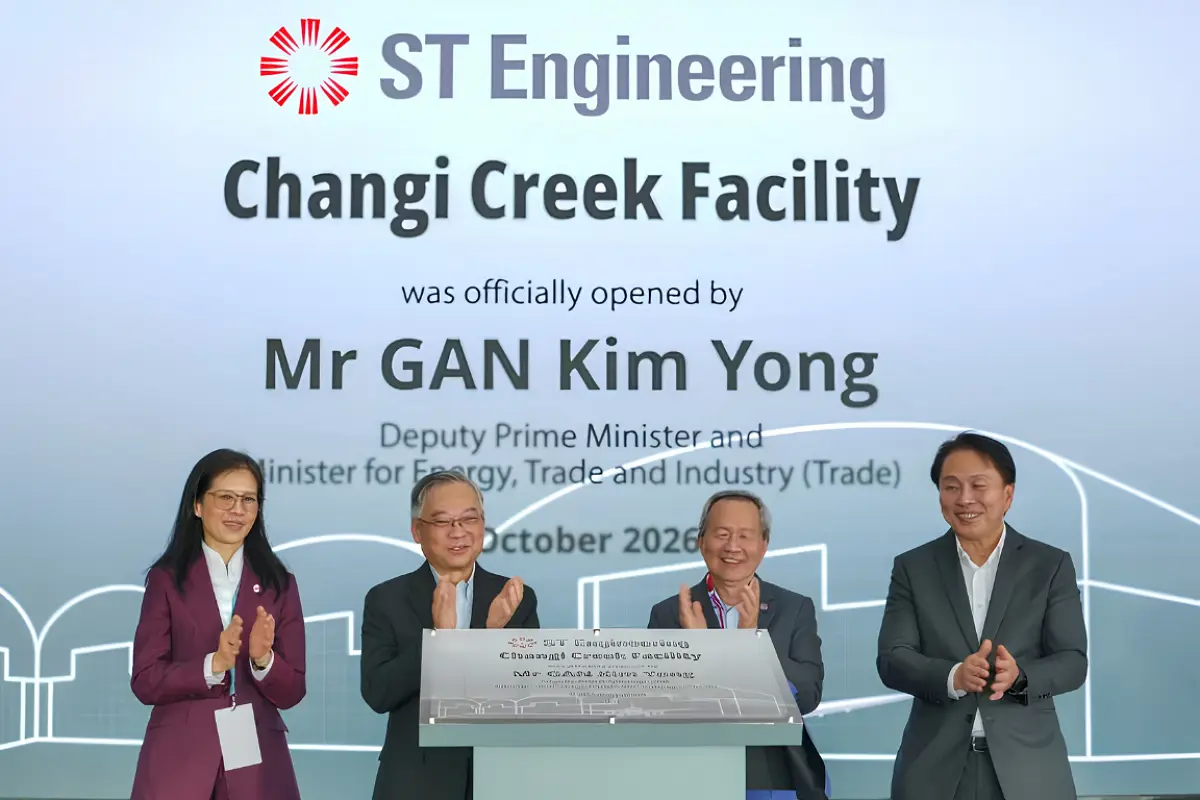
ST Engineering Built Its Newest Singapore Hangar as a Robotics Testbed, and the 40% Capacity Gain Comes With a Condition
ST Engineering formally opened its fourth airframe MRO facility in Singapore on October 9, 2026, a S$170 million (about US$132 million) site at Changi Creek with four widebody bays on an 84,000 square metre plot. The company says it will lift its widebody airframe maintenance capacity in Singapore by 40%, or about 100 additional aircraft a year, while deploying drones, AI inspection and autonomous robots. Aviation Week’s headline captures the other purpose of the site: a testbed for future technologies.
What Was Built, and How Much of It Is Hangar
Only about a quarter of the site is hangar floor: 19,914 square metres of the 84,000 total, according to Aviation Week. The four widebody bays include a hybrid painting and maintenance bay and can support line and heavy airframe maintenance on the A330, A350, 767, 777 and 787. It is ST Engineering’s second-largest facility in Singapore, and it has been operating since May ahead of the official opening.
The 40% Figure Has a Condition Attached
Aviation Week reports that the projected 40% increase, roughly 100 aircraft, is contingent on the eventual closure of ST Engineering’s Paya Lebar facility, which is scheduled for the 2030s. That makes the full uplift a medium-term outcome rather than an immediate one. Kevin Chow, President of Commercial Aerospace, told the publication that airframe capacity is dynamic and that ST Engineering could add capacity at its overseas facilities as needed, using its global network to respond to demand.
Where Technology Does Real Work
The technology has specific jobs. Drones inspect the upper surfaces of aircraft, reducing the need for technicians to work on scaffolding or lifts. Autonomous cameras check engine nacelles, landing gear and auxiliary power units, and an autonomous vehicle called AI-Fast carries components of up to 500 kg around the hangar. One outlet reports that a robotic arm with an AI camera cuts landing-gear inspection time by up to 83%, though that figure comes from a single aggregator and should be treated as a company claim until independently confirmed. Singapore’s minister also pointed to ST Engineering’s work with A*STAR and the National Robotics Programme on “physical AI” for complex, unstructured MRO tasks.
The logic is simple. Inspections done at height are slow and carry safety risk, and every hour an aircraft sits in a bay is revenue its operator does not earn.
The Productivity Target and the Workforce Question
ST Engineering aims for a long-term 25% productivity gain at the facility, which it expects to employ more than 500 people once fully ramped, including licensed aircraft engineers, technicians and planning and production control specialists. It plans training in digital tools and AI-enabled processes so staff can work alongside the technology. That framing matters because the industry’s binding constraint is people, not floor space. Aviation Week recently quoted Sanad’s strategy head saying that finding qualified technicians is becoming harder in the Middle East, and this feed has covered the same pressure in Greece’s push to build MRO capacity around Aegean and in Air India’s maintenance plans. A 25% productivity gain is, in effect, a way to add capacity without finding 25% more engineers.
The Demand Behind It
MRO Business Today notes that airlines are contending with growing fleets, aircraft staying in service longer and rising demand for maintenance slots. That is the same pressure behind the Pratt & Whitney engine-related groundings and delivery delays this feed has tracked all year: when new aircraft arrive late, old ones fly longer and need more heavy checks.
ST Engineering is also expanding outside Singapore. Its release confirms a second hangar at Ezhou, China, expected to become operational in the second half of 2027, and two new hangars in Pensacola, Florida, entering service progressively from early 2027. This follows its sale of the STARCO joint venture stake to China Eastern, which this feed covered, and suggests a deliberate shift toward facilities it controls outright.
What to Watch
Three tests will show how much of this is real. The first is whether the 25% productivity target is demonstrated and reported rather than only projected. The second is the Paya Lebar closure timeline, since the full 40% depends on it. The third is customer demand: whether airlines book the new bays quickly enough to justify a facility designed as much to try out new methods as to add hangar space.