Solairus Aviation Expands with Clay Lacy Aviation Acquisition
Solairus Aviation will acquire Clay Lacy’s aircraft management and charter divisions, creating a 500-plus aircraft managed fleet.
 Jishan Khan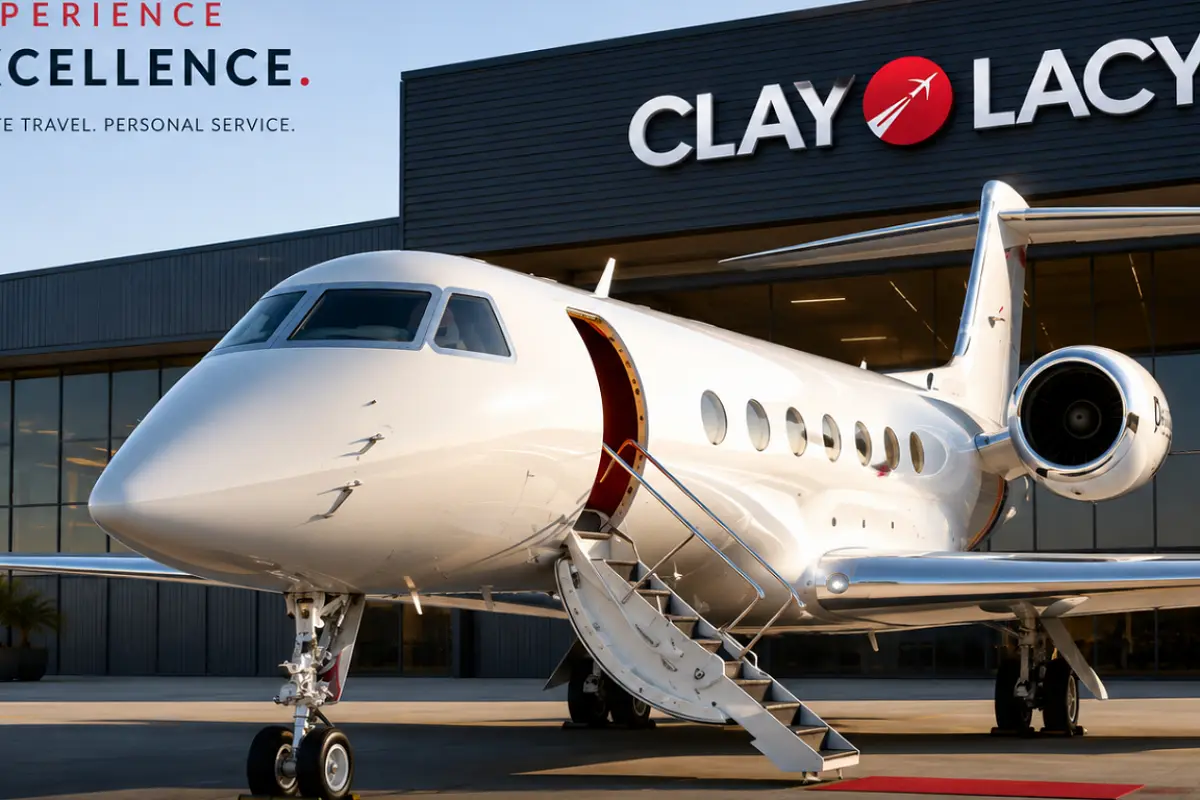
Solairus Just Bought the West Coast's Most Storied Private Aviation Brand, and Its CEO Said Scale Is Not the Point
Solairus Aviation announced on August 7, 2026 that it has agreed to acquire the aircraft management and charter divisions of Clay Lacy Aviation, creating a combined managed fleet of more than 500 aircraft. Solairus currently manages approximately 360 aircraft from more than 100 base locations across North America, while Clay Lacy manages approximately 140 aircraft. The deal closes at the end of September, subject to regulatory approval. Clay Lacy's FBO, maintenance and aviation real estate businesses are not part of the sale and remain under current ownership.
The most interesting thing about this deal is what Solairus's CEO said immediately after announcing it.
This Has Little to Do With Size
"This has little to do with size, Solairus already manages the largest fleet of managed aircraft in the United States," said Dan Drohan, founder and CEO of Solairus. "What matters is that this brings together two like-minded companies built on a passion for personalized service and the most forward-thinking support systems in the industry."
That statement is worth taking seriously rather than reading as standard M&A boilerplate. Solairus was already the largest pure-play aircraft management company in the US before this deal. Adding Clay Lacy's 140 jets does not fix a competitive problem, it deepens an existing advantage. What Clay Lacy actually brings is something harder to replicate than fleet count: a West Coast presence built over 58 years, starting when Clay Lacy himself began flying celebrities and executives out of Van Nuys Airport in 1968, and a managed fleet of 160 jets valued at approximately USD 3.5 billion that skews heavily toward large-cabin and ultra-long-range aircraft.
What the Charter Side Creates
The combined charter operation will include approximately 200 aircraft available for charter, with more than 150 of them large-cabin and ultra-long-haul jets from Bombardier, Gulfstream and Dassault, including Global 7500s and Gulfstream 650s capable of nonstop flights from the US West Coast to Europe or Southeast Asia. That concentration of large-cabin charter availability in a single managed programme is commercially significant. A client who needs a Global 7500 from Los Angeles to London on short notice currently navigates multiple brokers and management companies to find available aircraft. A Solairus with 200 charter-available jets, 150 of them large-cabin, becomes a one-call solution for the most demanding charter requirements in North America.
The combined entity will become the sixth-largest US operator by charter hours, a meaningful jump for Solairus, which ranked seventh before the deal. The charter hours metric is how brokers and frequent flyers assess an operator's real-world availability. Moving from seventh to sixth sounds incremental; the underlying shift in available large-cabin inventory is not.
Why Brian Kirkdoffer Sold Half His Business
Kirkdoffer began working for Clay Lacy as a Learjet pilot in 1990, became company president in 2003, and acquired the business from its founder in 2012. He built the managed fleet to 160 aircraft over fourteen years. Selling the management and charter divisions while retaining the FBOs, maintenance business and real estate is not a retirement exit — it is a deliberate strategic pivot. The infrastructure side of aviation, fixed-base operations, hangars, maintenance facilities, aviation real estate, generates different economics from aircraft management. It is capital-intensive, location-locked and produces stable long-term returns without the crew management, regulatory complexity and client relationship intensity of running a managed fleet at scale.
Kirkdoffer is keeping the part of the business that compounds in value as aviation infrastructure grows and divesting the part that required him to compete against an operator, Solairus, that was already larger than him and growing faster. At the same time, the deal protects Clay Lacy's aircraft management clients, who transition to Solairus without disruption. The outcome serves everyone, which is usually how well-structured deals work.
The Number Nobody Had Crossed Before
The combined company will be the first pure-play aircraft management operator with more than 500 aircraft. NetJets has more than 650 fractional aircraft plus over 200 managed by Executive Jet Management, but that is a fractional ownership programme, not pure management. The distinction matters, a management company operates aircraft on behalf of owners who retain title; a fractional operator sells shares. Different business model, different client relationship, different regulatory structure. Solairus at 500-plus is a different category of entity from what existed in US business aviation management before August 7.
The deal closes in September. Until then, both companies operate independently. After that, private aviation in the US has a platform at a scale it has never had before.