Abu Dhabi's L'imad Holding Explores Stake in Atlas Air
Abu Dhabi investment platform L'imad Holding is reportedly exploring a stake in Atlas Air, as Gulf investors look to develop trade and logistics alternatives to the Strait of Hormuz.
 Jishan Khan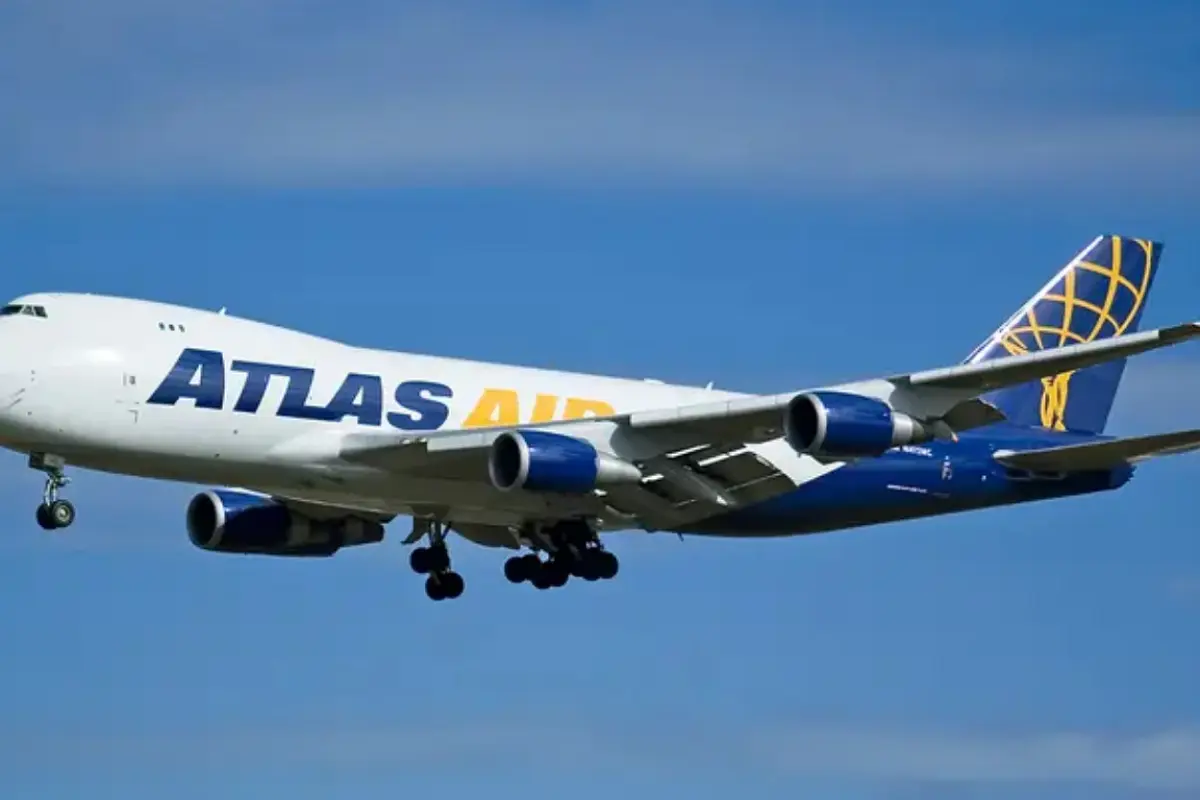
Abu Dhabi's Interest in Atlas Air Isn't About Air Cargo at All, It's About Never Needing the Strait of Hormuz Again
Bloomberg reported on September 16, 2026 that Abu Dhabi sovereign investment platform L'imad Holding is among the parties circling a potential stake in Atlas Air Worldwide, the Apollo Global Management-owned cargo carrier, in a deal that could value the business at $10 billion or more, nearly double the roughly $5.2 billion Apollo and its partners paid to take Atlas private in 2023. Every outlet covering the story converges on the same specific motivation, stated by Bloomberg directly: L'imad is pursuing this "amid the emirate's efforts to develop alternatives to the Strait of Hormuz." That single phrase reframes what looks like a routine private equity valuation story into something this feed has been tracking as one of 2026's defining aviation and geopolitical themes since February.
Why an Air Cargo Deal Is Really a Response to a War That Closed a Shipping Lane
This feed has documented extensively how the February 2026 Iran conflict and the subsequent closure of the Strait of Hormuz, the narrow waterway through which roughly a fifth of the world's oil trade normally passes, triggered a cascade of consequences across global aviation: the fuel price spike that forced Canada's C$150 million airline loan facility, the capacity cuts that hit AirAsia, Cebu Pacific and dozens of other carriers, and the airspace disruptions that displaced traffic toward Turkish Airlines and Qatar Airways. What has received far less attention is the parallel, longer-horizon response now emerging from Gulf sovereign capital: a deliberate strategic pivot toward building trade and logistics infrastructure that does not depend on a waterway a regional conflict can shut down overnight.
The Loadstar's own reporting situates the Atlas Air interest directly alongside a cluster of related moves, AD Ports' pursuit of Noatum Logistics, DP World's agreement with the Fujairah Ports Authority specifically to develop landbridge infrastructure that bypasses the Strait of Hormuz entirely, and a broader pattern of Gulf logistics investment explicitly framed around reducing dependency on a single maritime chokepoint. Air cargo is a structurally different, and in some ways more resilient, category of trade infrastructure than shipping through a contested strait, an air freighter fleet is not tied to any single geographic passage the way maritime cargo is. Acquiring a stake in one of the world's largest cargo airlines is, in that context, less a bet on air freight economics specifically and more a hedge against exactly the kind of chokepoint vulnerability the Strait of Hormuz closure just demonstrated in brutal, real-time fashion.
Why This Particular Investor Vehicle Matters as Much as the Target
L'imad Holding is not a long-established sovereign fund with decades of institutional history,, it is a genuinely new entity, formed in early 2026 when Abu Dhabi rolled its $263 billion ADQ sovereign wealth fund into a restructured investment vehicle, with Mohamed Hassan Alsuwaidi, simultaneously the UAE's investment minister, installed as executive chairman after stepping down from leading Lunate, the roughly $115 billion UAE alternative asset manager. That leadership pedigree matters: Alsuwaidi was closely involved in building Lunate into a firm that has already taken stakes in Brevan Howard, OpenAI and CoreWeave, alongside investment platforms with Brookfield and Blue Owl a track record of fast, ambitious dealmaking across genuinely diverse asset classes, now being applied to L'imad's own mandate.
The Etihad Aviation Group connection cited in the original reporting is also structurally significant rather than incidental. L'imad's portfolio already includes Etihad, meaning any Atlas Air stake would sit inside an investment platform that already has deep, direct operational expertise in commercial aviation, not simply financial capital being deployed opportunistically into an unfamiliar sector. That existing aviation fluency could plausibly translate into more than passive financial ownership if a deal ultimately proceeds, the kind of strategic, operationally-informed investor relationship this feed has tracked with Singapore Airlines' stake in Air India, rather than a purely arm's-length financial position.
Why Apollo Would Be Thrilled by a Number That Sounds Almost Too High
The valuation gap here is the detail every outlet has flagged, and for good reason. Apollo led the consortium that took Atlas Air private in 2023 at approximately $5.2 billion. The Loadstar's own analysis frames L'imad's reported interest explicitly as something that "could give Apollo a valuable price marker" separate reporting has previously suggested Apollo had explored a sale at a valuation exceeding $12 billion including debt, a figure that would represent the kind of return private equity sponsors dream about but rarely actually achieve within a three-year holding period.
That framing matters for understanding whose interests this reported interest actually serves in the near term. Even preliminary, unconfirmed deliberations reported by credible outlets function as a genuine market signal, establishing a public reference point that other potential bidders, lenders and Apollo's own eventual exit negotiations will all measure against, regardless of whether L'imad ultimately submits a formal bid, let alone completes one. Apollo gains real value from this reporting existing publicly, independent of whether the underlying transaction ever closes.
What Atlas Air Actually Is, and Why It Fits This Specific Strategic Logic
Atlas Air is genuinely one of the largest cargo aircraft operators in the world, running an ACMI (Aircraft, Crew, Maintenance and Insurance) business model this feed has covered extensively in other contexts, European Cargo's collapsed A340 freighter operation, Oman Air's deliberate choice to rebuild freighter capacity through partnerships rather than ownership. Atlas's subsidiaries include Polar Air Cargo and a joint venture with Bain Capital called Titan Aircraft Investments, alongside a 49% stake in Air Atlanta Icelandic, a genuinely global freighter network built specifically around flexible, contracted capacity for e-commerce giants, freight forwarders and other airlines needing widebody cargo capacity without owning the aircraft themselves.
That ACMI structure is precisely the kind of flexible, non-geography-locked logistics infrastructure that fits the Strait-of-Hormuz-alternative thesis cleanly. A Gulf sovereign investor building genuine independence from a single maritime chokepoint needs air freight capacity that can be redeployed rapidly across different trade corridors as geopolitical conditions shift, exactly the operational flexibility an ACMI-model global freighter operator like Atlas Air is built to provide, in a way that fixed port or shipping infrastructure fundamentally cannot replicate.
Why "At an Early Stage" Is Not the Same as "Unlikely to Happen"
Every credible source covering this story is careful to note the deliberations remain preliminary, with people familiar with the matter speaking on condition of anonymity because the discussions are confidential and unresolved. That caution is appropriate and should be taken seriously, plenty of reported sovereign wealth interest in specific acquisition targets never converts into a completed transaction, and this feed's own reporting on Riyadh Air's reported SpiceJet interest earlier this year demonstrated exactly how quickly unconfirmed M&A speculation can circulate without ever producing a signed deal.
But the broader strategic pattern surrounding this specific report is harder to dismiss as isolated speculation. AD Ports' Noatum Logistics pursuit, DP World's Fujairah landbridge agreement, and now L'imad's reported Atlas Air interest represent at least three distinct, separately reported Gulf logistics moves within a matter of weeks, all explicitly tied by the same outlets to the identical strategic driver, reducing dependency on the Strait of Hormuz following the conflict this feed has covered reshaping global aviation and energy markets since February. Whether this specific Atlas Air deal closes or not, the underlying capital allocation logic driving Abu Dhabi's sovereign wealth apparatus toward diversified, geography-independent logistics and transport infrastructure appears to be a genuine, sustained strategic priority, not a single opportunistic bet that happened to attach itself to one American cargo airline's ownership story.