India Hotel Brand Proliferation Sparks Identity Debate
India hotel brand proliferation raises questions about whether guests can still distinguish between increasingly similar hospitality brands.
 nishathapa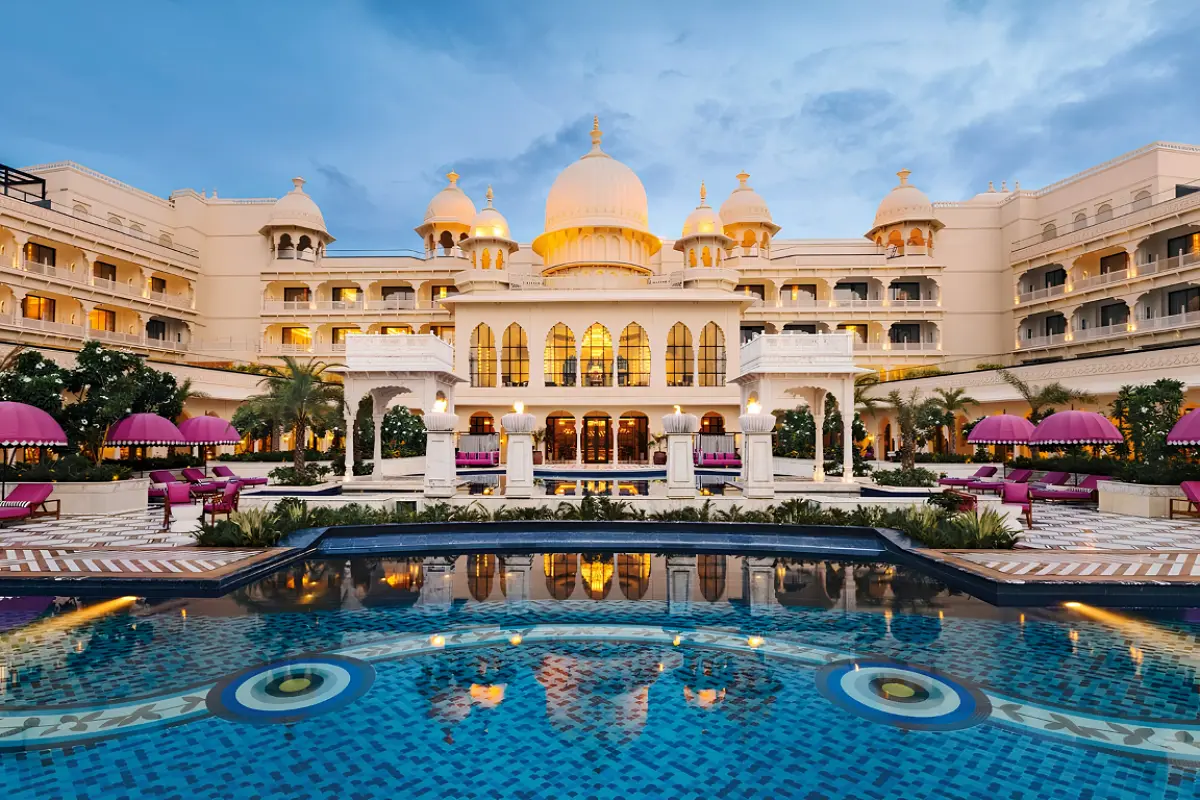
NEW DELHI, May 31, 2026: India's hotel industry is in the middle of one of the most productive development cycles in its history, with branded room inventory expanding rapidly across metros, mini-metros and dozens of Tier II and Tier III cities. But alongside that growth, a different kind of question is starting to get louder inside boardrooms, owner meetings and consultant briefings: is the industry creating more brands than it can meaningfully differentiate, and more importantly, more brands than guests can understand?
The question is not rhetorical. It is rooted in a very specific and observable phenomenon, the gap between how the industry talks about brand architecture and how a traveller opening a hotel booking app actually makes a decision. One is structured, deliberate and coherent. The other is driven by price, location, reviews and name recognition in roughly that order. Brand positioning documents rarely survive contact with the search results page.
India's Hotel Boom Is Creating More Brands as Well as More Hotels
The growth drivers behind India's hotel expansion are well-established and genuinely broad-based: new airports and aviation routes, expressway and highway corridor development, religious and spiritual tourism, destination weddings, MICE and convention demand, manufacturing and industrial expansion, Tier II and Tier III city growth and rising domestic tourism spending. For every operator, each new market represents a fresh opportunity, and increasingly, each fresh opportunity appears to require a fresh brand.
What began as rational segmentation has, in the view of several industry observers, evolved into something approaching proliferation. Every major global hotel company operating in India now runs a portfolio of brands spanning multiple price tiers and guest profiles. Marriott International has more than sixteen active brands in India, from Ritz-Carlton and St. Regis at the luxury end through Sheraton, Westin, Courtyard and Fairfield into the select-service and extended-stay segments. Accor runs through Raffles, Fairmont, Sofitel, Pullman, Grand Mercure, Novotel, Mercure and ibis, plus the Morgans Originals independent hotel platform. Hilton operates through Conrad, Hilton Hotels and Resorts, DoubleTree, Hilton Garden Inn, Hampton and Spark. Hyatt covers Park Hyatt, Grand Hyatt, Andaz, Alila, Hyatt Regency, Hyatt Centric, Hyatt Place and JdV by Hyatt. Radisson Hotel Group deploys ten brands across India. IHG spans eight-plus brands from Six Senses and InterContinental down to Holiday Inn Express and Garner.
India's domestic champions have followed the same logic. IHCL now operates well beyond the iconic Taj brand through Claridges Collection, SeleQtions, Vivanta, Gateway, Ginger, Tree of Life, Brij, Atmantan, Taj Safaris and amã Stays and Trails, a portfolio of ten-plus brands. ITC Hotels covers ITC Hotels, Mementos, Epiq Collection, Welcomhotel, Storii, Fortune Hotels and WelcomHeritage across seven identities. Lemon Tree Hotels runs Aurika, Lemon Tree Premier, Lemon Tree Hotels, Keys Prima, Keys Select, Red Fox and Keys Lite, seven formats. Sarovar Hotels covers four brands. Even mid-market and economy operators have expanded their brand architectures to create conversion and management pathways across different price points.
Two Companies That Made Different Choices, and What That Tells You
Against this backdrop, two Indian hospitality groups stand out for the opposite of proliferation. The Oberoi Group maintains a deliberately focused architecture across just three identities, Oberoi Hotels and Resorts, Trident Hotels and Maiden's Hotel, choosing depth of brand meaning over breadth of coverage. The Leela has taken the most concentrated position of all, strengthening a single luxury master brand across palaces, city hotels and destination resorts rather than creating sub-brands for different guest profiles.
Neither approach is commercially inferior to the multi-brand model. The Leela's strategy builds a guest's loyalty to a single, unambiguous identity, you know exactly what you are booking when you book The Leela, regardless of the city. That clarity has commercial value in a world where brand recognition at the booking stage is the first hurdle every hotel has to clear. A portfolio of twelve brands, each with its own positioning narrative, requires a guest to understand twelve narratives before recognising that any single one of them might be the right choice for their trip.
The Consumer Confusion Problem Is the Industry's Least-Discussed Risk
The hospitality industry's internal fluency in brand architecture is not the problem. Development officers understand the difference between Vivanta and SeleQtions. Consultants from JLL, Cushman and Wakefield, HVS, Hotelivate, Horwath HTL and CBRE can explain why a particular property fits one brand positioning better than another. Owners navigating a multiple-brand pitch from the same operator understand what they are being offered.
The guest, however, has not necessarily become a hospitality expert. Most travellers understand the broad difference between luxury and economy. Many can distinguish Taj from Ginger. Far fewer can reliably differentiate between Marriott and Sheraton, Grand Hyatt and Hyatt Regency, Radisson and Radisson Blu, Novotel and Mercure, Vivanta and SeleQtions, or Lemon Tree Premier and Keys Prima.
Industry voices are beginning to say this plainly.
"The industry understands brand architecture extremely well. The bigger question is whether consumers see the distinctions as clearly as operators do."
— Senior hospitality consultant
"Brand expansion creates growth opportunities, but long-term value comes from relevance, recognition and consistency rather than simply adding another flag."
— Hospitality investor
Both observations point toward the same gap: the industry's internal clarity about brand architecture does not automatically translate into guest-level comprehension at the booking stage. And at the booking stage, what a guest does not immediately recognise, they tend to evaluate through price and reviews rather than brand identity, which means the brand investment loses much of its commercial purpose the moment the guest turns to a comparison platform.
Owners Gain Flexibility, and Absorb New Complexity
Brand proliferation has created real and tangible benefits for hotel owners. More brands mean more conversion opportunities, more market-specific positioning options, more negotiating leverage with operators and more flexibility to find the right flag for a specific asset in a specific market. A hotel in Tier III India that would not attract a luxury flag can attract a mid-scale or economy brand from the same family, giving the owner access to distribution, reservation systems and loyalty programmes that an unbranded property cannot access independently.
But the proliferation has also made the owner's evaluation process considerably more complex. A new hotel project in 2026 may require the owner to evaluate multiple brands from the same operator before a decision can be made, and to understand the positioning distinctions between those brands in enough detail to judge whether one is meaningfully better positioned for their specific asset than another. That is a sophisticated exercise in any market. In rapidly evolving Tier II and Tier III markets where demand patterns are still taking shape, it is genuinely difficult.
What Mature Markets Suggest About Where India Is Heading
Several mature hospitality markets offer useful reference points. The United States has, by most assessments, already reached the point of peak brand proliferation, a market so crowded with branded flags that travellers increasingly rely on loyalty programme tier status and specific property reviews rather than brand identity to make booking decisions. Japan continues to prioritise consistency and service delivery over brand architecture complexity. Singapore emphasises clarity and reliability. Thailand focuses on destination appeal and guest experience rather than brand layering. China is increasingly aligning brands around clearly differentiated consumer needs rather than creating new identities for conversion purposes.
India's challenge, in this context, is not brand creation. India is demonstrably good at brand creation. India's challenge is brand differentiation, building enough distance between adjacent brands in the same portfolio that a guest can actually feel and articulate the difference, not just read about it in a positioning document.
Creating a new hotel brand name and logo is a straightforward exercise. Creating a guest experience that is genuinely, consistently and memorably different from the brand below and above it in the same portfolio's pricing ladder is considerably harder, and it is where the value of the brand investment either compounds or evaporates over time.
India Needs More Hotels. It Also Needs the Brands It Already Has to Mean Something
The conclusion is not that India should stop creating new brands. The pipeline of Tier II and Tier III markets emerging as viable hotel investment destinations is large enough to justify continued brand expansion, and the conversion opportunity in India's existing unbranded hotel stock is enormous. More brands will continue to be created, and most of them will find properties to manage.
The more useful question for the industry is whether the next wave of brand creation will be accompanied by the investment in differentiation, in product, service, design, culture and guest experience, that makes a brand mean something at the booking stage. Because in a market where every company has a dozen brands and every brand claims to be unique, uniqueness itself eventually becomes harder to recognise. And in hospitality, as one industry voice put it plainly, confusion rarely creates loyalty.