IRCTC stock news: travel stocks fall after Modi curbs foreign travel
Hotel and travel stocks including Indian Hotels, IRCTC and Thomas Cook fell up to 5% after PM Modi urged citizens to avoid overseas travel and conserve foreign exchange.
 nishathapa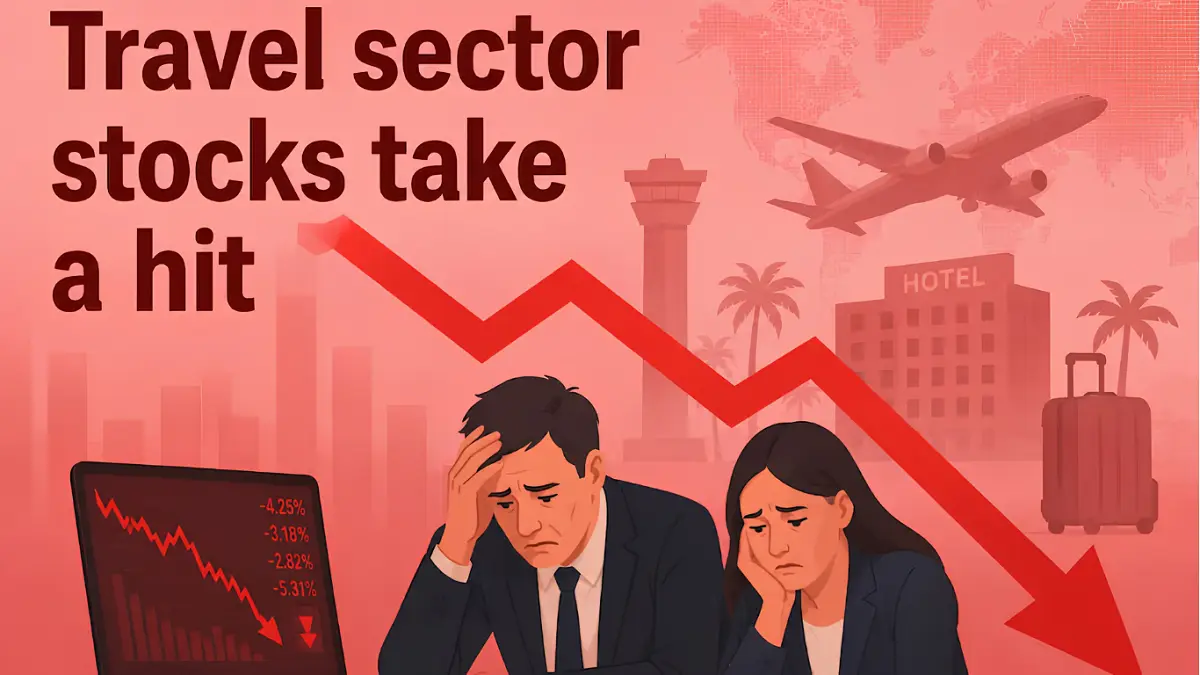
New Delhi, May 12, 2026: Talk in dealing rooms turned cautious after Prime Minister Narendra Modi flagged overseas spending, hotel and travel stocks didn’t wait to react.
Shares of major hospitality and travel companies in India declined by up to 5% in Monday’s trading session after the Prime Minister urged citizens to avoid non-essential foreign travel, overseas vacations and destination weddings, triggering a sharp market reaction across the sector.
The advisory, aimed at conserving foreign exchange amid rising global uncertainties, led to immediate selling pressure in hotel operators, online travel firms, and tourism-linked businesses.
Investors clearly read it as a demand signal shift.
Hospitality and travel stocks record broad-based decline
Shares of Indian Hotels Company Limited (IHCL), which operates the Taj brand portfolio, fell over 2% to ₹656.25 from ₹673.30. Market cap slipped to ₹93,946 crore.
Government-run Indian Railway Catering and Tourism Corporation (IRCTC) also dropped around 2% to ₹552.05. Valuation fell to ₹44,560 crore.
Among private players, Easy Trip Planners declined 3% to ₹7.66. Thomas Cook India slipped up to 5%, trading at ₹96.79—top loser in the pack.
Hospitality chain Lemon Tree Hotels also dropped about 3% to ₹117.50 from ₹120.45. Market cap stood at ₹9,336 crore.
It wasn’t selective. It was broad.
Policy advisory linked to foreign exchange conservation
The trigger came from May 10 remarks, where Modi pushed for reduced overseas travel and discretionary foreign spending.
The backdrop: falling forex reserves, rising crude prices, and geopolitical tension in West Asia.
And a familiar tone, cut non-essential spending, just like during COVID.
Markets took it seriously. Especially for outbound-heavy businesses.
Outbound travel-linked firms face immediate pressure
Companies like Thomas Cook India and Easy Trip Planners, with clear exposure to outbound tourism, took the hardest hit.
Less foreign travel means fewer bookings. Fewer forex transactions. Lower service revenues.
Simple math.
Even IRCTC, largely domestic-focused, wasn’t spared. That shows this was sentiment-led, not fundamentals-driven.
And hotel companies with mixed portfolios saw mild but visible cuts.
Domestic hospitality demand remains structurally strong
But here’s the flip side.
Less outbound travel could mean more domestic spend. Staycations. Local holidays. Destination weddings within India.
Hotels may actually gain from that shift.
Domestic demand is already strong, driven by rising incomes, better connectivity, and a clear shift toward experience-led travel.
Weddings, religious travel, business trips, they’re all holding steady.
That cushion matters.
Market reaction driven by sentiment rather than fundamentals
Most analysts are calling this what it is, a knee-jerk reaction.
Not a structural crack.
Outbound players may feel short-term pressure. But domestic-focused hotel companies could see upside if travel budgets stay within India.
Now the real question is redistribution, not decline.
Where will the demand go?
Because the appetite to travel hasn’t gone anywhere.