Low Occupancy and Decline in Foreign Guests Put Pressure on Dhaka’s Luxury Hotels
Luxury hotels in Dhaka are facing financial pressure as declining foreign guest arrivals and low occupancy rates impact revenues across Bangladesh’s hospitality sector.
 Pratyaksha Singh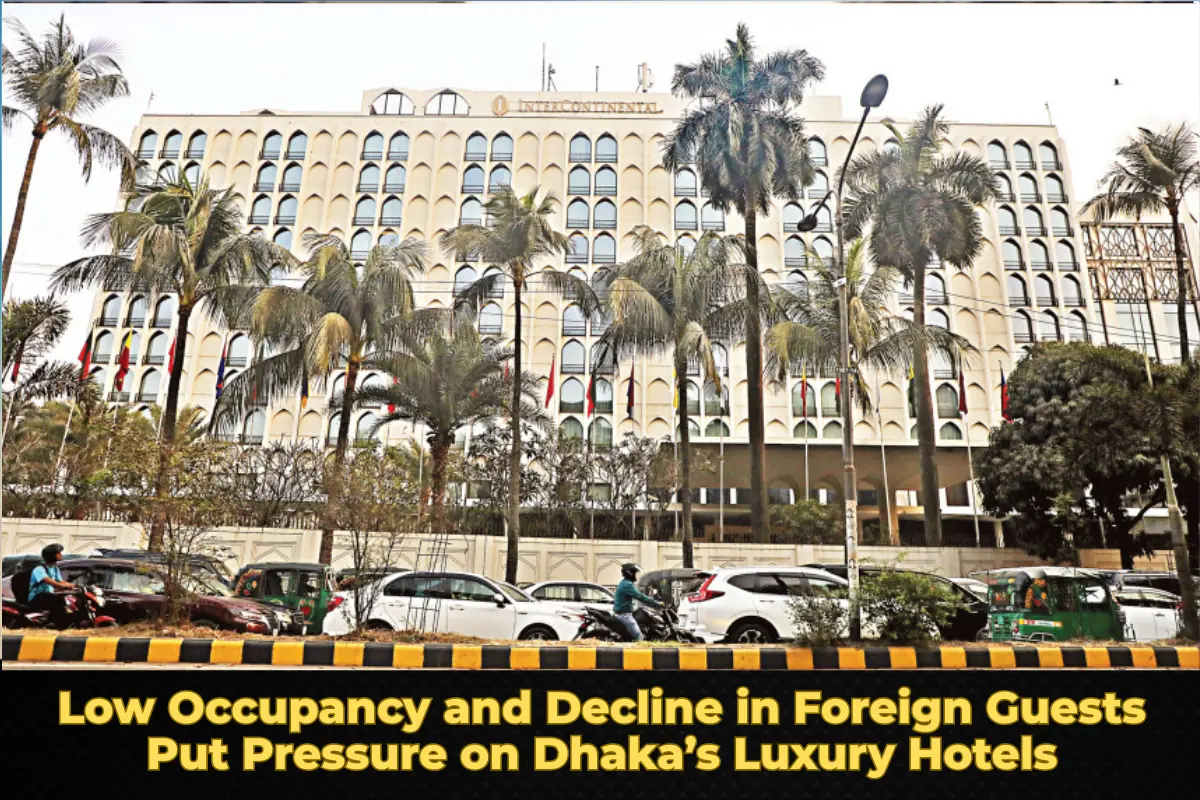
Low Occupancy and Decline in Foreign Guests Put Pressure on Dhaka’s Luxury Hotels
Luxury hotels in Dhaka are facing increasing operational pressure as declining foreign guest arrivals and reduced occupancy levels strain revenues across Bangladesh’s hospitality sector. Hotel operators in the capital say the slowdown in international visitors combined with changing travel patterns has significantly affected performance at high-end properties that traditionally rely on foreign corporate travelers and diplomats.
The situation has become particularly challenging for Dhaka’s luxury hospitality segment, where many hotels depend heavily on international guests linked to multinational companies, development agencies, and diplomatic missions. With fewer foreign visitors staying in the city, hotel occupancy rates have declined, forcing operators to adjust pricing strategies and explore alternative revenue sources.
Declining International Guest Arrivals
Hotel managers in Dhaka report a noticeable drop in foreign guests over recent months, a trend that has directly affected occupancy levels at upscale properties. Many international business travelers who previously stayed for extended periods are now visiting for shorter trips or choosing alternative destinations in the region.
Industry observers say that global economic uncertainties, changes in corporate travel policies, and evolving regional business dynamics have contributed to the reduction in international travel to Dhaka. These shifts have made it more difficult for luxury hotels to maintain consistent occupancy rates throughout the year.
Foreign guests have traditionally been an important customer segment for Dhaka’s high-end hotels, often booking premium rooms, conference facilities, and long-term stays. The decline in this segment has therefore had a disproportionate impact on the revenue of luxury properties.
Low Occupancy Rates Affect Revenue
Lower guest numbers have translated into declining occupancy levels at several upscale hotels in the capital. When occupancy rates fall below optimal levels, hotels often experience pressure on room revenue as well as reduced demand for additional services such as restaurants, event spaces, and business facilities.
Luxury hotels typically operate with high fixed costs related to staffing, maintenance, utilities, and property management. As a result, sustained periods of low occupancy can significantly affect profitability.
Industry representatives say that maintaining operational efficiency while ensuring consistent service quality remains a major challenge during periods of reduced demand.
Dependence on Corporate and Diplomatic Travelers
Dhaka’s luxury hospitality sector has historically relied heavily on corporate travelers, international development organizations, and diplomatic delegations. Many high-end hotels in the city were designed to serve the needs of these guest segments by offering conference facilities, business centers, and long-stay accommodation options.
However, changes in global travel behavior have affected this traditional demand base. Some international organizations have reduced travel budgets, while companies are increasingly adopting hybrid meeting formats that reduce the need for frequent international travel.
This shift has resulted in fewer long-term hotel stays by corporate guests, further contributing to declining occupancy levels at premium properties.
Competition Within the Hospitality Market
The hospitality market in Dhaka has also become increasingly competitive as new hotels enter the market and existing properties expand their offerings. The increase in room supply has created additional pressure on occupancy rates across the luxury segment.
When demand growth does not keep pace with new hotel openings, operators may face challenges in filling available rooms. Hotels often respond by introducing promotional offers, discounted room packages, and special corporate rates to attract guests.
While these strategies may help improve occupancy levels, they can also reduce average room rates and affect overall profitability.
Hotels Target Domestic Travelers
In response to the decline in foreign guests, many luxury hotels in Dhaka have begun targeting domestic travelers and local event markets. Promotional packages for weekend stays, family gatherings, weddings, and social events are being introduced to attract local customers.
Domestic tourism and staycations have emerged as alternative revenue streams for several hotels. Local residents are increasingly visiting luxury properties for dining experiences, celebrations, and short leisure stays.
While domestic travelers may not fully replace the spending patterns of international corporate guests, they provide an important supplementary market during periods of reduced foreign arrivals.
Event and Conference Business Slows
Another area affected by the slowdown in international travel is the meetings and conferences segment. Luxury hotels in Dhaka often host international seminars, corporate meetings, and diplomatic events, which generate significant revenue through venue bookings and hospitality services.
With fewer international delegates traveling to the city, demand for large conferences and corporate events has softened. Hotels that rely on such events to fill banquet halls and meeting spaces are experiencing reduced bookings.
The decline in this segment further contributes to revenue challenges for upscale properties that depend on diversified income streams.
Rising Operational Costs Add Pressure
At the same time that occupancy rates are falling, hotel operators are also dealing with rising operational costs. Expenses related to energy, food supplies, staffing, and maintenance have increased in recent years.
Luxury hotels often maintain large workforces and extensive facilities to deliver premium guest experiences. These operational structures make cost management particularly important when revenue declines.
Industry stakeholders say balancing cost control with service quality is essential for maintaining competitiveness in the hospitality market.
Efforts to Revive International Tourism
Tourism authorities and industry organizations in Bangladesh are working to attract more international visitors by promoting the country’s cultural heritage, natural attractions, and business opportunities. Improved tourism promotion and stronger travel connectivity could help increase foreign visitor arrivals in the future.
Expanding international flight routes and enhancing travel infrastructure may also support the recovery of the hospitality sector by making it easier for travelers to reach the country.
Industry representatives believe that stronger collaboration between tourism authorities and hospitality businesses will be necessary to rebuild international travel demand.
Opportunities in Regional Tourism
Some hospitality experts believe that Bangladesh could attract more regional travelers by strengthening tourism links with neighboring countries. Promoting cultural tourism, heritage sites, and business travel opportunities could help diversify visitor sources.
Regional tourism initiatives may encourage travelers from nearby markets to visit Dhaka for business events, cultural experiences, or short leisure trips.
Such efforts could help hotels reduce their reliance on a limited number of international travel segments.
Industry Outlook Remains Cautious
Despite the current challenges, hospitality professionals remain cautiously optimistic about the long-term prospects of Dhaka’s luxury hotel sector. The city continues to serve as Bangladesh’s economic and diplomatic center, hosting multinational companies, international organizations, and government institutions.
As economic activity expands and international engagement increases, demand for high-quality hotel accommodation is expected to recover gradually.
However, hotel operators emphasize that rebuilding occupancy levels will require sustained efforts to attract foreign travelers and strengthen the country’s tourism infrastructure.
Until international travel demand improves, many luxury hotels in Dhaka are expected to continue focusing on domestic markets and diversified revenue streams to sustain operations in a challenging hospitality environment.