Villa Argentina Dubrovnik Renovation Reopens a Historic Icon
Villa Argentina Dubrovnik renovation restores a historic hotel to 109 rooms and suites, with 14,000 plants, a 1967 mosaic and a new place in Leading Hotels of the World.
 RUKAIYA KADIWAL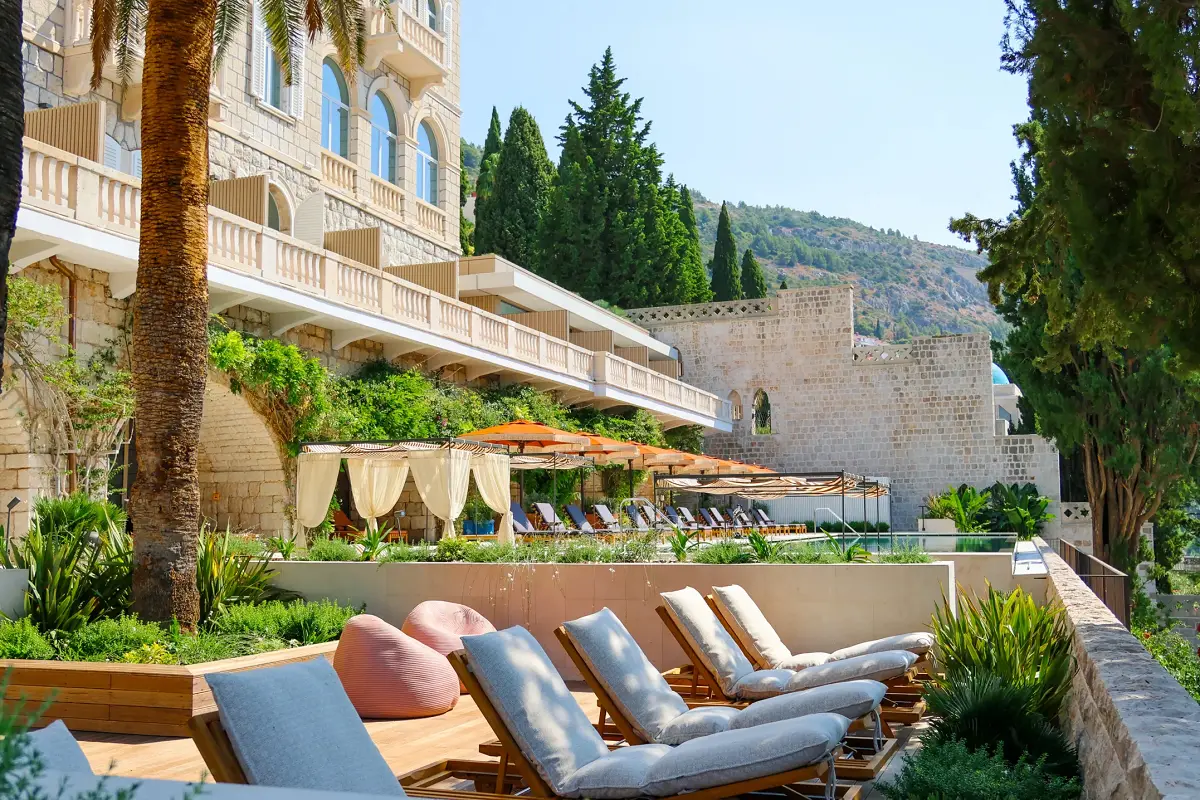
The mosaic had been in storage since it was removed from its original position, waiting with the patience that only objects indifferent to time can manage. Ivo Dulčić painted Dubrovačke varijacije in 1967, and the work he produced was not decorative in the sense that hospitality art is usually decorative, chosen to fill a wall without demanding anything from the people who pass it. It is a Dubrovnik painting by a Dubrovnik artist, rooted in the particular quality of Adriatic light that the city has been producing and that painters have been trying to capture for centuries. When the renovation team at Villa Argentina made the decision to restore the mosaic and return it to its original location within the hotel, they were not making an aesthetic choice. They were making a statement about what the renovation was actually for.
Villa Argentina Dubrovnik Renovation Delivers 109 Rooms and a Cultural Restoration
On September 21, 2026, Villa Argentina Dubrovnik renovation completed its work and the hotel reopened to guests for the first time following a comprehensive transformation covering more than 10,000 square metres. Together with Villa Orsula, its neighbour within the Adriatic Luxury Hotels complex situated near Dubrovnik's Old Town, the property now offers 109 rooms and suites with views of the Adriatic Sea. The renovation was designed by Croatian architecture studio 3LHD, whose approach brought contemporary design into conversation with the hotel's historic structure rather than replacing one with the other. On the same day as its reopening, Villa Argentina joined The Leading Hotels of the World, a collection of more than 450 independent luxury hotels globally that represents one of the hospitality industry's most recognised quality endorsements.
The timing of both events arriving together is not coincidental. A renovation of this scale, in a city whose hospitality market is as competitive as Dubrovnik's, requires the kind of external validation that the Leading Hotels affiliation provides from the moment the doors reopen. Guests booking Villa Argentina for the first time after the renovation will arrive with a specific set of expectations shaped by that affiliation, and the hotel's design and service programme will be measured against what the collection's standards imply.
What the Renovation Preserved and Why That Mattered Most
Philippe Andre Burq, President of the Management Board of Adriatic Luxury Hotels, was direct about the renovation's central purpose. "Villa Argentina has been part of Dubrovnik's identity and Croatia's luxury tourism offering for decades," he said. "With this renovation, we wanted to preserve its unique architecture, artistic heritage and connection to the Dubrovnik landscape." His framing positions the renovation not as a reinvention but as an act of stewardship, the application of resources and expertise to the problem of keeping something genuinely old alive in a format that the contemporary hospitality market can receive.
That distinction, between renovation as reinvention and renovation as preservation, shapes every design decision in a project of this kind. A hotel that has been part of a city's identity for decades carries an obligation to that identity when it renovates, and the failure to honour it is always visible to the people who knew the place before. The Dulčić mosaic returned to its original location is the most concrete expression of how Burq's stated principle was applied in practice. The 14,000 plants integrated into the landscape around the hotel are another, a decision that treats the natural environment of the Dubrovnik hillside as an architectural material rather than a backdrop.
3LHD and the Architecture of Preservation
Croatian architecture studio 3LHD led the renovation with a brief that required engaging with the hotel's existing architectural and artistic heritage rather than overwriting it. The interiors reflect Dubrovnik's architectural tradition through the use of natural materials, stone and wood primarily, that belong to the region's building culture and that give the renovated rooms a texture that imported materials could not have produced. The result is a hotel that feels specifically Dalmatian in its material character, which is the outcome that Burq's preservation brief required and that 3LHD's design delivered.
The contemporary Croatian architecture that the renovation introduces alongside the preserved elements represents the creative challenge at the heart of projects like this: how to bring a building into the present without making its past feel like a period room. 3LHD's approach of layering contemporary design onto the hotel's historic structure rather than excavating the historic elements and displaying them in a modern setting is the choice that preserves the sense of continuity, of a building that has been many things and is now being the newest version of itself rather than a museum of its previous versions.
The Adriatic View and What It Has Always Meant
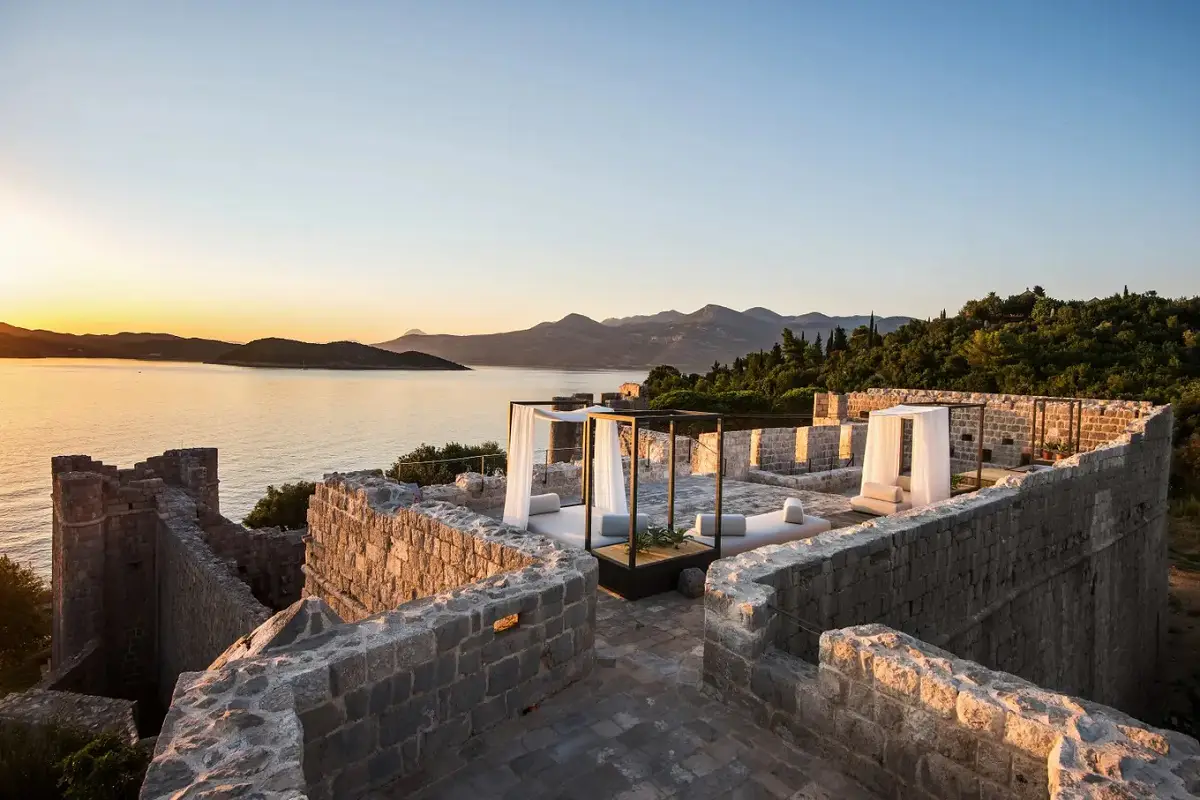
Villa Argentina's position near Dubrovnik's Old Town, with views of the Adriatic Sea from its terraces and rooms, gives it a natural asset that the renovation's landscape design has worked to frame rather than compete with. The 14,000 plants integrated into the grounds are not ornamental in the conventional hotel gardening sense. They are part of the landscape argument, the claim that the hotel's outdoor spaces belong to the hillside they occupy rather than being imposed on it. In a city where the visual relationship between architecture and natural landscape is as carefully considered as it is in Dubrovnik, where the Old Town walls and the sea and the mountains behind the city compose a picture that has been looked at and painted and photographed for centuries, a hotel garden that participates in that composition rather than interrupting it is making a specific choice about what it wants to be.
The terrace levels that step down from the hotel's main building toward the water give guests a graduated relationship with the view, moving through garden spaces and pool areas toward the sea itself, so that the Adriatic arrives progressively rather than all at once. That sequencing is part of the hotel's spatial experience, the way the renovation has organised movement through the property to give the view its proper weight.
What the Leading Hotels Affiliation Adds
The Leading Hotels of the World collection positions its member properties within a global network that travellers who book within it use as a quality filter. Joining on the day of reopening ensures that Villa Argentina's renovated identity and its Leading Hotels affiliation arrive simultaneously in the market, so that the first guests to experience the new hotel are already arriving within the framework of expectations the collection represents. For Adriatic Luxury Hotels, which manages a portfolio of properties in the Dubrovnik market that already includes multiple acclaimed addresses, the Leading Hotels membership for Villa Argentina extends the group's presence within that global network.
The affiliation also carries a commercial significance for the Croatia luxury market more broadly. As Croatian tourism continues to attract the higher end of international leisure travel, the concentration of internationally recognised luxury properties in Dubrovnik strengthens the destination's appeal to the traveller who uses collection membership as an entry point into planning a trip. Villa Argentina's membership adds another landmark address to the map of reasons to choose Dubrovnik specifically rather than another Adriatic destination.
Croatia's Luxury Tourism Sector and What This Investment Signals
Villa Argentina's reopening represents a significant investment in Croatia's luxury tourism infrastructure at a moment when the country's hospitality market has been actively competing for the higher end of European and international leisure travel. The renovation's scale, more than 10,000 square metres of transformation across a historic hotel complex near one of the Mediterranean's most recognised UNESCO heritage sites, is the kind of commitment to quality that shapes how a destination is perceived by the developers, brands, and travellers who use the presence of serious investment as a signal about a market's trajectory.
The restoration of a 1967 Ivo Dulčić mosaic to its original position within a renovated hotel is not a detail that most renovation press releases would lead with. The decision to centre it in how the project is described reflects an understanding that the cultural depth of what Villa Argentina represents to Dubrovnik is itself a commercial asset, one that distinguishes the property from new-build luxury hotels in the region that must construct their identity rather than restore it.
A Mosaic Returned and a Hotel Ready for Its Next Chapter
Ivo Dulčić died in 1975, eight years after completing the work that now occupies its restored position inside a hotel that has just opened again after the most significant transformation in its history. The mosaic did not know it was being restored. It simply waited, the way objects made to last always wait, for whatever the people responsible for the space it belonged to decided to do next. That they decided to bring it back, to commission its restoration and return it to the location the artist intended for it, is the kind of decision that reveals something about the people making it. Villa Argentina on September 21, 2026 is not the same hotel it was before the renovation closed it, and it is not trying to be. It is the newest version of something that has been accumulating meaning in the same place, against the same Adriatic view, since before the word renovation was applied to anything within its walls. The mosaic is back where it belongs. The guests are arriving. Dubrovnik looks the same from the terrace as it always has.
Related reading: Opo Hotel West Bengal opens in New Town ahead of Durga Puja