50–60% of Restaurants May Shut in Days if Commercial LPG Supply Isn’t Restored: NRAI
The National Restaurant Association of India warns that 50–60% of restaurants could shut within days if commercial LPG supply disruptions continue.
 Prajakta Sanjay Warwadkar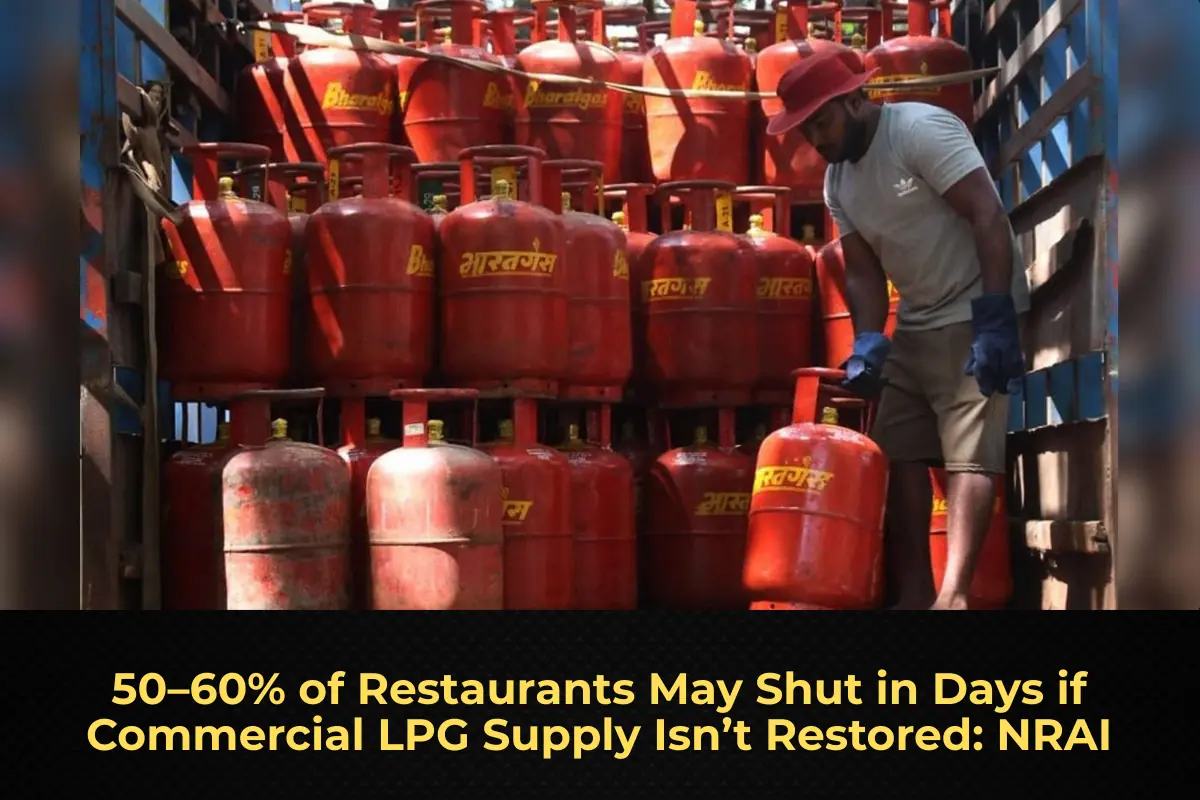
LPG Supply Disruption Threatens Restaurant Operations
The restaurant industry in India is facing a serious operational challenge as disruptions in the supply of commercial LPG cylinders continue to affect kitchens across the country. The National Restaurant Association of India (NRAI) has warned that nearly 50–60 percent of restaurants could be forced to shut down within two to three days if regular supply is not restored.
Restaurants rely heavily on commercial LPG for daily cooking operations. With supply shortages emerging in several cities, operators are finding it increasingly difficult to maintain normal service.
The situation has created widespread concern among restaurateurs, many of whom are already managing rising operational costs and intense competition.
NRAI Raises Alarm Over Industry Impact
The NRAI has highlighted the severity of the crisis, noting that the shortage of commercial LPG cylinders is disrupting food preparation across restaurants, cafés, and cloud kitchens.
Industry leaders warn that if the supply situation is not resolved quickly, a significant portion of restaurants may temporarily suspend operations due to the inability to cook food safely and efficiently.
For many establishments, particularly small and independent restaurants, even a short disruption in kitchen operations can lead to substantial revenue losses.
Operational Challenges for Restaurants
Restaurants typically require multiple commercial LPG cylinders each day to sustain cooking during peak service hours. With the current shortage, many operators are being forced to ration fuel usage or adjust their menus.
Some establishments have already begun limiting dishes that require longer cooking times or high heat, while others are exploring alternative cooking methods where possible.
However, such adjustments can only offer temporary relief and may affect the variety and quality of menu offerings.
Ripple Effects Across the Hospitality Sector
The LPG shortage is not only affecting restaurants but also impacting other segments of the hospitality industry, including hotels, catering services, and food delivery kitchens.
Commercial kitchens depend on consistent energy supply to maintain hygiene standards, food safety, and timely service.
Any prolonged disruption could have broader consequences for employment, supply chains, and customer satisfaction within the hospitality ecosystem.
Appeal for Immediate Government Intervention
Industry representatives have urged authorities to prioritize the restoration of commercial LPG supply to the hospitality sector. Ensuring uninterrupted fuel availability is considered essential to keep restaurant operations running smoothly.
The NRAI has also emphasized that the restaurant industry plays a significant role in urban economies, supporting millions of jobs and contributing substantially to local businesses.
Timely intervention could help prevent widespread operational disruptions and protect the livelihoods connected to the sector.
Restaurants Explore Short‑Term Measures
While awaiting resolution of the supply issue, some restaurants are implementing short‑term measures such as optimizing cooking processes, preparing ingredients in advance, and temporarily reducing menu items that require extensive fuel usage.
These strategies aim to conserve available LPG supplies while allowing restaurants to continue serving customers.
However, industry experts caution that such measures cannot sustain operations indefinitely if the shortage persists.
Industry at a Critical Moment
The coming days are likely to be crucial for the restaurant sector as operators closely monitor developments in LPG availability.
If supplies resume soon, restaurants may be able to avoid widespread shutdowns. However, continued disruption could significantly impact business continuity for thousands of establishments.
The situation underscores the importance of reliable energy supply for the functioning of the foodservice and hospitality industry.