Conveyor Belt Sushi Restaurants: How a Beer Plant Sparked an Idea
Conveyor Belt Sushi Restaurants began in Osaka in 1958 after a beer bottling plant gave one owner an idea. Here is the short story and what ube adds to it.
 RUKAIYA KADIWAL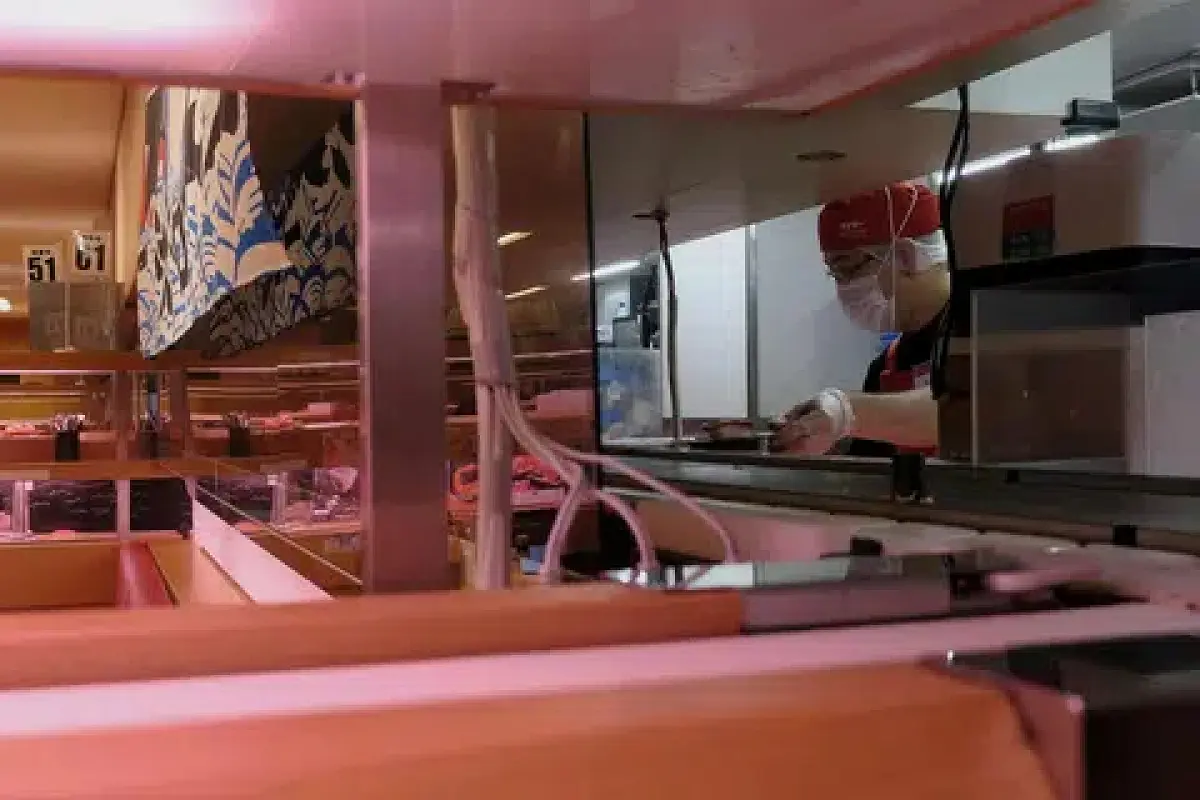
Behind a counter, a worker in a red cap and face mask moves quietly through the rhythm of the kitchen. Plates leave his hands and glide away, and nobody needs to ask for them. This is the everyday magic of Conveyor Belt Sushi Restaurants, a format that began with a simple observation.
The story appears in a weekly column from The Straits Times and the National Library Board. Grace Yeoh, a features correspondent, wrote it as part of the ST NLB Crossword 2026 series. She uses sushi and a purple yam to talk about how new ideas arrive.
How Conveyor Belt Sushi Restaurants Began
In the 1950s, Osaka restaurateur Yoshiaki Shiraishi was struggling to keep up with orders at his popular sushi shop. Chefs prepared each piece and handed it directly to customers. He wanted a more efficient way to serve.
The answer came from an unlikely place. He watched bottles travel along a conveyor at a beer bottling plant. After several years of development, he opened the first conveyor belt sushi restaurant, Mawaru Genroku Sushi, in Osaka in 1958.
That is the origin of Kaitenzushi Japan now knows well, and it is a fine example of Japanese food innovation. The idea did not need new technology. It needed someone to see a familiar machine in a new place.
The Lesson of the Obvious
Yeoh draws a lesson from the story. The greatest innovations, she writes, often uproot something everyone else takes for granted. Before the belt, handing sushi over the counter was simply how it was done.
Today the picture is reversed. For a modern diner, it is the belt that feels natural, and the old way may seem slow. She asks readers to wonder what might feel obvious in the future but has not yet been invented.
That question suits Innovation in restaurants as well as any other field. A kitchen can improve through a new gadget, but it can also improve through a new habit. Sushi innovation began with a changed layout, not a changed recipe.
Why Conveyor Belt Sushi Restaurants Still Draw Crowds
The format suits many kinds of diners. Guests see the food before they choose it, and they take what they like as it passes. Staff spend less time on handoffs and more time on preparation.
The column does not give modern sales figures or restaurant counts, so this article does not either. What it does show is how a single operational idea can outlast its inventor. The Osaka conveyor belt sushi that started in 1958 shaped many of the Japanese conveyor belt restaurants that followed.
A Second Lesson From a Purple Yam
The same column offers a different kind of innovation. Ube, a purple yam popular in the Philippines, has long been used in Filipino desserts such as halo halo and ube halaya. Around 2016 it began to attract wider international attention.
Its deep purple colour suited the Instagram food community. Restaurants such as New York's Manila Social Club helped, as its ube doughnuts became an online sensation. Soon the Ube purple yam appeared in cakes, waffles, ice cream and lattes on café menus abroad.
The trend forecaster WGSN named it a top flavour trend in 2023. Some commentators now see it as a possible successor to matcha in fashionable cafés and bakeries. Yeoh points out that the innovation was not ube itself. It was the new ways of presenting a long established ingredient, which makes the Ube food trend a lesson in reaching a new audience.
What the Column Leaves Open
This is an opinion style puzzle column, not a food history. It gives one account of Shiraishi's path and does not cite other sources for it. It also says nothing about how the belt format spread to Singapore.
Readers who enjoy this kind of puzzle can look for the Straits Times crossword series and the Singapore crossword 2026 editions. For travellers wanting to try the format, the Osaka Info page on kaitenzushi is a useful starting point. For a story about how a supplier can shape a restaurant's fortunes, see this report on the Taylor Farms lettuce recall.
The plates keep circling, each one a small proof that someone once looked at bottles and saw dinner. Most diners reaching for a piece will never think about beer or Osaka. They will simply enjoy what passes by, which is perhaps the best sign that an idea has truly worked.