Dining Experience vs Food Quality: What Matters More to Diners in 2026?
Explore the debate around dining experience vs food quality and discover how atmosphere, service, ambiance, and restaurant design are shaping modern dining trends in 2026.
 Prajakta Sanjay Warwadkar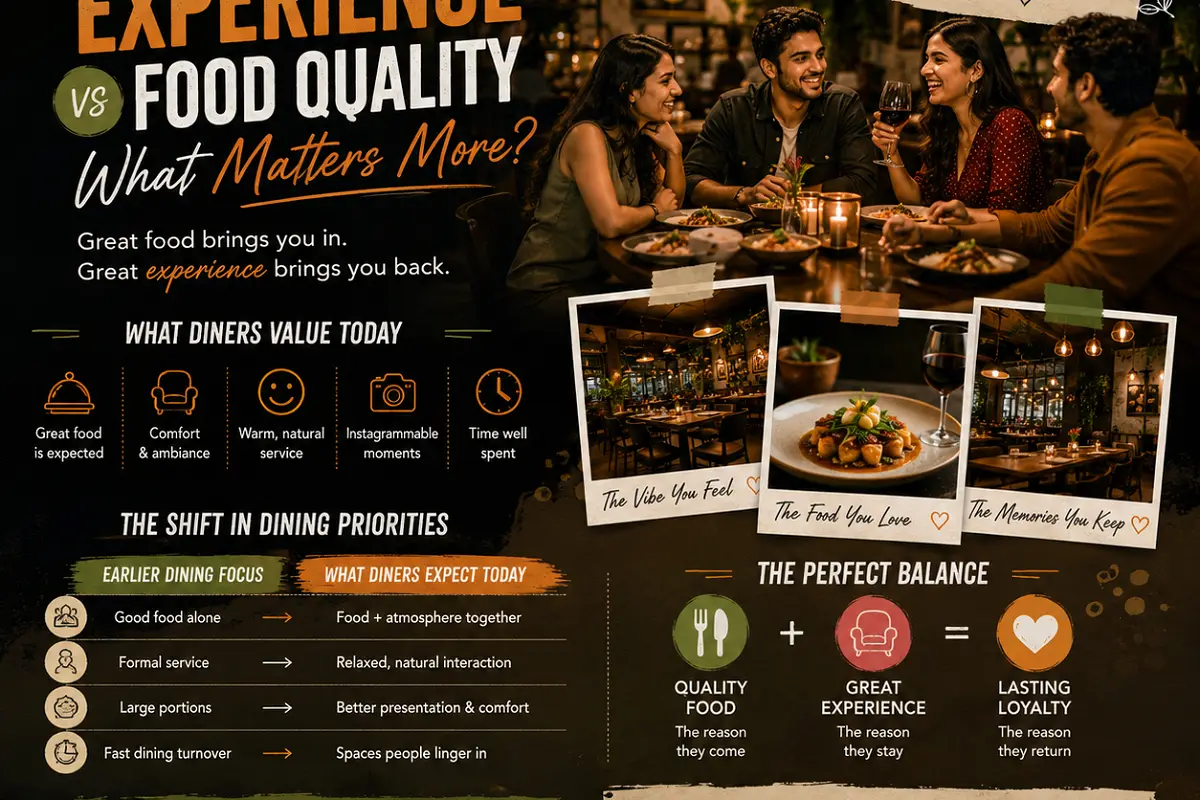
Dining Experience vs Food Quality: What Matters More?
Restaurants used to survive mostly because of the food. Simple. If the dishes were good, people came back. But now, it’s not that straightforward anymore. Today, diners care about how a restaurant feels almost as much as what it serves. Sometimes even more, honestly.
A place can have excellent food and still feel forgettable. Meanwhile, another spot with pretty decent food, softer lighting, good music, comfortable seating somehow stays packed every weekend. Bit unfair maybe, but that’s where dining culture is heading.
Why Has Dining Become More About the Experience?
People don’t really go out just to “eat” anymore. At least not always.
Sometimes it’s:
-
catching up with friends after work
-
escaping the house for a while
-
working from a cafe with one coffee for three hours
-
celebrating something tiny that probably doesn’t even need celebrating
Restaurants became social spaces first, food spaces second, or maybe both together now.
And social media definitely accelerated this shift. Platforms like Instagram changed how people choose restaurants completely. A place with warm aesthetics and good plating gets attention fast. Sometimes faster than genuinely great food does.
That sounds harsh. But it’s true.
Does Food Quality Still Matter Most?
Yes. Obviously.
Nobody forgives genuinely bad food just because the interiors look expensive. But once restaurants reach a certain “good enough” food standard, experience starts deciding who wins.
You see it all the time:
-
similar menus
-
similar pricing
-
completely different customer reactions
One place feels welcoming. The other feels cold, rushed, awkward people notice that immediately.
And honestly, diners talk more about vibe now than flavor details.
Nobody says:
“the seasoning balance was exceptional.”
They say:
“that place felt nice.”
Which, from a chef’s perspective, probably sounds mildly frustrating.
What Actually Creates a Good Dining Experience?
It’s usually small things. Not dramatic luxury.
Things like:
-
lighting that doesn’t feel harsh
-
staff who sound natural instead of scripted
-
enough space between tables
-
music low enough for conversations
Even chairs matter more than restaurants think. Bad seating can ruin a perfectly good meal weirdly fast.
Timing matters too. Slow service feels cozy in one cafe irritating in another. Hard to explain exactly why. People respond emotionally to spaces before they even realize it.
How Are Restaurants Balancing Food and Experience Together?
The smarter restaurants stopped separating them completely.
Menus, interiors, playlists, plating, it’s all connected now. Casual dining cafes focus on comfort and slower pacing. Fine dining spaces focus more on presentation and storytelling. Even smaller restaurants think carefully about background music now, which honestly wasn’t really a thing before.
|
Earlier Dining Focus |
What Diners Expect Today |
|
Good food alone |
Food + atmosphere together |
|
Formal service |
Relaxed, natural interaction |
|
Large portions |
Better presentation and comfort |
|
Fast dining turnover |
Spaces people linger in |
Sometimes restaurants lean too hard into aesthetics though, and then the food disappoints. That balance matters more than people think.
Are People Willing To Pay More for Experience?
Usually, yes.
Not necessarily for luxury. Just for places that feel thoughtful.
A restaurant with warm service, comfortable seating, nice presentation, maybe a little personality, people tend to stay longer there. Spend more too. It feels worth it somehow, even if prices are slightly higher.
And honestly, memories are tied to atmosphere more than dishes most of the time. People remember birthdays, conversations, how comfortable they felt sitting there for two hours. Not every ingredient on the plate.
Pro-Tip: In our experience covering India's dining sector, restaurants that train floor staff as storytellers, talking through ingredients, sourcing, or the chef's intent, tend to see dramatically higher diner satisfaction scores, even when the food itself is fairly straightforward. It shifts the meal from transaction to memory.
What Happens Next in 2026?
Dining spaces will probably become even more experience-focused over the next few years. Restaurants are already experimenting with mood-based interiors, community spaces, regional storytelling, quieter luxury, all of that.
But food still stays at the center. It has to.
Because eventually, no amount of aesthetic lighting can save a restaurant if the food keeps disappointing people. And diners figure that out pretty quickly now.
Read more: Rise of Experience-Based Restaurants: Why Are They Taking Over Dining?
Dining Out Trends 2026: Why People Prefer Dining Out Over Cooking More Than Ever
More information about Indian cuisine and its regional diversity can be explored through Indian cuisine history and traditions.
Businesses monitoring hospitality expansion trends can also explore restaurant industry growth trends for 2026 to understand how regional food concepts are shaping dining markets.