Five Senses Restaurant Nairobi Redefines Kenyan Fine Dining
Inside Five Senses Restaurant Nairobi, Chef Kim Kiarie blends French technique with Kenyan ingredients to build a dining experience for all five senses.
 RUKAIYA KADIWAL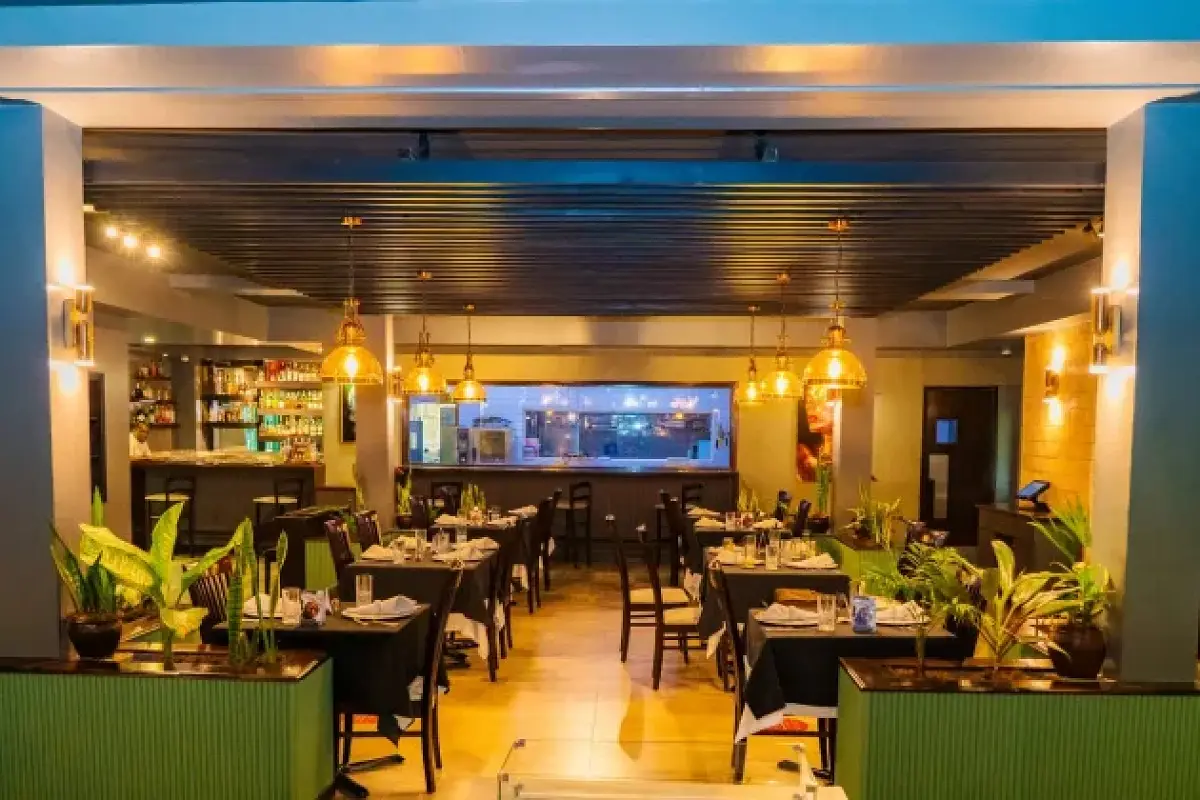
Long before a fork touches a plate at this restaurant tucked inside Galana Plaza, something else has already begun. A guest notices the coral stone pillars first, their rough, earthy texture catching the low light, then the low hum of conversation held in check by walls engineered specifically to absorb it. Somewhere past the bar, a scent drifts out from the kitchen, and only then, several sensations into the evening, does the food itself arrive. It is a sequence built entirely on purpose, the work of a chef who believes a meal begins the moment a guest walks through the door, not the moment the first course lands.
That chef is Kim Kiarie, the CEO and founder behind Five Senses Restaurant Nairobi, a classically trained cook who has become one of the more distinctive voices shaping Kenya's contemporary dining scene. Capital Lifestyle visited the intimate space in Kilimani to understand how a restaurant built around a five word philosophy has managed to carve out something genuinely different in East Africa's culinary landscape.
A Philosophy Built on Sequence
Kiarie's thinking about hospitality begins with an observation most diners never articulate but instinctively feel. "When you enter a restaurant, you first see the space, hear the atmosphere, smell what is coming from the kitchen, feel the textures around you and finally taste the food," he says. "I wanted to create a restaurant where all five senses are deliberately considered. By the time you leave, you should feel that you have experienced something, not simply eaten a meal." The distinction he draws, between eating and experiencing, sits at the center of everything the restaurant has built since opening, shaping decisions that extend well beyond the kitchen itself.
Turning that philosophy into a physical space required undoing as much as building. Kiarie has said the biggest early challenge was stripping away the sterile, corporate feel of a standard commercial unit and replacing it with something closer to a sanctuary, a space guests would want to linger inside rather than simply pass through.
Building a Room That Argues Its Case Before the Menu Arrives
The solution took the form of tactile storytelling rather than conventional decor. Coral stone pillars anchor the dining room with an organic, weathered character, while an indoor pergola creates the sensation of dining inside a sheltered garden rather than a commercial plaza unit. Stone, wood, fabric and glass interact deliberately throughout the space, ensuring that guests absorb something of the restaurant's philosophy well before a menu ever reaches the table.
Acoustics received equally careful attention. Table layouts were balanced against soft, sound absorbing materials to preserve a room that feels lively without tipping into noise, allowing conversation to remain intimate even as the space fills. It is the kind of detail most diners would never consciously register, yet its absence would be felt immediately, a reminder that comfort in a dining room is often built from things guests never think to ask about.
French Discipline, Kenyan Memory
What distinguishes Five Senses most clearly within Nairobi's dining scene is the tension it holds, deliberately, between classical French training and Kenyan culinary heritage. Kiarie trained in the rigorous traditions of French kitchens, yet has structured his entire menu around refusing to let that training erase the food he grew up with. "My classical training is French, but my memories and ingredients are Kenyan," he says. "At Five Senses, you may encounter ugali, matumbo, kienyeji chicken or indigenous vegetables, but presented through a different lens. French cooking gave me discipline, how to build sauces, develop flavour, control temperature and respect ingredients. Kenya gives me the soul of the food."
That balance shapes the restaurant's approach to dishes long confined to casual settings. Matumbo and mayai pasua, familiar staples across Kenyan households, appear on the menu not sanitised beyond recognition but re engineered in technique and presentation, treated with the same seriousness a French kitchen might apply to a classic sauce. The intent is not to distance these dishes from their origins but to honour the emotional weight they already carry, suggesting that true luxury has as much to do with memory and familiarity as with rare ingredients or elaborate technique.
A Menu Built Around Reason, Not Spectacle
Kiarie is notably resistant to complexity for its own sake, a stance that runs counter to a broader trend in fine dining toward visual spectacle. "A dish should not be complicated simply for the sake of looking impressive," he says. "It should have a reason for being on the plate, and it should create a feeling or bring back a memory." That principle guides how the kitchen approaches seasonality as well, with menus evolving based on supplier relationships and storytelling rather than shifting simply because a calendar page has turned.
Hospitality as a Daily Discipline
Running a restaurant built on this level of intention requires a particular kind of daily rigor. Kiarie's mornings typically begin well before service, reviewing reservations, inspecting produce deliveries, and coordinating with a service team he has deliberately built around curiosity and emotional intelligence rather than technical polish alone. "Skills can be taught, but attitude, warmth and curiosity are much harder to teach," he explains. "Our service should be knowledgeable without being intimidating. Once they understand why a dish exists, they can communicate it naturally and become part of the experience." The comment reflects a broader belief that a restaurant's atmosphere is ultimately carried by its staff as much as its design, and that genuine curiosity about the food translates directly into how confidently a server can speak about it.
That philosophy plays out across a week that shifts in character day by day, from business focused coffee sessions and wine pairing evenings to live jazz, meat focused Fridays and more relaxed Saturday platters, giving the restaurant a rhythm that evolves alongside its regular patrons rather than repeating the same format night after night.
What Comes Next, Without Losing the Point
As the restaurant's reputation has grown, its ambitions have shifted from proving technical capability to deepening identity and meaning, a distinction Kiarie treats as more important than scale. Expansion beyond Kilimani remains on the horizon, but growth is treated as secondary to integrity, a sequencing choice that says as much about the restaurant's values as any dish on its menu. Experimental extensions like destination dining and a concept called The Nomad Table have already begun carrying the restaurant's philosophy beyond its own walls, into farms, wild spaces and open air settings where the same five sense approach can be reimagined outside a fixed dining room.
A Bigger Ambition Than One Dining Room
What Kiarie ultimately wants from Five Senses extends well past a single address in Kilimani. "I would like Five Senses to help change the way we value Kenyan food and ingredients," he says. "I want young African chefs to understand that they do not have to abandon their identity to cook at an international level. Our ingredients, childhood memories and traditional foods belong in the finest dining rooms when handled with respect, skill and confidence." It is a statement less about one restaurant's success than about the broader confidence he hopes an entire generation of African chefs will carry forward.
By the time a guest finishes a meal here, coral stone still catching the light, the last notes of quiet jazz fading into conversation, what lingers is rarely a single dish. It is the sense of having moved through a space built with genuine intention, one course, one texture, one memory at a time, and the quiet suggestion that the food people grew up eating was always fine enough to belong exactly where it now sits.
More information is available on the official website at 5senses.co.ke. Further reading on the restaurant industry is available at hospitalitycareerprofile.com.