Restaurant Server Burnout 2026: Why Forced Smiles Drive Turnover
Restaurant Server Burnout 2026, Restaurant server burnout, Restaurant worker burnout 2026, Restaurant employee turnover, Restaurant server turnover, Tipped restaurant workers, Emotional labor in restaurants, Servers smiling for tips, Restaurant employee retention, Restaurant staffing shortage, Restaurant worker stress, Restaurant industry turnover 2026, Full service restaurant turnover, Restaurant employee replacement costs, Tipped workers wages, Restaurant hospitality workforce
 RUKAIYA KADIWAL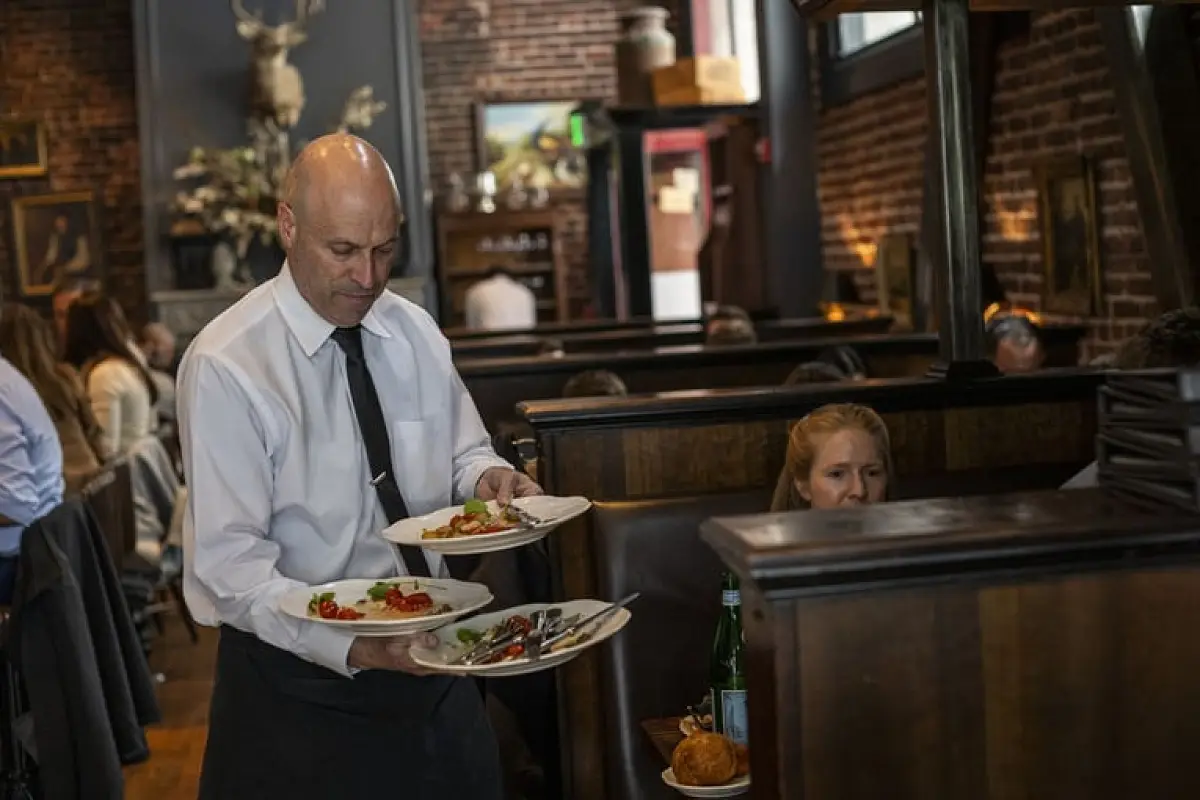
In the photograph, a server in a white shirt and black tie crosses a wood panelled dining room with three plates along one arm. His face is calm and his eyes are on the food. Whatever kind of night he is having, the job asks him to make it look easy. That quiet demand sits at the centre of Restaurant Server Burnout 2026.
Quartz reports that restaurants have asked servers to smile for decades, whatever the shift is like. The research it cites finds that faking cheerfulness wears people out and pushes them to quit. Restaurants and hotels already lose workers faster than any other industry, so the cost is not small.
What Restaurant Server Burnout 2026 Looks Like
The Quartz report, updated on October 3, 2026, begins in a coffee shop. At a Starbucks in western Massachusetts, barista Madison Connors told the Boston Globe in May that her store was already short of staff. Adding a handwritten note to every cup made her job more stressful.
The notes are part of CEO Brian Niccol's plan to make Starbucks feel like a cozy neighborhood café again. Baristas can get in trouble for skipping them. Michelle Eisen, a spokeswoman for Starbucks Workers United, argued that a message written under pressure is not the warmth it pretends to be.
What Research Says About Faking a Smile
Victoria Isabelle Thompson, a graduate student at Virginia Tech, interviewed 14 tipped workers for her 2024 master's thesis. They described pandemic shifts spent smiling behind masks at anxious customers. Seven of them quit, and six more wanted to.
A study of casino dealers in South Korea, published last November, points the same way. Dealers who smiled without meaning it were the most worn out and the likeliest to plan to leave. The ruder their customers, the more often they had to fake it.
This is emotional labor in restaurants in plain terms. Workers manage their own feelings to protect someone else's mood. Restaurant worker stress builds when a job demands a smile no matter how guests behave, and Quartz says the pandemic only made that easy to see.
Why Tips Raise the Stakes
For tipped restaurant workers, the smile is also part of the paycheck. Federal law lets restaurants pay as little as $2.13 an hour, a rate unchanged since 1991, and count tips toward the rest of the minimum wage. A server who stops smiling at a rude table risks losing money.
That makes servers smiling for tips a financial habit as well as a social one. Even with tips, servers in Illinois average $16.68 an hour, or about $34,700 a year, according to the Bureau of Labor Statistics. These tipped workers wages leave little room for a slow season.
Nataki Rhodes, who worked several tipped jobs before joining the advocacy group One Fair Wage, told WTTW: "A lot of tipped workers live in poverty." Her words matter because they come from someone who lived the schedule. They also explain why walking away from a bad shift is rarely a simple choice.
The Cost of Turnover
Hourly full service restaurant turnover was 92% in the third quarter of last year, according to Black Box Intelligence figures cited by Quartz. Each replacement costs about $2,706. For a restaurant with 20 workers, that adds up to tens of thousands of dollars a year.
This is why restaurant employee turnover is a business problem as well as a human one. The restaurant employee replacement costs hit owners every time a server leaves. Fast food restaurants lose workers even faster, going through more than their whole crew each year.
What Might Help
The report points to older research. In 2011, researchers who reviewed 95 studies of service workers told companies to stop asking staff to fake it. They advised helping workers mean it, through training and more good moments on the job.
For baristas like Connors, Quartz says that would start with enough people on each shift. The same logic applies in dining rooms. Better restaurant employee retention may depend on staffing and working conditions more than on slogans, and a restaurant staffing shortage makes every forced smile cost more.
A Fair Reading of the Debate
Starbucks sees the notes differently. It calls them a meaningful way for baristas to connect with customers, even while it wants drinks handed over within four minutes. The Boston Globe found that few customers noticed the notes, and one rider called a "much love" message from a stranger awkward.
The report is also narrow. It draws on a small thesis, a study of casino dealers and one coffee chain's policy, not a survey of every dining room. Its subheading says the best servers leave first, but the text gives no figures on that. Readers should treat the findings as strong signals for the wider restaurant hospitality workforce, not final proof.
More business coverage is on the Quartz website. For a lighter story about an idea that changed how restaurants serve, see this report on conveyor belt sushi restaurants and Osaka innovation. Both ask how a restaurant can work better for the people inside it.
Most guests will never see the effort behind a smile that arrives on time. They will tip or not, and leave. The server will cross the room again with the next plates, and the cost of that warmth will go home with him.