McDonald's India Marks 30 Years of Burger Culture with India-First Menu Legacy
McDonald's India marks 30 years of burger culture with India-first creations like McAloo Tikki and McSpicy Paneer. Read the full story here.
 Prajakta Sanjay Warwadkar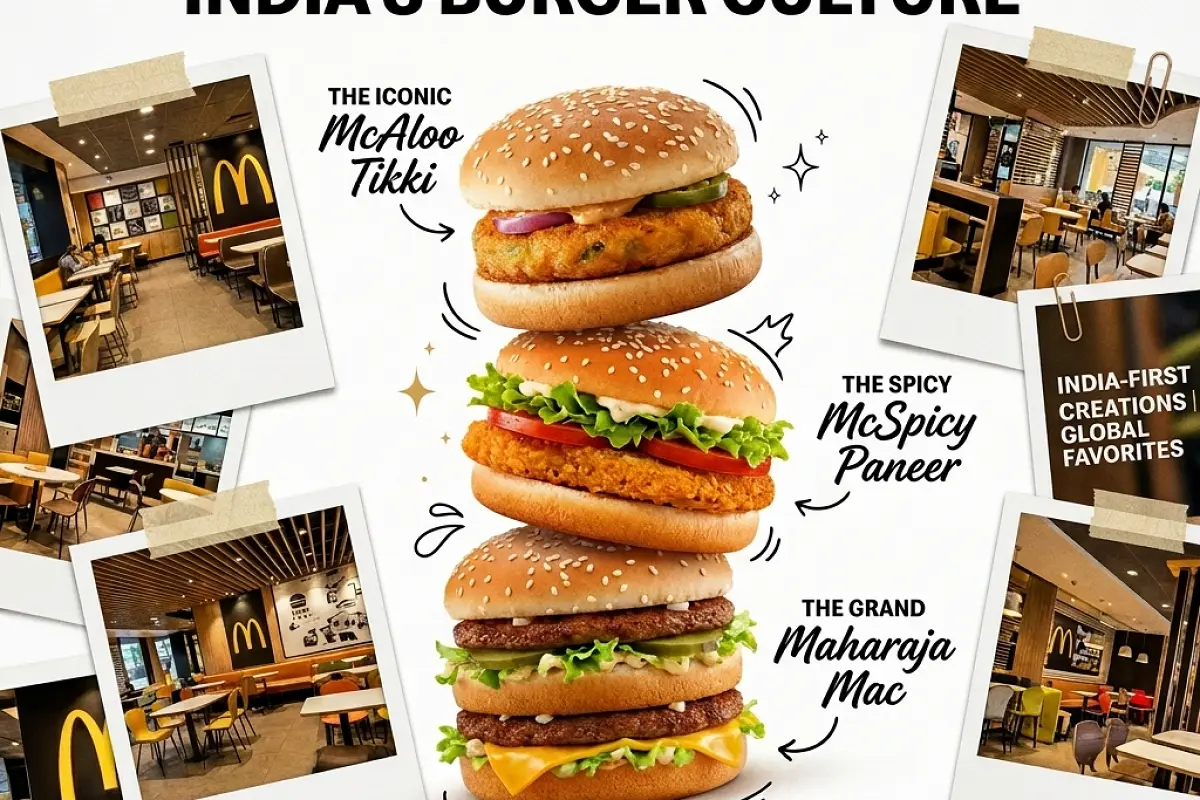
MUMBAI, May 27, 2026 — McDonald's India, operated in the western and southern regions by Westlife Foodworld, marks 30 years in the country this year, using International Burger Day to highlight the three decades of menu innovation that turned the global burger chain's India chapter into one of the most closely studied examples of food localization in the quick service restaurant industry.
When the chain entered India in 1996, burgers occupied a narrow niche in a market shaped by strong vegetarian preferences, deep regional flavour identities, and limited exposure to the American fast-food format. Rather than importing its international menu wholesale, McDonald's India chose to build an original product range from the ground up, using local ingredients, Indian spice profiles, and the country's street food traditions as its starting point.
Three decades on, products born from that decision have become mainstream reference points in India's fast-food vocabulary, with McAloo Tikki widely recognized as among the most successful single menu innovations any global chain has developed for the Indian market.
McDonald's India's First Menu Set the Tone in 1996
The brand's launch menu in 1996 established the dual-track approach, serving both vegetarian and non-vegetarian consumers, that would define McDonald's India's product strategy through every subsequent decade. The opening range included McVeggie, McChicken, Maharaja Mac, and Filet-O-Fish, with the Maharaja Mac arriving as a direct local answer to the global Big Mac format, scaled up for Indian portion preferences and flavour expectations.
Two years after launch, in 1998, McAloo Tikki joined the menu. The potato-and-spice vegetarian burger drew directly from the aloo tikki tradition, a fried potato patty seasoned with Indian spices, long established as street food across North India, and placed it inside a burger bun served with tangy sauce and fresh vegetables. The product found its audience immediately and has remained on the menu ever since, a run of more than 27 years that few fast-food items anywhere in the world have matched.
A Decade-by-Decade Menu Evolution Shaped by Indian Tastes
The years that followed produced a steady stream of India-specific launches as the brand responded to shifting consumer preferences and a growing appetite for both spice-forward and premium options within the QSR format.
In 2010, McDonald's India introduced McEgg, built around a steamed egg preparation that offered a protein option outside the standard fried-food approach. A year later, in 2011, McSpicy Paneer arrived as a bold, heat-forward vegetarian burger developed specifically for Indian consumers comfortable with higher spice levels than the chain's international markets typically demanded.
The 2016 menu expansion added Corn and Cheese Burger, Grilled Chicken Burger, and the Veg Maharaja Mac, a vegetarian counterpart to the brand's largest burger format, designed to give non-meat-eating consumers access to a premium, stacked burger experience within McDonald's India's portfolio.
McCheese debuted in 2021 as part of the brand's Gourmet Burger collection, targeting a consumer segment seeking a more premium and cheese-forward option within the McDonald's India menu. McSpicy Deluxe followed in 2023, developed in response to demand for a more layered, crunchier variant of the original McSpicy range. The most recent addition, Chicken Surprise, launched in 2024, takes a more playful and curiosity-led approach to its format.
Why McDonald's India's Localization Strategy Matters for the QSR Sector
India's quick service restaurant sector has expanded considerably over the three decades since McDonald's entered the country, with both domestic and international brands now operating across urban, semi-urban, and emerging consumer markets. Within that landscape, the early decision by McDonald's India to build original products rather than adapt existing ones is consistently cited as a foundational case study in large-scale food localization.
The approach addressed two structural realities of the Indian market that no international chain could ignore: a large vegetarian consumer base with no equivalent in McDonald's home markets, and a flavour sensitivity built around spice, acidity, and texture combinations quite different from Western fast-food norms. Products like McAloo Tikki and McSpicy Paneer did not translate the burger into Indian terms, they used Indian culinary logic to build something new inside the burger format.
For Westlife Foodworld, which operates McDonald's across western and southern India, the 30-year milestone is also a commercial one. The franchise has expanded from the single Mumbai outlet that opened in October 1996 to a network that spans hundreds of restaurants across the two regions, with the brand's India-first menu serving as the consistent commercial anchor across all of them.
International Burger Day Provides the Platform for McDonald's India's Anniversary Moment
McDonald's India has timed its 30-year celebration to International Burger Day, using the occasion to reinforce the brand's positioning as a shaper of India's burger culture rather than simply a participant in it. The framing places the anniversary in the context of a market transformation, from a country where burgers were largely unfamiliar in 1996, to one where a McAloo Tikki is among the most recognizable fast-food items in the national market.
The anniversary also underlines a broader truth about global QSR expansion: that the chains which endure in culturally distinct markets are typically those that invest in understanding and reflecting local food identity rather than those that rely on the pull of their global brand name alone.
More information about Indian cuisine and its regional diversity can be explored through Indian cuisine history and traditions.
Businesses monitoring hospitality expansion trends can also explore restaurant industry growth trends for 2026 to understand how regional food concepts are shaping dining markets.