Milan Restaurant Baltimore Auction Unveils a Little Italy Saga
Milan Restaurant Baltimore auction is set for August 20 as the long vacant Little Italy eatery ends a legal fight over its future and possible redevelopment.
 RUKAIYA KADIWAL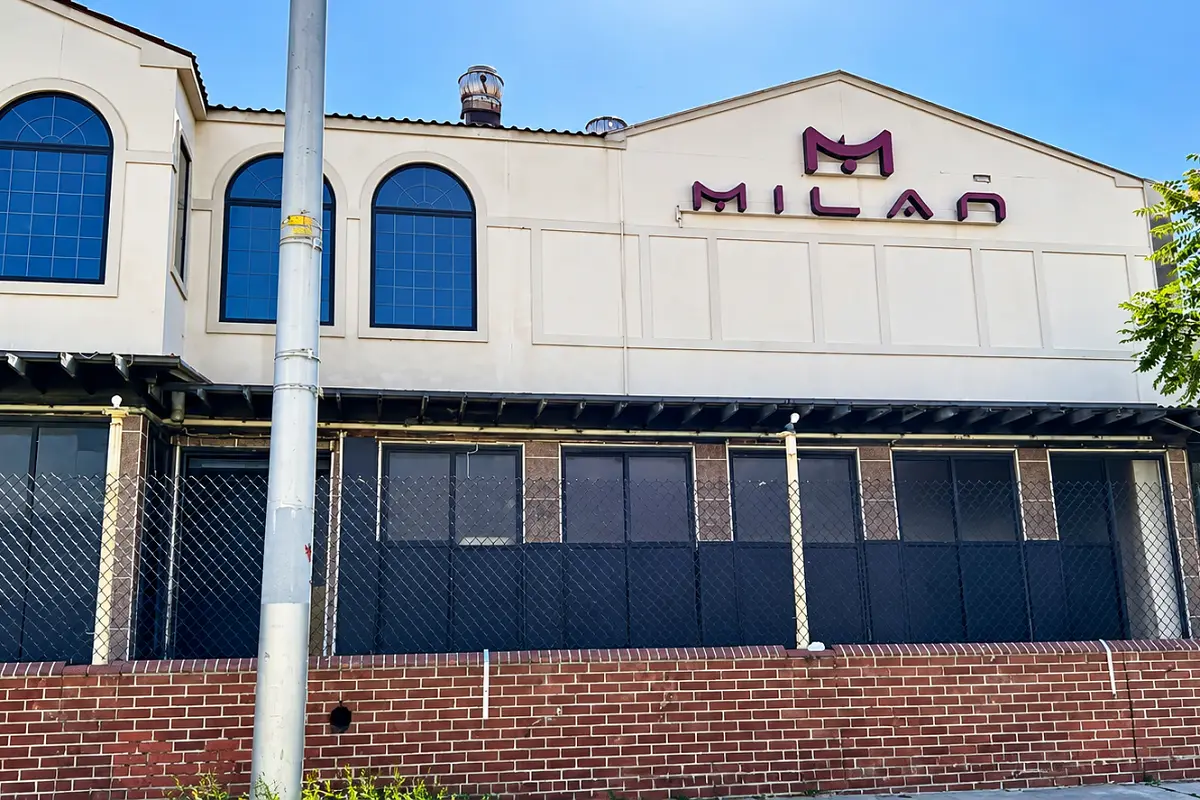
The purple letters spelling out Milan still catch the afternoon light above Eastern Avenue. Nothing beneath the sign has moved in years. Chain link mesh covers the windows where diners once watched the street go by. A brick wall, patched in places, holds back a building that has sat empty long enough for weeds to claim the sidewalk cracks in front of it. This is the site of the Milan Restaurant Baltimore auction, and on August 20, it will finally change hands.
For a building this visible, sitting on the edge of one of Baltimore's most storied dining neighborhoods, silence has become its most defining feature. The Former Milan Restaurant Baltimore property at 1000 Eastern Avenue has not served a meal in years. Yet its presence still shapes how people talk about the cusp of Little Italy, the invisible line where the neighborhood's warmth gives way to something more uncertain.
A Restaurant That Became an Entertainment Venue, Then Nothing at All
Long before it became a fixture of local news coverage, Milan Restaurant 1000 Eastern Ave operated as an Italian eatery. It later transitioned into an entertainment venue. That shift already hinted at the shrinking margins independent restaurants faced even a decade ago. The transformation did not save it.
The building was eventually eyed for possible demolition and redevelopment as an apartment complex. That plan, like so many others proposed for aging commercial properties in dense urban neighborhoods, never materialized. What followed instead was a prolonged period of dormancy, the kind that slowly turns a building from a landmark into a question mark.
Passersby stopped expecting it to reopen. The arched windows on its upper floor, ornate and clearly built for a different era of hospitality, became more a curiosity than an invitation.
The Legal Fight Behind the Boarded Windows
Behind the chain link and the faded signage sat a nearly two year legal skirmish. The dispute pitted the Baltimore City Department of Housing and Community Development against the property's owner, HSN LLC, over the site's fate. Disputes like this rarely make headlines on their own. But they reveal something important about how cities manage the slow decay of once vibrant commercial spaces.
A Baltimore City District Court judge ultimately ordered the property to auction. This came after housing officials sought the appointment of a vacant building receiver in 2024. Cities increasingly rely on this legal mechanism when owners are unable or unwilling to bring a property back into productive use. The receivership process hands control of a stalled property's future to the court, a signal that patience with prolonged vacancy had run out.
What the Milan Restaurant Baltimore Auction Means for the Neighborhood
On site bidding is scheduled to begin at 11 a.m. on August 20. The date will close one chapter of the building's uncertain history and open another whose outcome remains unwritten. For a neighborhood built on the reputation of its restaurants, from red sauce institutions to newer arrivals chasing the same loyal foot traffic, a large vacant restaurant Baltimore property sitting at its edge carries weight beyond its square footage.
Vacant commercial buildings tend to influence perception long before they influence redevelopment outcomes. A boarded storefront can quietly discourage new investment nearby. This can happen even as the property waits, sometimes for years, for the right buyer or the right legal resolution to arrive.
Little Italy has weathered its own share of change. The eventual outcome of the Milan Restaurant Baltimore auction will say something about whether this particular corner returns to hospitality use or moves toward something else entirely, residential, commercial, or otherwise.
A City Weighing Preservation Against Practicality
Baltimore's approach to long vacant properties has increasingly leaned on receivership and court ordered sales. These tools help break stalemates between owners and the city, particularly in neighborhoods where blight risks undermining broader revitalization efforts. Housing officials pursuing this path are, in effect, betting that a forced sale will accomplish what negotiation could not.
Not everyone views that approach the same way. Preservationists and longtime residents often hope buildings with genuine architectural character find new life rather than face demolition once ownership changes hands. The arched windows and Spanish tile roofline still visible on the former Milan property are exactly the kind of detail worth saving, in their view.
Developers, meanwhile, tend to weigh the cost of renovation against the economics of starting fresh. That calculation has determined the fate of similar properties across Baltimore's older commercial corridors. Other Baltimore area restaurant operators have faced comparable pressure to adapt or reinvent, a pattern echoed nationally in how Griddle 24 in Chicago has adjusted its business model to survive shifting economic conditions rather than close its doors.
What Comes Next for a Building Waiting to Be Seen Again
Whoever steps forward at the August 20 auction inherits more than a structure. They inherit a building that has already survived one failed redevelopment plan. They inherit a legal battle that stretched nearly two years. They inherit a slow public forgetting that comes with any property left empty long enough.
What happens next will say as much about Baltimore's evolving relationship with its older commercial spaces as it does about this single address. Readers curious about the property's original concept and history can find archived details on the official Milan Restaurant website.
For now, the sign remains, faded but legible. It is a quiet marker of what the corner once was and an open question about what it might become. Somewhere beneath the boarded windows and the patched brick, there is still the outline of a dining room that once held conversation, celebration, and the particular kind of noise that only a full restaurant makes. Whether that sound returns, or whether the building takes on an entirely different life, will be decided not in a kitchen, but in the court ordered sale that finally, after years of waiting, gives this corner of Eastern Avenue a chance to move forward.