Mount Koya Temple Lodging Reveals Major Tax Shortfall
Mount Koya temple lodging operators underreported more than 100 million yen in income, prompting tax audits across the UNESCO World Heritage site.
 RUKAIYA KADIWAL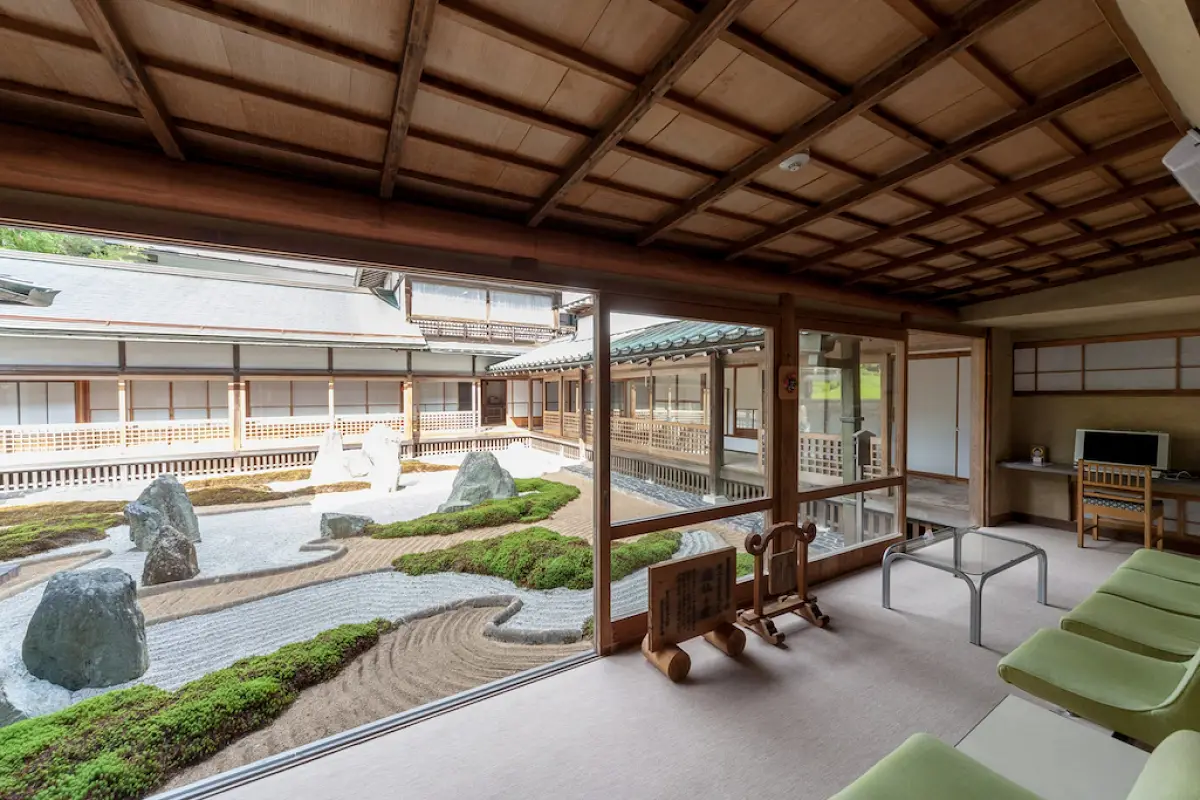
Raked gravel curves gently around moss covered stones in a temple courtyard, the low afternoon light catching every ridge left behind by a monk's careful hand that morning. Through sliding glass doors, a quiet sitting room waits nearby, green chairs arranged beneath wooden beams, a small television and writing desk tucked into the corner for guests staying the night. This tranquil scene, repeated across dozens of properties on a mountain sacred to Japanese Buddhism, sits at the center of a quietly unfolding financial story. Mount Koya Temple Lodging operators, it now appears, have not been entirely forthcoming with tax authorities about the income these serene retreats actually generate.
Several religious corporations operating temple lodgings on Mount Koya, a UNESCO World Heritage site in western Japan, have failed to report a total of more than 100 million yen in income, according to sources familiar with the matter. That figure, uncovered through official audits, places a spotlight on the commercial side of a tradition long associated primarily with spiritual practice rather than hospitality revenue.
What the Audits Actually Found
The Osaka Regional Taxation Bureau uncovered the undeclared income during audits conducted in fiscal 2025, which ended in March, with around 60 million yen in additional taxes now set to be imposed on the entities involved. That combination of underreported income and resulting tax penalties suggests a pattern significant enough to warrant sustained regulatory attention rather than a single isolated oversight.
The bureau audited more than 10 of the roughly 50 such operators currently running temple lodgings on the mountain, examining specifically how these businesses were being managed financially. That sampling approach, reviewing a meaningful subset rather than the entire network at once, allowed investigators to identify a pattern significant enough to merit public disclosure while still leaving open questions about the remaining operators not yet examined.
Where Tax Exemption Ends and Commercial Activity Begins
Understanding this story requires grasping a specific distinction within Japanese tax law. Income related to religious activities, including offerings and monetary donations, remains tax exempt for religious corporations in Japan, a longstanding protection reflecting the country's respect for religious institutions' spiritual functions. Income from commercial operations such as lodging and restaurant businesses, however, is subject to taxation like any other business activity.
That line, between sacred offering and commercial transaction, becomes considerably harder to draw in practice when a temple's lodging operation increasingly resembles a full service hotel, complete with dining, guest amenities and overnight accommodation booked by tourists rather than pilgrims seeking spiritual guidance. The audits suggest at least some Mount Koya operators may have blurred that distinction in their own financial reporting.
A Tradition Increasingly Shaped by Tourism
Mount Koya stands as a major center of the Shingon school of Buddhism, its temple lodgings, known as shukubo, traditionally built to accommodate monks and worshippers making pilgrimage to the sacred site. Today, those same lodgings are widely used by tourists as well, including a growing number of visitors from overseas drawn specifically by the chance to experience an authentic temple stay.
That shift, from primarily religious accommodation toward a genuine tourism destination, has transformed the underlying economics of running a shukubo considerably. What once functioned largely as pilgrim hospitality, supported through donations and modest fees, now increasingly resembles a competitive hospitality business, complete with online bookings, curated dining experiences and international marketing, a transformation that appears to have complicated how some operators categorized their income for tax purposes.
A World Heritage Designation With Commercial Consequences
Mount Koya was listed as a World Heritage Site in 2004 as part of the Sacred Sites and Pilgrimage Routes in the Kii mountain range, a designation that significantly boosted the destination's international visibility and, by extension, tourist demand for authentic temple stays. That heightened profile likely contributed directly to the increased commercial activity now under scrutiny, since UNESCO recognition tends to drive sustained growth in visitor numbers well beyond what a site previously experienced.
Public reaction to the audit findings has been notably mixed. Some commentators have questioned why religious corporations operating what increasingly function as commercial hotels should retain any tax advantages at all, while others have pointed out that World Heritage status itself never granted blanket tax exemption in the first place, and that the current situation reflects standard administrative enforcement rather than any special treatment or double standard. Full details on visiting Mount Koya's temple lodgings are available on the official Koyasan tourism website.
An Administrative Process, Not a Criminal Matter
Despite public frustration expressed by some observers, the resolution process here has remained squarely administrative rather than criminal. No law enforcement involvement has been reported in connection with these audits, since the matter was handled entirely through the tax bureau's standard review process, resulting in back taxes and penalties rather than arrests or prosecution.
That distinction matters for understanding how Japan's tax authorities typically address underreporting cases involving established institutions, particularly religious corporations operating within a legally gray area between exempt spiritual activity and taxable commercial enterprise. The outcome, audit, disclosure, back payment and penalty, reflects a fairly standard regulatory pathway rather than an unusually lenient one specific to this case.
What This Reveals About Temple Hospitality's Growing Pains
The Mount Koya findings illustrate a broader tension facing religious institutions worldwide as they increasingly participate in mainstream tourism and hospitality markets. Balancing genuine spiritual tradition against the practical financial realities of running a modern lodging business, complete with proper bookkeeping, tax compliance and commercial accountability, represents a challenge many religious sites are only beginning to navigate as international tourism continues reshaping their traditional revenue models.
That tension between heritage, tradition and modern commercial pressure echoes across hospitality more broadly, where operators of every kind, from centuries old religious institutions to contemporary restaurant groups, continue adapting long standing practices to meet evolving financial scrutiny and shifting guest expectations, a dynamic also visible in how established hospitality markets elsewhere navigate their own mix of tradition and commerce, as seen in recent coverage of this season's wave of Los Angeles restaurant openings and seasonal offerings.
A Mountain Still Sacred, Now More Closely Watched
The raked gravel gardens and quiet sitting rooms of Mount Koya's temple lodgings will continue welcoming pilgrims and tourists alike, largely unchanged in appearance regardless of the tax bureau's findings. What has shifted, quietly but meaningfully, is the level of financial scrutiny these institutions can now expect to face going forward, as authorities work to ensure that commercial success, however deserved, no longer travels quite so easily beneath the protective shadow of religious tradition.