Mumbai Diner Highlights Subtle Restaurant Tactics That Encourage Higher Spending
A Mumbai diner has sparked discussion by revealing how common restaurant practices subtly influence customers to spend more, shedding light on menu psychology and pricing strategies.
 Prajakta Sanjay Warwadkar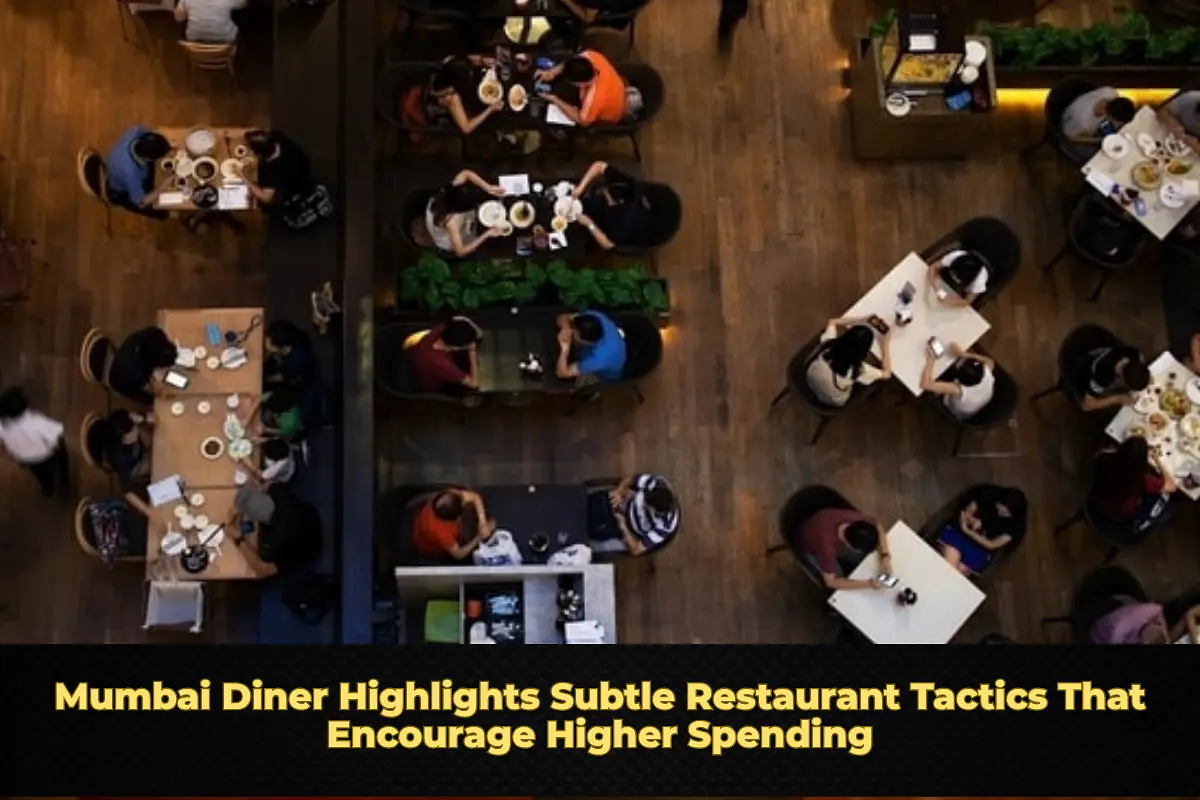
Mumbai Diner Highlights Subtle Restaurant Tactics That Encourage Higher Spending
A Mumbai-based diner has drawn attention online in March 2026 after explaining how certain common restaurant practices subtly influence customers to spend more, sparking widespread discussion about menu psychology, pricing strategies, and consumer behavior in the hospitality industry.
The observation, which gained traction on social media platforms, outlines how restaurants design menus and structure choices in ways that guide diners toward higher-value items without overtly pressuring them. The discussion has resonated with consumers and industry professionals alike, highlighting the growing awareness of behavioral economics in dining experiences.
The Role of Menu Psychology
Menu psychology has long been a key component of restaurant strategy, with operators carefully designing layouts, descriptions, and pricing formats to influence customer decisions. The Mumbai diner’s explanation focused on how these elements can create a perception of value while nudging customers toward more expensive options.
Common techniques include placing high-priced items at the top of the menu to anchor expectations, using descriptive language to enhance perceived quality, and highlighting specific dishes to draw attention. These strategies are designed to make certain choices appear more appealing, often leading customers to spend more than initially planned.
Industry experts note that such practices are not new but have become more refined with advancements in consumer behavior research.
Anchoring and Pricing Strategies
One of the key tactics discussed is price anchoring, where restaurants introduce a premium-priced item to make other options seem more reasonable by comparison. This psychological effect can encourage diners to choose mid-range items that still carry higher margins for the business.
In addition, the absence of currency symbols or the use of rounded numbers can make prices feel less significant, reducing the likelihood of customers focusing on cost. These subtle adjustments can influence decision-making without customers being consciously aware of the impact.
Such pricing strategies are widely used across the hospitality sector, particularly in competitive urban markets.
Curated Choices and Decision Simplification
The Mumbai diner also pointed out how restaurants often limit choices or structure menus in a way that simplifies decision-making for customers. By presenting a curated selection, operators can guide diners toward specific items that are more profitable or align with the restaurant’s brand identity.
This approach reduces decision fatigue while increasing the likelihood of customers selecting featured dishes. In some cases, servers may also play a role by recommending certain items, further influencing the final order.
These practices are designed to enhance the overall dining experience while simultaneously supporting business objectives.
Impact on Consumer Awareness
The viral discussion has increased awareness among diners about the psychological factors at play when ordering food. While many consumers appreciate transparency, others view these strategies as a natural part of the dining experience.
Industry professionals emphasize that the goal is not to mislead customers but to present options in a way that aligns with both customer preferences and business sustainability. Effective menu design can enhance satisfaction by helping diners discover dishes they might enjoy.
However, the conversation has also prompted calls for greater transparency in pricing and menu presentation.
Balancing Business Strategy and Customer Trust
Restaurants operate in a challenging economic environment, with rising costs for ingredients, labor, and operations. As a result, strategies that increase average spending per customer are often essential for maintaining profitability.
At the same time, maintaining customer trust is critical. Overly aggressive upselling or perceived manipulation can lead to negative experiences and impact brand reputation. Striking the right balance between strategic design and genuine hospitality is key to long-term success.
Many operators are now focusing on creating value-driven experiences that justify pricing while maintaining transparency.
Global Relevance of Menu Engineering
The practices highlighted by the Mumbai diner reflect broader global trends in the restaurant industry. Menu engineering, which combines psychology, design, and data analysis, is widely used by operators to optimize performance.
Restaurants increasingly rely on data to understand customer preferences, track ordering patterns, and refine menu offerings. This data-driven approach allows for continuous improvement in both customer experience and profitability.
The integration of technology, including digital menus and ordering systems, has further enhanced the ability to implement and test these strategies.
Consumer Behavior in Urban Dining Markets
In cities like Mumbai, where dining options are abundant and competition is intense, understanding consumer behavior is particularly important. Diners are often influenced by a combination of factors, including price, presentation, ambiance, and social trends.
The growing popularity of dining out and food delivery has also increased the importance of effective menu design. Restaurants must capture attention quickly and communicate value clearly to stand out in a crowded market.
The discussion sparked by the Mumbai diner underscores the evolving relationship between consumers and the hospitality industry.
Industry Response and Future Trends
As awareness of these tactics grows, restaurants may need to adapt their approaches to align with changing consumer expectations. Transparency, authenticity, and value are becoming increasingly important in shaping customer perceptions.
Future trends may include more personalized menus, dynamic pricing, and enhanced digital experiences that provide greater clarity and choice for customers. At the same time, the fundamentals of menu psychology are likely to remain a core aspect of restaurant strategy.
Industry stakeholders are expected to continue refining these techniques to balance profitability with customer satisfaction.
Conclusion
The discussion initiated by a Mumbai diner has shed light on the subtle ways restaurants influence spending, highlighting the role of menu psychology in modern dining while emphasizing the need for transparency and trust in an evolving hospitality landscape.