Rising Gas Prices Unlikely to Deter Restaurant Traffic, Analysts Say
Analysts say rising gas prices are unlikely to significantly impact restaurant traffic, as consumer dining habits remain resilient despite economic pressures.
 Prajakta Sanjay Warwadkar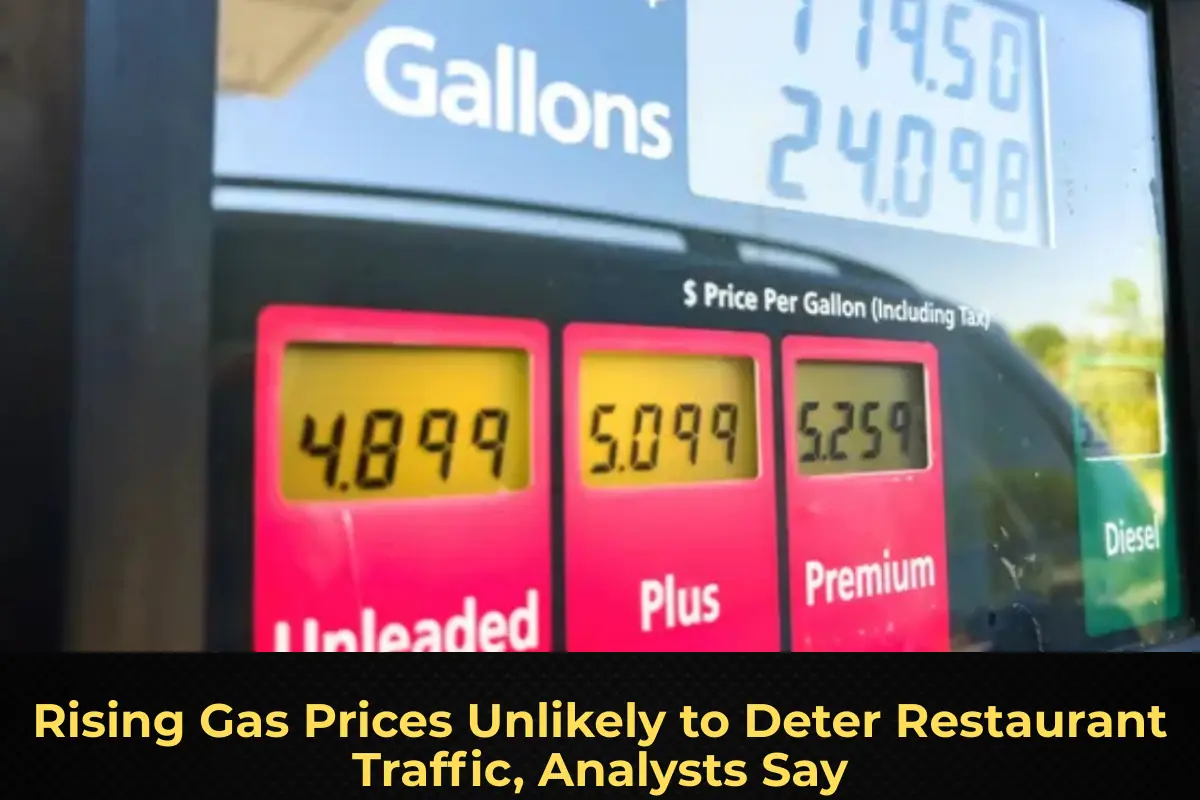
Rising Gas Prices Unlikely to Deter Restaurant Traffic, Analysts Say
Rising gas prices are not expected to significantly reduce restaurant traffic in 2026, according to market analysts, who say consumer dining behavior remains resilient despite increasing fuel costs and broader economic pressures. The assessment comes amid ongoing concerns that higher transportation expenses could limit discretionary spending, particularly in the food service sector.
Industry analysts note that while gas prices influence household budgets, their direct impact on restaurant visits appears limited. Consumers continue to prioritize dining experiences, suggesting that eating out remains a relatively stable component of discretionary spending even during periods of economic fluctuation.
Consumer Dining Habits Show Resilience
Recent data indicates that restaurant traffic has remained steady despite fluctuations in fuel prices. Analysts attribute this resilience to the ingrained role of dining out in modern lifestyles, where restaurants serve not only as places to eat but also as social and experiential destinations.
Consumers are increasingly viewing dining as an essential part of their routine, rather than a luxury that can be easily reduced. This shift has helped the restaurant industry maintain consistent footfall even as other discretionary spending categories experience volatility.
Additionally, convenience-driven habits, including takeout and delivery, continue to support overall demand in the sector.
Limited Direct Correlation Between Fuel Costs and Dining Out
While rising gas prices can influence consumer spending patterns, analysts highlight that the correlation between fuel costs and restaurant traffic is not as strong as previously assumed. Unlike larger expenditures such as travel or major purchases, dining out typically involves smaller, more frequent transactions that are less sensitive to fuel price fluctuations.
Consumers may adjust other areas of spending to accommodate rising costs, but dining often remains a priority due to its role in social interaction and lifestyle habits. This behavior helps insulate restaurants from the full impact of economic pressures related to fuel prices.
The industry’s adaptability has also played a role in mitigating potential declines in traffic.
Shift Toward Value and Affordable Options
Although overall restaurant traffic remains stable, consumer preferences are evolving in response to economic conditions. Many diners are seeking value-driven options, including promotions, bundled meals, and affordable menu items.
Quick service and fast-casual restaurants are particularly well-positioned to benefit from this trend, as they offer cost-effective dining solutions. Full-service restaurants may also adapt by introducing value menus or special offers to retain customer interest.
This shift reflects a broader adjustment in consumer behavior, where spending is optimized rather than reduced entirely.
Operational Costs Continue to Rise
While restaurant traffic may not be significantly impacted, rising gas prices contribute to higher operational costs for restaurant operators. Increased transportation expenses affect the supply chain, including the delivery of ingredients, packaging, and other essential materials.
Delivery services, which rely heavily on fuel, are also facing cost pressures that can influence pricing strategies and margins. Restaurants must balance these rising expenses with the need to remain competitive and maintain customer demand.
As a result, some operators are implementing modest price increases or optimizing operations to manage costs effectively.
Regional Variations and Market Differences
The impact of gas prices on restaurant traffic may vary by region, depending on factors such as commuting patterns, urban density, and local economic conditions. In areas where consumers rely heavily on personal vehicles, higher fuel costs could have a more noticeable effect on dining frequency.
However, in urban centers with strong delivery infrastructure and walkable dining options, the impact is likely to be less pronounced. These regional differences highlight the complexity of consumer behavior and the importance of localized strategies for restaurant operators.
Understanding these nuances allows businesses to tailor their approach to specific markets.
Role of Delivery and Digital Channels
Digital ordering and delivery platforms continue to play a crucial role in sustaining restaurant traffic. Even as fuel prices rise, the convenience of ordering food online helps maintain demand, particularly among urban consumers.
Restaurants are investing in technology and partnerships to enhance their delivery capabilities, ensuring that they can meet customer expectations while managing operational challenges. These efforts contribute to overall stability in the sector.
The integration of digital channels has become a key factor in the industry’s resilience.
Balancing Pricing and Customer Retention
Restaurants are carefully managing pricing strategies to address rising costs without discouraging customers. Incremental price adjustments, combined with targeted promotions, are being used to maintain a balance between profitability and affordability.
Transparency and perceived value are critical in this context, as consumers are more likely to accept price increases if they feel they are receiving quality and experience in return. Restaurants that successfully communicate their value proposition are better positioned to retain customer loyalty.
This balancing act remains a central challenge for operators in the current environment.
Industry Outlook Remains Stable
Despite ongoing economic uncertainties, the outlook for restaurant traffic remains stable, supported by consistent consumer demand and evolving business strategies. Analysts expect the industry to continue adapting to changing conditions, leveraging innovation and operational efficiency to sustain growth.
While external factors such as fuel prices and inflation will continue to influence the sector, the fundamental drivers of dining demand appear intact. Restaurants that can respond effectively to these challenges are likely to maintain their performance in the months ahead.
The industry’s ability to remain resilient underscores its importance within the broader consumer economy.
Conclusion
Rising gas prices are contributing to cost pressures within the restaurant industry, but analysts maintain that consumer demand for dining remains strong, with traffic levels expected to hold steady as businesses adapt to evolving economic conditions.