Russia Western Food Import Ban Extends Through 2028
The Russia Western food import ban has been extended through 2028, deepening a 14 year old trade rift as drought hits harvests across Europe and the US.
 RUKAIYA KADIWAL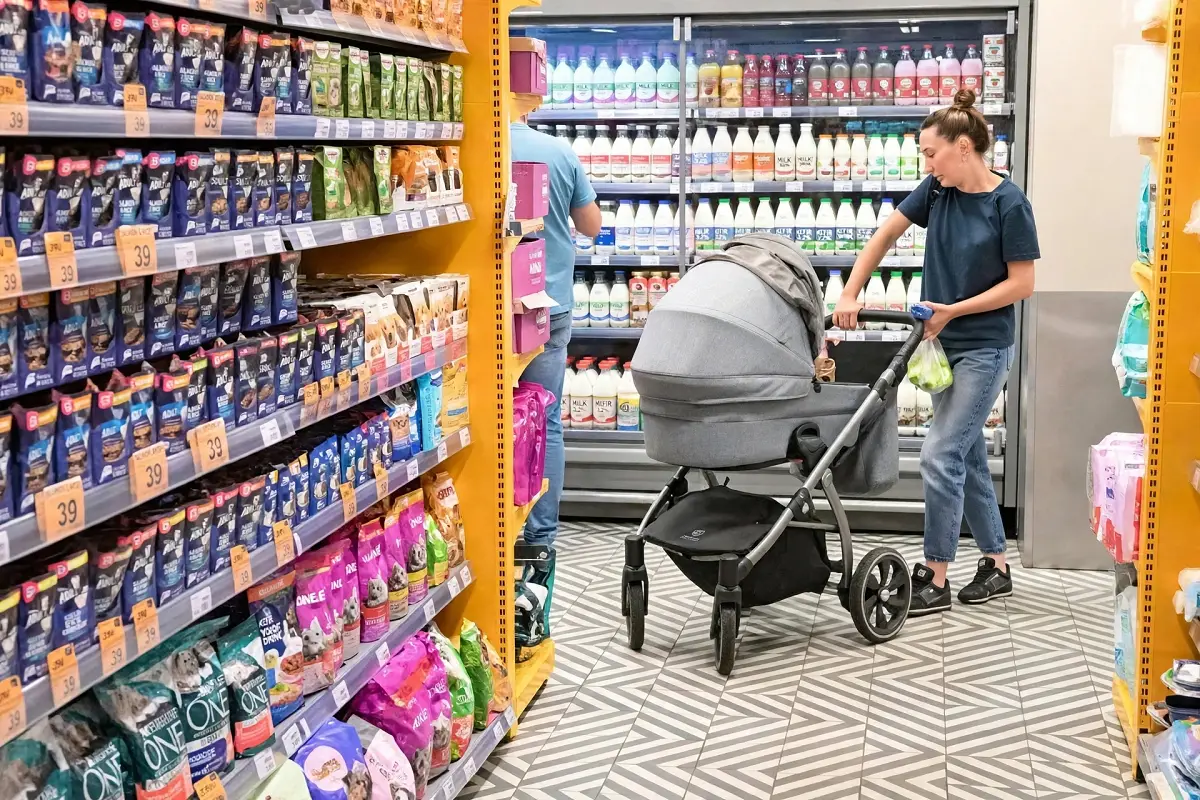
Inside a Moscow supermarket, a mother pushes a stroller past shelves stocked with dairy products bearing unfamiliar brand names, Serbian cheeses standing where French ones once sat, domestic sausages filling space that German imports used to occupy. It is an ordinary Thursday shopping trip, yet the shelves themselves tell a story that stretches back more than a decade, one that has just been extended for several more years to come, a story reported by Irish Sun this week.
President Vladimir Putin has extended the Russia Western food import ban through the end of 2028, according to a decree published on the Kremlin's website on Thursday. The move stretches a policy first introduced in August 2014 into its fourteenth year, a remarkably long run for what began as a retaliatory measure tied to one of the more contested geopolitical episodes of the past decade.
How the Embargo Began
The restrictions trace back to sanctions imposed on Russia by several Western nations following Crimea's 2014 referendum to join the Russian Federation, a vote that Russia recognises as legitimate but that the United States, the European Union, and most of the international community have not recognised, regarding the process as inconsistent with international law and Ukraine's sovereignty. In response to the sanctions that followed, Moscow introduced its own counter measures, banning a wide range of food imports from countries it considered responsible.
Those restrictions now apply to the United States, the European Union, the United Kingdom, Canada, Australia, New Zealand, Norway, Ukraine, Albania, Montenegro, Iceland, and Liechtenstein, covering meat, seafood, dairy, fruits, and vegetables. Many of these countries are formally designated as "unfriendly" under current Russian government policy, a classification that has shaped trade relationships well beyond food alone.
What Moscow Says the Ban Achieved
Russian officials have consistently framed the embargo as a catalyst rather than a restriction, arguing that it forced domestic agricultural production to expand in ways that might never have happened otherwise. Moscow points to increased output from Russian farms and processors, alongside a growing presence of brands from what it terms "friendly" nations, with Serbia frequently cited as a country that has filled gaps left by departing Western suppliers.
Whether that narrative fully captures the on the ground reality for Russian consumers is harder to verify from outside the country, and independent assessments of long term price and quality effects remain limited. What is clear is that the policy has now outlasted the initial crisis that produced it by more than a decade, suggesting Moscow views the ban less as an emergency measure and more as a permanent feature of its trade relationship with the West.
An Extension Timed Against a Difficult Harvest
The timing of this extension coincides with genuinely severe agricultural pressure on both sides of the Atlantic. Drought remains widespread across the contiguous United States following its hottest meteorological summer on record, according to the National Oceanic and Atmospheric Administration. Western Europe has recorded a similarly extreme season, with the EU's Copernicus Climate Change Service confirming its own hottest summer on record.
The consequences for European agriculture are measurable. The European Commission's Joint Research Centre has projected that key EU summer crop yields could fall as much as 14 percent below their five year averages. Potato harvests across Great Britain, Germany, France, Belgium, and the Netherlands are expected to suffer losses between 498 million and 818 million pounds, translating to roughly 572 million to 940 million dollars, according to the UK based Energy and Climate Intelligence Unit.
What This Means for Food Supply Chains
For the hospitality and food retail sectors on both sides of this divide, the extended ban adds another layer of complexity to an already strained agricultural year. Western producers already grappling with reduced yields now face continued exclusion from a market that once represented meaningful export volume, while Russian retailers and restaurants continue adapting menus and supply chains around substitutes sourced from friendlier trading partners.
That adaptation is not without friction. Chefs and food buyers accustomed to specific European ingredients, certain cheeses, wines, or specialty meats, have spent over a decade building alternative supply relationships, a process that has reshaped culinary options available to Russian consumers and hospitality businesses alike. Similar disruptions to established supply patterns have rippled through hospitality sectors elsewhere this year, a dynamic echoed in unrelated stories of businesses adapting to shifting local conditions, including the steady expansion of chains like the one detailed in Chick-fil-A's newest Lansing Township opening, a reminder that food businesses everywhere are constantly recalibrating around forces outside their control, whether political or environmental.
A Policy Measured in Years, Not Headlines
What began in 2014 as a retaliatory response to a specific geopolitical crisis has, by 2028, become something closer to a structural feature of how Russia manages its food economy. The mother pushing her stroller past shelves of Serbian dairy products may not think of her weekly shop as a political statement, yet every unfamiliar label on those shelves is, in its own quiet way, a residue of decisions made more than a decade earlier and reaffirmed once again this week. Whether the coming years bring any shift in that arrangement will likely depend less on food policy itself than on the broader diplomatic relationships it was designed to punish in the first place.