Texas Roadhouse Leads Job Growth as Full‑Service Restaurants Show Strong Labor Gains
A new jobs report highlights strong employment growth in full‑service restaurants, with Texas Roadhouse emerging as a key contributor as the hospitality industry continues rebuilding its workforce.
 Prajakta Sanjay Warwadkar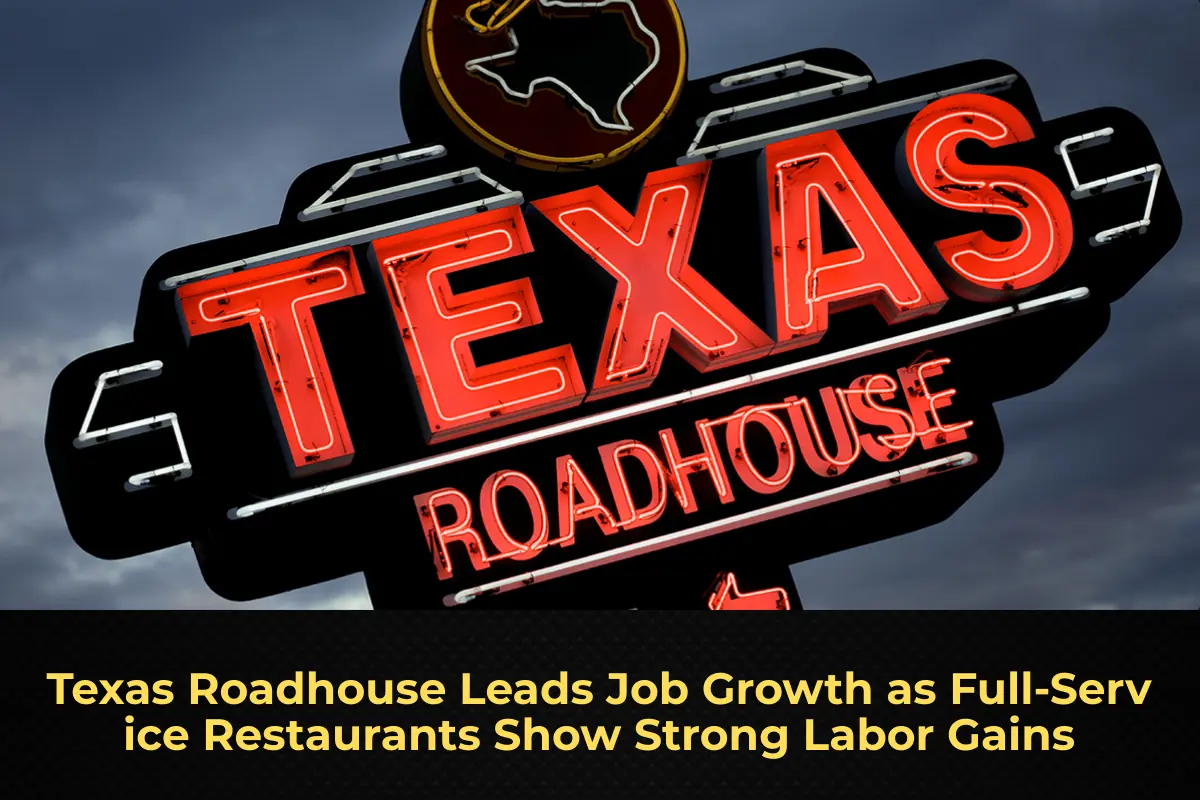
Restaurant Industry Shows Positive Employment Momentum
The restaurant industry continues to demonstrate resilience as employment levels gradually strengthen across the United States. According to recent labor data, full‑service restaurants have emerged as one of the key drivers of job growth within the hospitality sector. Among the brands contributing significantly to this momentum is Texas Roadhouse, which has reported notable hiring activity as it continues expanding operations and serving a growing customer base.
The jobs report highlights a broader recovery trend within the restaurant industry. As dining demand remains steady and consumers continue returning to restaurants for social experiences, many operators are rebuilding their workforce to support increasing service volumes.
Texas Roadhouse Driving Employment Expansion
Texas Roadhouse has long been recognized as one of the most successful full‑service restaurant chains in the United States. Known for its casual dining atmosphere and focus on high‑quality food and hospitality, the brand has maintained consistent growth even during periods of economic uncertainty.
The latest employment figures indicate that Texas Roadhouse has played an important role in driving job creation within the full‑service dining segment. As the company continues to open new locations and maintain strong guest demand, staffing needs have grown across both front‑of‑house and kitchen roles.
This expansion not only strengthens the company’s operations but also contributes to broader employment opportunities in the communities where its restaurants operate.
The Importance of Full‑Service Restaurants in Job Creation
Full‑service restaurants traditionally employ a wide range of staff, including servers, bartenders, hosts, chefs, line cooks, and management teams. Because of the variety of roles involved, these establishments play a significant role in supporting employment across the hospitality industry.
As restaurants experience higher guest traffic, staffing requirements increase to ensure efficient service and maintain quality standards. This dynamic allows full‑service restaurant chains to generate substantial employment opportunities compared with smaller dining formats.
The jobs report suggests that the continued growth of full‑service dining brands may contribute to sustained labor demand throughout the hospitality sector.
Rising Consumer Demand Supporting Restaurant Hiring
One of the main drivers behind the industry’s improving employment outlook is the steady return of consumer demand for in‑person dining experiences. While delivery and takeout remain popular, many customers are increasingly seeking the social atmosphere and service experience offered by full‑service restaurants.
Restaurants like Texas Roadhouse benefit from this trend because their business model emphasizes hospitality, table service, and an engaging dining environment. These experiences require well‑trained staff who can provide attentive service while maintaining efficient operations.
As a result, many restaurant brands have prioritized hiring and workforce development to meet growing customer expectations.
Investing in Staff Training and Retention
Recruiting employees is only one aspect of building a strong restaurant workforce. Many hospitality companies are also focusing on training programs and employee retention strategies to ensure long‑term stability.
Training initiatives often include hospitality skills, food safety education, leadership development, and career advancement opportunities. These programs help employees build valuable skills while encouraging them to remain with the company.
Retention has become particularly important as restaurants compete for skilled workers in a tight labor market. Employers that offer supportive workplace cultures and career growth opportunities are more likely to attract and retain talented team members.
Challenges Facing Restaurant Labor Markets
Despite positive hiring trends, the restaurant industry continues to face several workforce challenges. Labor shortages, rising wage expectations, and scheduling complexities remain common concerns among operators.
Many restaurants have adjusted their strategies by offering competitive pay, flexible scheduling, and improved benefits to attract employees. Others are investing in technology that helps streamline operations and reduce pressure on staff.
Balancing labor costs with service quality remains a key challenge for restaurant operators as they work to maintain profitability while delivering exceptional guest experiences.
Technology Supporting Workforce Efficiency
Technology has become an important tool for managing restaurant labor more effectively. Digital scheduling systems, workforce management platforms, and integrated point‑of‑sale solutions help managers allocate staff efficiently during peak hours.
These technologies can also provide insights into sales patterns and customer traffic, allowing restaurants to plan staffing levels more accurately. Improved workforce management helps reduce stress on employees while ensuring smooth service operations.
For large restaurant chains like Texas Roadhouse, technology plays a crucial role in coordinating labor strategies across multiple locations.
The Broader Impact on the Hospitality Industry
The positive employment trends reported within the restaurant sector have broader implications for the hospitality industry as a whole. Restaurants often serve as entry points for individuals beginning careers in hospitality, providing valuable training and professional development opportunities.
From entry‑level positions to management roles, restaurant jobs can serve as stepping stones toward long‑term careers in food service, hotel management, and culinary arts.
As the industry continues expanding, these employment opportunities contribute to local economies by generating income, supporting suppliers, and encouraging community engagement.
Looking Ahead for Restaurant Employment
The outlook for restaurant employment remains cautiously optimistic. While economic conditions and consumer spending patterns will continue to influence hiring decisions, the demand for hospitality experiences suggests that restaurants will remain important sources of job creation.
Companies that successfully balance workforce investment with operational efficiency are likely to thrive in this environment. By focusing on employee training, supportive workplace cultures, and strong service standards, restaurants can build teams capable of delivering memorable guest experiences.
For Texas Roadhouse and other full‑service dining brands, continued expansion and steady customer demand may create additional employment opportunities in the years ahead.
Conclusion
The latest jobs report highlights encouraging progress for the restaurant industry as employment levels gradually recover. Full‑service restaurants, led by brands such as Texas Roadhouse, are playing a key role in driving workforce growth.
As restaurants continue adapting to evolving consumer expectations and operational challenges, investing in employees will remain a critical factor for long‑term success. By creating supportive work environments and expanding career opportunities, hospitality businesses can strengthen both their operations and the communities they serve.