Overbooking Management Strategies: Front Desk SimpleTraining in Hotels
Learn overbooking management strategies at front desk with SOP, guest handling steps, and service standards to ensure smooth hotel operations.
 Shah Vaibhavi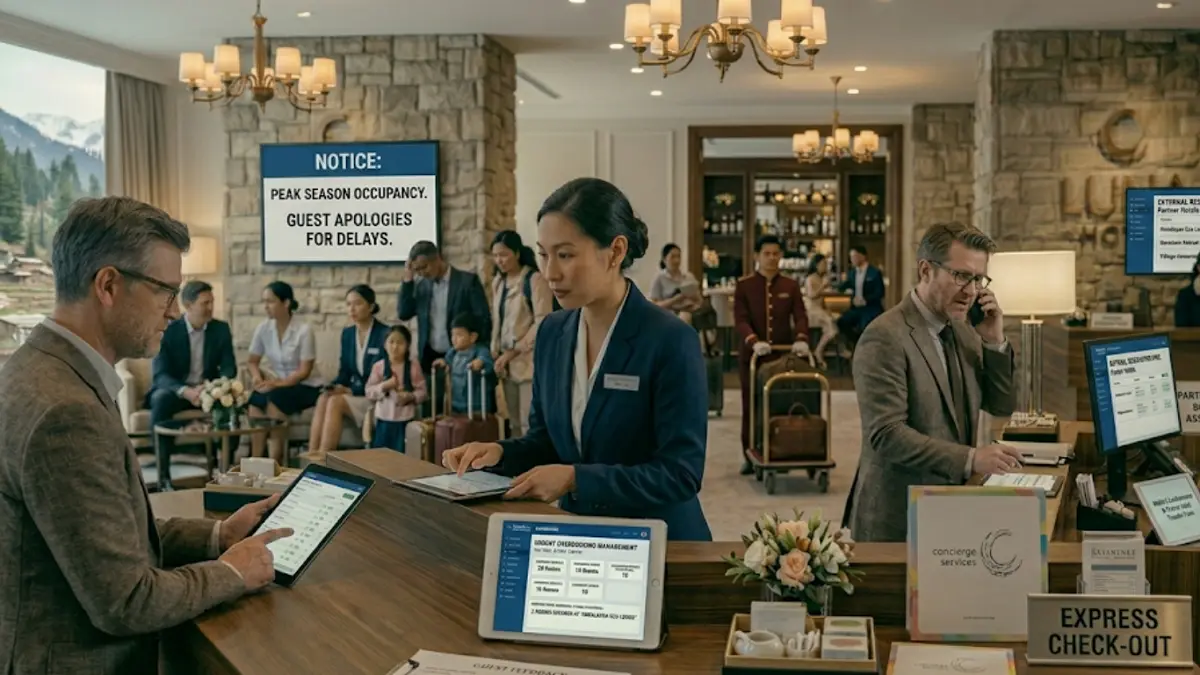
This training module on overbooking management strategies front desk is designed to equip front office staff with structured procedures to handle excess bookings professionally. Overbooking is a common hotel revenue strategy, but improper handling can lead to guest dissatisfaction, operational disruption, and brand damage. This guide ensures efficient, guest-focused resolution while maintaining service standards.
Overview of Overbooking Management Strategies
Overbooking management strategies front desk refer to the operational methods used to manage situations where the number of confirmed reservations exceeds available rooms. Hotels often overbook intentionally to offset no-shows and cancellations, but unexpected full occupancy requires careful handling at the front desk.
Effective overbooking management depends on real-time coordination between reservations, housekeeping, and front office teams. The goal is to minimize guest inconvenience while maintaining occupancy targets and revenue performance.
Front desk staff play a critical role during guest arrival, where they must communicate transparently, offer alternatives, and ensure service recovery. A well-managed overbooking situation can still result in a positive guest experience if handled professionally.
SOP Procedure for Overbooking Handling
The overbooking management strategies front desk SOP ensures structured and consistent handling:
Step 1: Identify Overbooking Status
Review PMS and occupancy reports to confirm overbooking situation before guest arrival.
Step 2: Prioritize Reservations
Classify bookings based on VIP status, loyalty members, prepaid reservations, and length of stay.
Step 3: Pre-Block Rooms
Ensure priority guests have confirmed room allocation.
Step 4: Identify Relocation Candidates
Select bookings eligible for relocation (non-guaranteed, OTA bookings, short stays).
Step 5: Arrange Alternative Accommodation
Coordinate with nearby hotels of similar or higher category.
Step 6: Inform Guest Professionally
Communicate the situation honestly and respectfully.
Step 7: Offer Compensation
Provide alternatives such as free transfer, upgrade at alternate hotel, or additional benefits.
Step 8: Arrange Transportation
Ensure smooth transfer to the alternate property.
Step 9: Update System Records
Mark booking as “walked guest” in PMS.
Step 10: Follow-Up
Ensure guest satisfaction at the alternate hotel.
This SOP ensures minimal disruption and maintains service quality during overbooking situations.
Front Desk Workflow for Overbooking Situations
Overbooking management strategies front desk must be integrated into daily operational workflow:
Pre-Arrival Planning:
Review occupancy forecast and identify potential overbooking in advance.
Reservation Monitoring:
Track last-minute bookings, cancellations, and no-show trends.
Coordination with Revenue Team:
Align overbooking limits based on historical data.
Housekeeping Coordination:
Ensure maximum room readiness to reduce displacement.
Shift Handover:
Communicate overbooking status clearly between shifts.
Walk Strategy Preparation:
Keep a list of partner hotels ready for relocation.
Documentation:
Maintain records of relocated guests for audit and reporting.
Guest History Update:
Record incident details for future service recovery.
This workflow ensures preparedness and reduces last-minute confusion.
Guest Interaction Process During Overbooking
Overbooking management strategies front desk require a structured and empathetic guest interaction approach:
Step 1: Private Communication
Speak to the guest discreetly to avoid public discomfort.
Step 2: Apologize Sincerely
Acknowledge inconvenience without blaming systems or staff.
Step 3: Explain Clearly
Provide a simple and honest explanation of the situation.
Step 4: Offer Immediate Solution
Present confirmed alternative accommodation.
Step 5: Highlight Benefits
Explain upgrades or added services at the alternate hotel.
Step 6: Provide Assurance
Reassure the guest of smooth handling and support.
Step 7: Arrange Logistics
Handle transportation and luggage assistance.
Step 8: Maintain Professional Tone
Stay calm and respectful even if guest is upset.
Step 9: Offer Compensation
Provide vouchers, discounts, or future stay benefits.
Step 10: Thank the Guest
Appreciate their understanding and patience.
This interaction approach helps maintain guest trust even in challenging situations.
Tools and Systems Supporting Overbooking Management
Overbooking management strategies front desk rely on operational tools and systems:
Property Management System (PMS): Tracks reservations, room inventory, and guest profiles.
Channel Manager: Controls room availability across booking platforms.
Revenue Management System: Determines optimal overbooking limits.
Arrival and Departure Reports: Provide real-time occupancy insights.
Partner Hotel Database: Maintains list of alternate accommodation options.
Internal Communication Systems: Enable coordination between departments.
Guest Feedback System: Tracks satisfaction and service recovery effectiveness.
These systems ensure accurate decision-making and efficient handling.
Service Standards and Performance Metrics
Overbooking management strategies front desk are measured through operational benchmarks:
Guest Relocation Time: Complete within 15–20 minutes.
Communication Clarity: No misinformation or confusion.
Guest Satisfaction Score: Positive feedback despite relocation.
Compensation Accuracy: As per hotel policy.
Coordination Efficiency: Smooth handling with minimal delays.
Error Rate: Zero incorrect room allocation.
Documentation Accuracy: Proper recording of walked guests.
Maintaining these standards ensures service consistency and protects hotel reputation.
Evaluation and Training Assessment
Regular evaluation ensures effective implementation of overbooking management strategies front desk:
- Supervisor Observation: Monitor guest handling during overbooking cases.
- Role Play Exercises: Simulate relocation scenarios.
- Guest Feedback Analysis: Evaluate satisfaction after relocation.
- Audit Reports: Review accuracy of overbooking records.
- Incident Analysis: Identify root causes of overbooking issues.
- Performance Reviews: Assess communication and problem-solving skills.
- Continuous Training: Improve conflict resolution and decision-making.
Continuous assessment enhances staff confidence, reduces operational errors, and improves guest experience.
In conclusion, overbooking management strategies front desk are essential for balancing revenue optimization with guest satisfaction. By following structured SOPs, maintaining clear communication, and ensuring efficient coordination, front office staff can handle overbooking situations professionally while preserving guest trust and service quality.