10 Hotel Standard Bed Making SOP: Complete Training Guide with SOP
Learn hotel standard bed making SOP with professional housekeeping procedures, bed arrangement techniques.
 Altama khan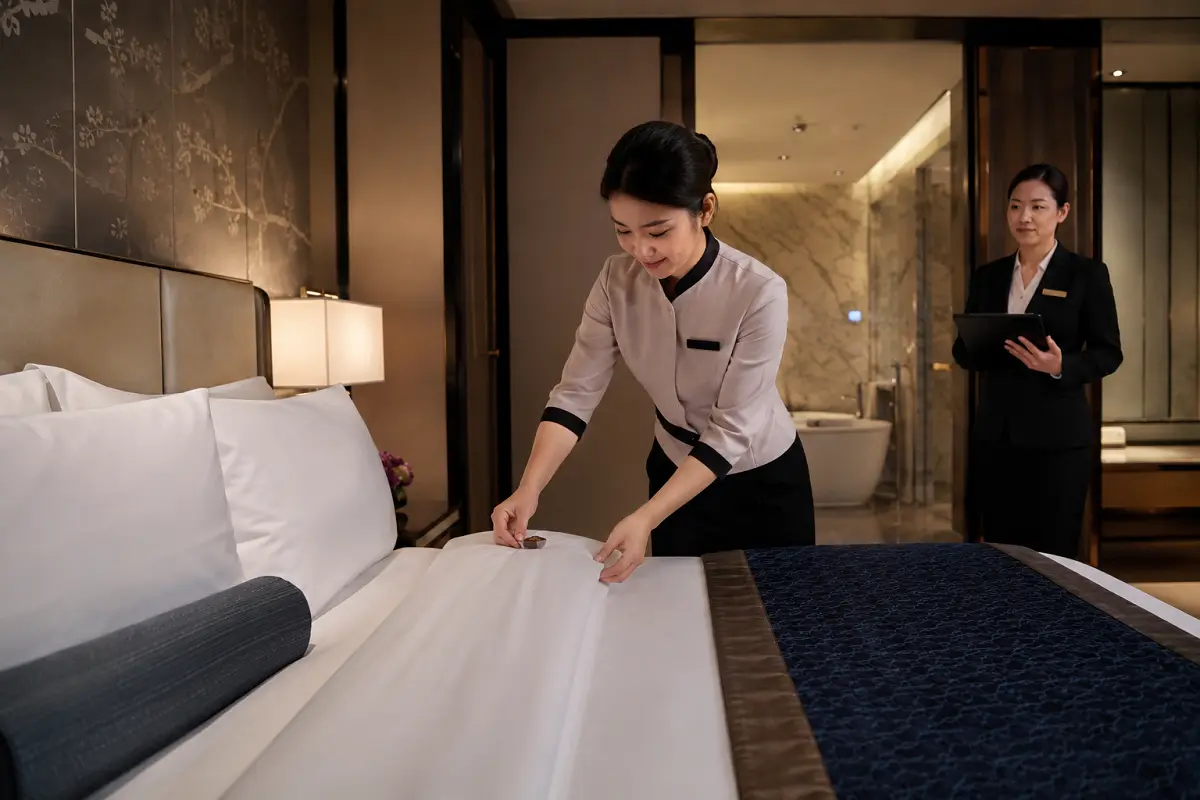
Hotel Standard Bed Making SOP: Professional Housekeeping Training Guide for Room Attendants
A. Personal Introduction
Ask any experienced housekeeper what the centrepiece of a perfectly presented guest room is, and almost every one of them will give you the same answer the bed. It is the first thing a guest notices when they open the door. It is the last thing they look at before they sleep. And it is the single most powerful visual indicator of whether a hotel takes its standards seriously.
A perfectly made hotel bed communicates something without saying a word. It tells the guest: this room was prepared for you, with care, by someone who takes pride in their work. Crisp, smooth linen. Tight, neat corners. Pillows arranged with precision. No creases. No unevenness. No shortcuts.
The hotel standard bed making SOP is one of the most fundamental skills in the entire housekeeping profession. Whether you're making a twin room in a budget hotel or turning down a king suite at a five-star resort, the principles are the same and when you master them, you'll feel the difference in every room you complete.
This guide covers everything. The linen. The technique. The corners. The pillows. The finishing touches. And the professional standards that make the difference between a good room and an unforgettable one. Let's get started.
B. What Makes This Training Special
Bed making is one of those skills that looks simple from the outside until you're standing next to a seasoned room attendant and watching them transform a stripped bed into a hotel-worthy masterpiece in under four minutes. At that point, you realise there is an entire craft here, and it is worth learning properly.
This training is built around the real SOP logic used in professional hotel operations including the techniques, sequences, and quality standards applied by leading international hotel brands. It covers not just how to make the bed, but why each step matters from the ergonomic benefit of working both sides simultaneously to the guest psychology behind a perfectly centred duvet.
You will also learn how bed making standards adapt across different room and bed types, how to handle linen with care and hygiene discipline, and how to inspect your own work to the standard your supervisor would expect.
C. Tools & Equipment Overview
Before you begin making any bed, ensure the following linen and equipment are available, clean, and in perfect condition. Never use linen that is stained, torn, or worn beyond its usable life remove it from service and replace it immediately.
- Fitted Sheet (Bottom Sheet): Elasticated at all four corners or fully elasticated around the perimeter. Must be the correct size for the mattress never use an undersized sheet that won't stay anchored.
- Flat Sheet (Top Sheet): Used in American or traditional European bed making styles as a layer between the guest and the duvet. Not used in all hotel styles check your property's standard.
- Duvet / Duvet Cover (Duvet Insert + Cover): The primary top layer in most modern hotel bed making. The duvet insert must sit fully inside the cover with all corners properly pushed into the cover corners no bunching or sagging.
- Pillows and Pillowcases: Standard hotels provide two pillows per guest sleeping position. Pillowcases must be fresh, crisp, and correctly fitted no excess fabric bunching at the closed end.
- Mattress Protector / Mattress Topper: Should be inspected and adjusted during each full linen change. Replace if stained or damaged. Never leave a bare mattress for a guest.
- Bed Runner / Decorative Throw (property-specific): Placed across the foot of the bed as a finishing touch in mid-range to luxury properties. Must be centred and wrinkle-free.
- Linen Bag: For collecting all soiled linen during stripping. Never place soiled linen on the floor or on any guest surface.
- Housekeeping Trolley: Clean linen stored on the upper shelf of the trolley, clearly separated from soiled linen bags and cleaning equipment.
- Lint Roller (optional but recommended): For a final lint and hair check on the duvet cover surface before room sign-off.
D. Training Process Overview
This bed making training is structured in a clear, progressive sequence from linen knowledge through to the final presentation standard. Each phase builds on the one before it.
- Phase 1: Linen identification, inspection, and hygiene handling
- Phase 2: Stripping the bed correctly and safely
- Phase 3: Mattress and base inspection
- Phase 4: Fitting the bottom sheet technique and mitre corner method
- Phase 5: Applying the top sheet or duvet (property standard dependent)
- Phase 6: Duvet cover application and positioning
- Phase 7: Pillow preparation and placement
- Phase 8: Finishing touches bed runner, turndown fold, and symmetry check
- Phase 9: Self-inspection to hotel standard
E. Professional Tips for Best Results
The best room attendants in the world make bed making look effortless. That ease comes from practised technique, good body mechanics, and a few professional habits that transform good bed making into great bed making:
- Always work both sides of the bed simultaneously where possible. Move from one side to the other in sequence don't complete one full side before starting the other. This saves time and ensures symmetrical tension across the linen.
- Shake linen out fully before laying it. Never place a crumpled or rolled sheet directly onto the mattress. A proper shake and float ensures even distribution and reduces the number of smoothing passes needed.
- Tension is everything. A hotel bed looks the way it does because the linen is under consistent, even tension. Smooth from the centre outward, working wrinkles toward the edges and tucking them away cleanly.
- Check your mitre corners from a standing position. Crouch down to bed level after completing your corners from this angle you can immediately see whether the fold is clean and the drape is even on both sides.
- Never touch the inside of a pillowcase with your hands when inserting the pillow. Hold the pillow through the closed end of the pillowcase to maintain hygiene standards.
- Centring is non-negotiable. The duvet, bed runner, and pillows must all be perfectly centred on the bed. Use the headboard as your reference point and check from the foot of the bed.
- Protect your back. Bed making is physically demanding. Use your legs when tucking low sheets, adjust the bed height where possible, and alternate which side you lead with to distribute physical effort evenly.
- Inspect in natural or good light. Always inspect the finished bed with all room lights on and ideally with daylight from the window. Shadows can conceal wrinkles, hair, and linen imperfections.
F. Department Coordination
Bed making sits at the centre of several important interdepartmental workflows. Understanding those connections helps room attendants perform their role more effectively:
- Laundry / Linen Room: Clean linen supply is the foundation of every bed make. Room attendants must report any linen shortages, quality issues (staining, wear, incorrect sizing), or delivery discrepancies to the linen room immediately. Never use substandard linen in a guest room.
- Housekeeping Supervisor: Room attendants must report any mattress damage, broken bed frames, faulty divan bases, or missing mattress protectors to their floor supervisor so a maintenance request can be raised before the room is returned to service.
- Front Office: VIP arrivals or guests with documented preferences (e.g. extra pillows, hypoallergenic linen, specific bed configurations for connecting rooms) are flagged by the front office to the housekeeping team. Room attendants should check their assignment sheet for any such notes before making the bed.
- Maintenance / Engineering: Any structural issue with the bed broken slats, a faulty adjustable base, a damaged headboard must be logged as a maintenance defect. The room should be placed Out of Order until the issue is resolved, rather than presenting an unsafe bed to a guest.
- Guest Relations / Concierge: Special requests such as rose petal turndown, specific pillow arrangements, or honeymoon/anniversary room setups are coordinated between guest relations and the housekeeping team. Room attendants receive these instructions via their supervisor or coordinator.
G. Safety & Hygiene Standards
Linen and bed hygiene are critical to guest health and the hotel's reputation. Every room attendant must understand and consistently apply the following standards:
- Never place soiled linen on the floor, on chairs, or on any guest surface. Strip directly into the linen bag on your trolley. Soiled linen carries bacteria and potentially contagious material treat it accordingly.
- Wear gloves when stripping beds. You do not know the health status of the departing guest. Protect yourself during the stripping process, especially when handling linen with bodily fluid stains.
- Check for sharps, foreign objects, and valuables inside bed linen before rolling and disposing. Needles, broken glass, jewellery, and medication can all be concealed in sheets. Follow your hotel's sharps disposal protocol if found.
- Never re-use linen between guests. Even if an occupied room's linen appears clean, all linen must be changed on every full room service unless the guest has actively participated in an opt-out linen reuse programme and has displayed the programme card accordingly.
- Inspect every piece of linen before placing it on the bed. Check for stains, tears, thinning fabric (pilling), odours, and correct sizing. Any linen that fails this check goes directly to the soiled or condemned linen bag not onto a guest bed.
- Practice proper manual handling. Linen, especially in large hotel batches, is heavy. Use correct lifting technique, never overload your linen bag, and request assistance for particularly heavy mattress work such as rotating or flipping a mattress.
- Allergy awareness: If a guest has documented allergies (feather/down, certain detergents), ensure hypoallergenic linen and pillows are used as specified. Confirm with your supervisor before making the bed in these cases.
H. Variations & Industry Applications
The bed making procedure adapts across different property types, room categories, and brand standards. Understanding these variations prepares you to work confidently across different hotel environments:
- American Style (Open Bed / Duvet Style): Fitted sheet, flat sheet, and duvet. The flat sheet is tucked across the foot of the bed and folded back over the duvet at the head to create a clean visible edge. Common in North American and Caribbean properties.
- European Style (Duvet Only): Fitted sheet and duvet cover — no flat top sheet. The duvet is folded back approximately 30–40 cm at the head to reveal the pillow presentation. Most common in UK and European hotel markets.
- Luxury / Five-Star Style: Multiple layers fitted sheet, flat sheet, duvet, decorative cushions, and a precisely positioned bed runner. Pillow arrangement is often more elaborate (decorative pillows, bolsters, and sleeping pillows in tiered presentation). Symmetry and precision are paramount.
- Twin Bed Configuration: Two separate single beds made to an identical standard both beds must be made in perfect parallel, with matching linen presentation, equal spacing from the wall, and centred pillows on each bed.
- King / Super King Bed: Requires additional care with centring the duvet and ensuring even drape on both sides. May require a second room attendant for efficient duvet cover application on large inserts.
- Sofa Bed / Rollaway / Cot: Smaller format beds used for additional guests. Made to the same linen hygiene standards but with appropriate linen sizing. Sofa beds require the mechanism to be fully extended and the mattress properly inspected before making.
- Turndown Service: An evening variation of bed presentation rather than a full make, the bed is folded back at a 45-degree diagonal on the guest's preferred sleeping side, an amenity is placed, and the room is prepared for sleep.
I. Preparation Method
Effective bed making begins with thorough preparation — both of your linen supply and your physical workspace. Follow these preparation steps before every bed make:
- Ensure your trolley is stocked with the correct quantity and size of linen for every bed on your floor before you start your shift.
- Confirm the bed type and size for each room on your assignment sheet single, double, queen, king, super king, twin and ensure you carry the correct linen sizes accordingly.
- Check any special notes on your assignment sheet for the room VIP preferences, allergy requirements, or extra linen requests.
- Before making any bed, remove all furniture that blocks access to both sides of the bed bedside tables should be pulled back slightly and any luggage or personal items belonging to a stayover guest should be carefully moved to a chair or luggage rack, never placed on the floor.
- Inspect the mattress protector, mattress, and bed base during every full linen change look for staining, damage, or pest evidence. Report anything abnormal to your supervisor immediately before proceeding.
- Ensure you have a clean linen bag attached to your trolley before entering the room you will need it for stripping the bed before making it.
J. Standard Operating Procedure (SOP): Hotel Standard Bed Making
The following is the full, professional hotel standard bed making SOP. Follow each step precisely and in sequence for consistent, guest-ready results every time.
Step 1: Strip the Bed
- Put on gloves before stripping any bed, regardless of its visible condition.
- Remove pillowcases first by gripping the open end and pulling the pillow free. Place bare pillows on a clean surface never on the floor.
- Remove the duvet cover by reaching inside and gripping both top corners of the insert, then pulling the cover inside out over the insert as you remove it. This keeps any debris contained inside the cover.
- Remove the flat sheet (if applicable) and the fitted sheet, rolling each piece inward as you remove it to contain any debris, skin cells, or moisture.
- Place all soiled linen directly into your linen bag never on the floor or on any furniture surface.
- Check between the mattress and divan base for any lost property, foreign objects, or sharps.
- Remove gloves and wash or sanitise hands before handling clean linen.
Step 2: Inspect the Mattress and Base
- Check the mattress protector is it clean, correctly positioned, and in good condition? If stained, torn, or damp, remove it and replace with a clean one.
- Inspect the mattress surface for staining, damage, or any signs of pest activity (small dark spots, shed skins, or eggs in seams). Report any concerns to your supervisor immediately and do not continue making the bed.
- Ensure the mattress is centred on the base and that the base itself is stable with no broken castors or legs.
Step 3: Apply the Fitted Sheet
- Open the fitted sheet fully with a clean shake and float hold it at shoulder height and let it billow down over the mattress evenly.
- Identify the correct orientation most fitted sheets have a longer dimension for the length of the bed. Ensure the sheet is oriented lengthwise before anchoring any corn
- Read more:- vip room setup