10 Professional Housekeeping Hierarchy: Complete Training Guide with SOP
Discover the complete professional housekeeping hierarchy with this in-depth training guide. Learn every role, responsibility, SOP.
 Altama khan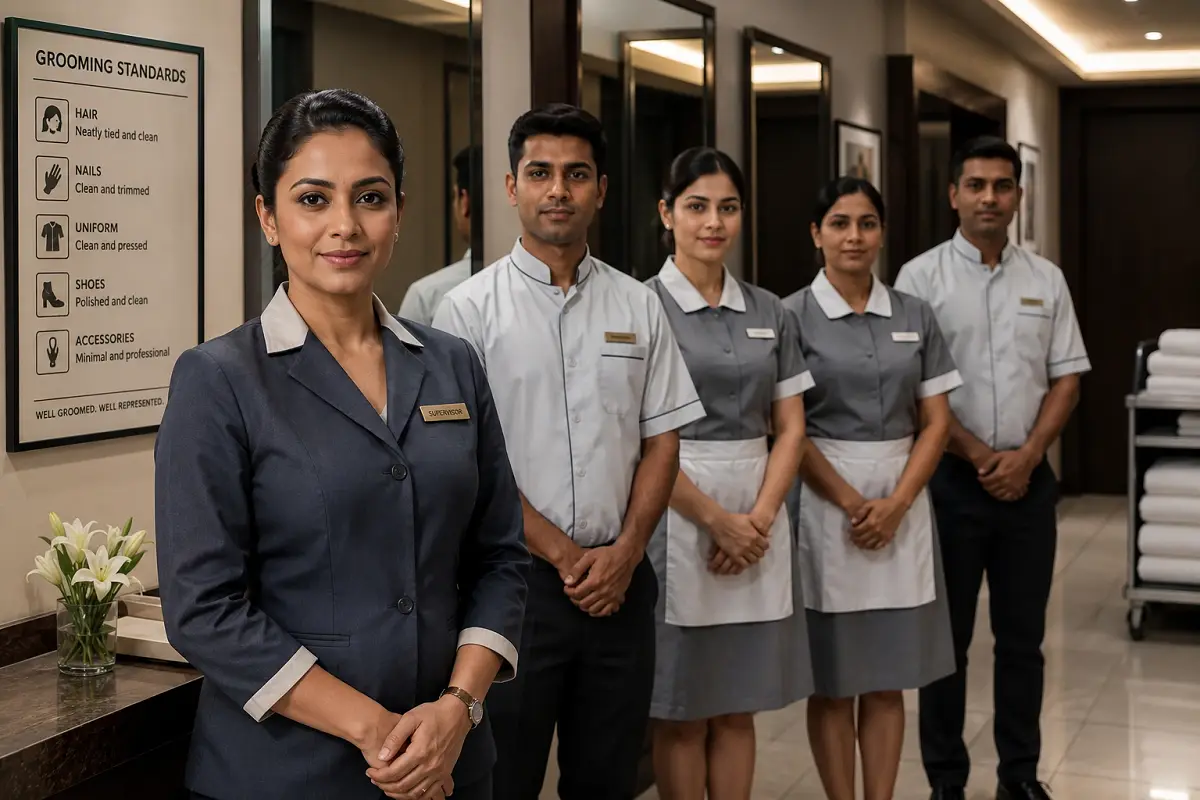
Professional Housekeeping Hierarchy: Understanding Every Role in the Hotel Housekeeping Department
A. Personal Introduction
Walk into any world-class hotel and you'll feel it immediately the immaculate corridors, the perfectly presented rooms, the quiet hum of a department running like clockwork. What you're experiencing is the result of a carefully structured professional housekeeping hierarchy working together, every single day, with precision and pride.
Housekeeping is one of the largest, most complex departments in any hotel. It operates across multiple floors, around the clock, with a team that can range from a handful of staff in a boutique property to well over a hundred people in a large resort or city hotel. Without a clear structure defined roles, reporting lines, and professional standards that scale simply cannot function.
Whether you're just joining the housekeeping team, stepping into a supervisory role, or building your career toward an executive position, understanding the housekeeping department hierarchy isn't just useful it's essential. This training guide walks you through every level of the structure, what each role actually does, how the team communicates, and what professional standards are expected at every position.
Let's build your understanding from the ground up.
B. What Makes This Training Special
Most organisational charts show you boxes and lines. This training gives you something far more valuable it explains the logic behind the structure. You'll understand not just who reports to whom, but why each role exists, what happens when roles overlap, and how the hierarchy enables the department to deliver consistent guest experiences at scale.
This guide is built on real hotel SOP frameworks used across independent hotels, boutique properties, and internationally branded chains. It reflects how the hierarchy actually operates on a live hotel floor not just on paper.
You'll also find guidance on the career pathway within housekeeping because this is a department where motivated professionals genuinely grow from entry-level positions into senior leadership roles. That path deserves to be understood and celebrated.
C. Tools & Equipment Overview
Each level of the housekeeping hierarchy works with specific tools and systems. Understanding which tools belong to which role helps clarify responsibility and accountability across the department.
- Executive Housekeeper: Property Management System (PMS), budgeting software, scheduling tools (e.g. Knowcross, HotSOS, or Opera), departmental KPI dashboards, staff training records, and procurement systems.
- Assistant Executive Housekeeper: Daily room status reports, linen inventory logs, staff attendance records, and quality audit checklists.
- Housekeeping Supervisor / Floor Supervisor: Floor master key, room inspection checklist, supervisor's daily report, radio/communication device, and maintenance defect log.
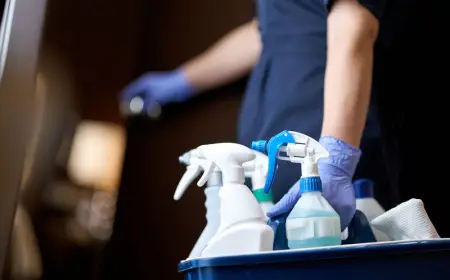
- Room Attendant / Chambermaid: Housekeeping trolley, color-coded microfiber cloths, approved cleaning chemicals, PPE (gloves, non-slip shoes), linen bag, amenity basket, and room assignment sheet.
- Public Area Attendant: Commercial vacuum cleaner, mopping system, glass cleaning kit, waste trolley, and public area checklist.
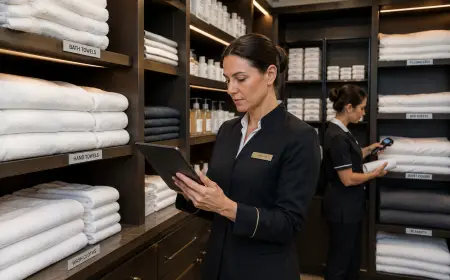
- Linen Room Attendant / Linen Porter: Linen counting sheets, laundry trolley, weighing scales (for commercial laundry), linen condition report forms.
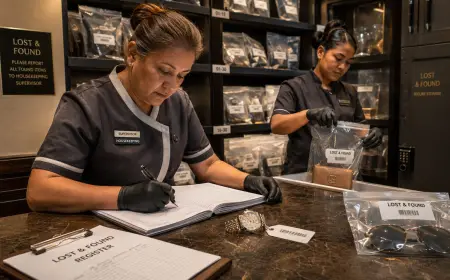
- Housekeeping Coordinator / Order Taker: Telephone system, PMS terminal, lost and found log, DND register, guest request tracking sheet, and radio.
- Turndown Attendant: Turndown tray, evening amenities, chocolates or turndown gifts (property-specific), amenity replenishment items.
D. Training Process Overview
This training is structured to give you a complete, layered understanding of the housekeeping hierarchy. We move through the department from the top of the structure down to the operational floor level — and then back up through the lens of communication, career progression, and professional standards.
- Module 1: Why departmental hierarchy matters in hotel housekeeping
- Module 2: The full housekeeping org chart — every role explained
- Module 3: Role-specific responsibilities and SOPs
- Module 4: Interdepartmental communication and reporting lines
- Module 5: Professional standards for every level of the hierarchy
- Module 6: Career progression pathways within housekeeping
- Module 7: Final inspection, quality standards, and departmental KPIs
E. Professional Tips for Best Results
No matter which level of the housekeeping hierarchy you currently occupy, these professional insights will help you perform at your best and grow within the department:
- Know your reporting line and respect it. The hierarchy exists to protect everyone including you. When you have a question, a concern, or an issue, take it to your direct supervisor first. This keeps communication clean and prevents confusion.
- Learn the role above yours. The best way to prepare for promotion is to understand what your supervisor does every day. Observe, ask questions, and volunteer for tasks that stretch your skills.
- Document everything. Whether it's a maintenance defect, a lost property item, or a guest complaint write it down. Documentation is the foundation of accountability at every level of the hierarchy.
- Communicate proactively. Don't wait for your supervisor to ask for updates. If you finish your rooms early, report in. If you're running behind, say so. Proactive communication keeps the whole floor running smoothly.
- Take ownership of your area. Whether you're responsible for two floors or the entire hotel, treat it as your own. Pride in your work area is what separates average from exceptional in housekeeping.
- Understand the guest journey. Every role in the hierarchy from laundry porter to executive housekeeper ultimately exists to serve the guest. Keeping that purpose front of mind makes every task meaningful.
F. Department Coordination
The housekeeping hierarchy doesn't operate in isolation. Its effectiveness depends entirely on how well it communicates with other hotel departments. Here's how the key interdepartmental relationships work:
- Front Office & Reservations: The front office provides the housekeeping department with daily arrival, departure, and occupancy reports. The executive housekeeper or coordinator uses this data to build the daily room assignment schedule and prioritise VIP arrivals and early check-ins.
- Maintenance / Engineering: Supervisors log maintenance defects discovered during room inspections and report them via the PMS or work order system. The maintenance team provides feedback on completion times so rooms can be released for guest occupancy.
- Food & Beverage / Room Service: Housekeeping notifies F&B of any uncollected room service trays, minibar consumption, or guest dining requests identified during room service.
- Security: Housekeeping staff escalate any safety concerns, found contraband, suspicious activity, or welfare check requirements to the security department immediately and in line with the hotel's duty of care procedures.
- Human Resources: The executive housekeeper and assistant work closely with HR on staff scheduling, disciplinary procedures, training records, and departmental onboarding programmes.
- Purchasing / Procurement: The executive housekeeper manages linen par levels, chemical stock, and amenity supply budgets in coordination with the purchasing department to ensure the floor never runs short.
G. Safety & Hygiene Standards
Professional standards in housekeeping are non-negotiable at every level of the hierarchy. Safety and hygiene responsibilities are shared across all roles, though the nature of those responsibilities changes with seniority.
- All Staff: Wear appropriate PPE for all cleaning tasks. Never mix chemicals. Report accidents, near misses, or hazards immediately. Follow manual handling guidelines when lifting linen, moving furniture, or handling equipment.
- Supervisors: Conduct daily safety briefings. Ensure all staff have completed COSHH (Control of Substances Hazardous to Health) training before handling cleaning chemicals. Monitor PPE compliance on the floor.
- Executive & Assistant Housekeeper: Maintain all staff training records including fire safety, manual handling, infection control, and chemical handling. Conduct periodic safety audits. Ensure the department is compliant with national health and safety legislation and the hotel's own safety management system.
H. Variations & Industry Applications
The housekeeping hierarchy structure adapts depending on the type and scale of the property. Here's how it typically varies across different hospitality environments:
- Large City Hotel / Chain Hotel (200+ rooms): Full hierarchy with executive housekeeper, assistant executive housekeeper, multiple floor supervisors, a dedicated coordinator, linen room team, public area team, and turndown team. Separate reporting lines for each sub-department.
- Boutique / Independent Hotel (under 80 rooms): Compressed hierarchy often one head housekeeper with two or three room attendants and a shared laundry/linen function. One person may perform multiple roles.
- Luxury Resort: Expanded hierarchy with villa attendants, butler teams, beach and pool housekeeping, and dedicated turndown and deep-cleaning teams. May include a separate laundry manager.
- Serviced Apartments / Extended Stay: Smaller core team focused on weekly deep cleans rather than daily room service. Strong emphasis on the linen and laundry function.
- Hospital / Healthcare Housekeeping: Infection control trained housekeeping staff with a clinical hygiene supervisor. Strict compliance with healthcare-specific cleaning and sterilisation protocols.
I. Preparation Method
Before delivering this training whether you're a trainer, supervisor, or manager or before stepping into any role in the hierarchy, the following preparation steps ensure the training lands effectively:
- Print or display the hotel's current housekeeping org chart for all trainees to reference throughout the session.
- Prepare role-specific job description cards for each position in the hierarchy so participants can study their own role in detail.
- Arrange a walkthrough of the housekeeping office, linen room, and a sample guest floor so participants can see the physical workspace for each role.
- Prepare a scenario exercise give trainees a situation (e.g. a guest complaint, a maintenance emergency, or a staffing shortage) and ask them to identify who in the hierarchy takes ownership and how it is escalated.
- Invite a senior member of the housekeeping team (ideally the executive housekeeper or a floor supervisor) to speak briefly about their own career journey through the department.
J. Standard Operating Procedure (SOP): Housekeeping Hierarchy in Daily Operations
Understanding the hierarchy means understanding how it functions in a real operational day. Here is how the housekeeping hierarchy activates from the start of a hotel day to the end of the evening shift:
Pre-Shift (6:00 AM – 7:30 AM)
- The Executive Housekeeper or Assistant reviews the night audit report from the PMS — total occupied rooms, check-outs, arrivals, VIPs, special requests, and any overnight incidents.
- The Housekeeping Coordinator prepares room assignment sheets for each floor supervisor based on occupancy data.
- The Floor Supervisors collect their assignment sheets, master keys, and supervisor's reports. They brief their room attendant teams at the start of shift.
- Room Attendants stock and prepare their trolleys, collect their individual room assignment sheets, and begin their floor.
- The Public Area Attendant begins the morning clean of lobby, corridors, lifts, and public restrooms before the main guest movement of the day begins.
Morning Operations (7:30 AM – 1:00 PM)
- Room attendants service check-out rooms first (to release them for incoming guests), followed by VIP rooms and early arrival requests.
- Floor supervisors conduct mid-morning inspections of completed rooms and communicate room-ready status to the coordinator via radio or PMS update.
- The coordinator relays room-ready information to the front office in real time, enabling early check-ins.
- Linen room staff receive soiled linen from the floors, count and sort it, and dispatch it to the laundry. Clean linen is received, counted, and restocked onto floor linen shelves or trolleys.
- Maintenance defects reported by room attendants are logged by supervisors and submitted to engineering. Rooms with pending maintenance are flagged as "Out of Order" in the PMS.
Afternoon Operations (1:00 PM – 5:00 PM)
- Remaining occupied room services are completed. DND rooms are re-attempted. Any rooms still on DND by 3:00 PM are escalated to the supervisor for a welfare check protocol decision.
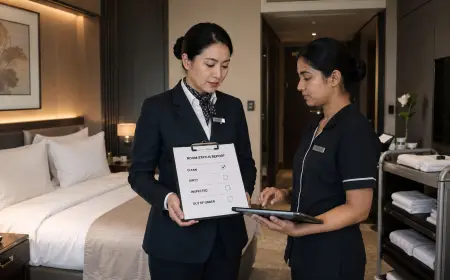
- The assistant executive housekeeper conducts a quality audit across a random selection of completed rooms, recording scores against the hotel's room inspection checklist.
- The executive housekeeper reviews the afternoon report rooms cleaned, rooms pending, maintenance items, and any guest feedback received via the front office or guest relations team.
- Deep cleaning schedules (for rooms on rotation), special project cleaning, and public area afternoon maintenance are completed during quieter periods.
Evening / Turndown Operations (5:00 PM – 10:00 PM)
- Where applicable, the Turndown Attendant team begins evening service for occupied rooms preparing the room for night, placing turndown gifts or amenities, and ensuring the room is settled for the guest's return.
- The evening supervisor conducts final floor checks, ensures all trolleys are restocked and stored correctly, and submits the end-of-shift housekeeping report.
- The coordinator logs the final room status for the night audit and hands over to the night team or the front office duty manager.
K. Grooming & Presentation Standards by Role
Professional presentation standards apply across every level of the housekeeping hierarchy, but they adapt slightly depending on the role's guest visibility:
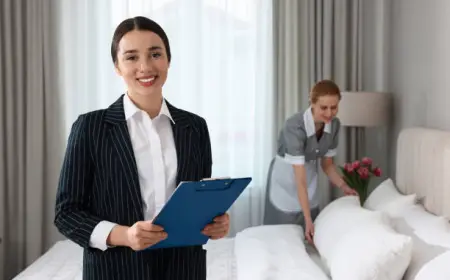
- Executive Housekeeper / Assistant Executive Housekeeper: Business professional attire or senior management uniform. Name badge and department identification clearly displayed. Polished shoes. Conservative accessories. They represent the department in leadership meetings and may interact directly with VIP guests or hotel ownership.
- Floor Supervisor: Supervisor-grade uniform (often distinct from room attendant uniform in colour or style). Name badge with role title. Smart, professional presentation they are visible to guests on the floor throughout the day.
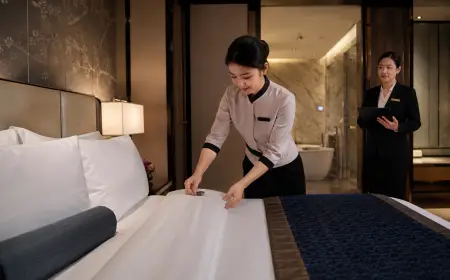
- Room Attendant / Chambermaid: Clean, pressed full uniform. Hair neatly tied back. No strong fragrance. Nails clean and trimmed. Non-slip, polished closed-toe shoes. Name badge worn correctly.
- Public Area Attendant: Full uniform with appropriate PPE for the tasks being completed (e.g. non-slip footwear, gloves). Must be presentable and approachable public area staff have frequent contact with guests in corridors, lobbies, and shared facilities.
- Linen Room / Laundry Staff: Full uniform appropriate for the laundry environment. Closed-toe shoes essential. Hair covered or secured. No loose clothing or jewellery near commercial laundry equipment.
L. Final Inspection & Service Standards
The hierarchy's quality control system is built around a structured inspection and reporting process at every level. Here's how it works from the floor up:
Read more:- step by step bathroom cleaning