Restaurant Technology Trends Reshape Hospitality in 2026
Restaurant technology trends 2026 help operators improve efficiency, automate tasks and enhance guest experiences across hospitality. Read more.
 Prajakta Sanjay Warwadkar
NEW DELHI, June 5, 2026 — Restaurant Technology Trends 2026: The Innovations Quietly Reshaping Hospitality operations in 2026 as restaurants adopt artificial intelligence, automation, digital payments and predictive analytics to improve efficiency and customer service. Operators across quick-service, casual dining and cloud kitchen segments increasingly rely on technology to manage rising costs, labor challenges and changing consumer expectations.
Now it's everywhere.
A customer scans a QR code before sitting down. A kitchen display replaces paper tickets. Inventory updates automatically in the background. Payments happen with a tap and are forgotten about seconds later. None of this feels particularly futuristic anymore.
That's probably what makes it interesting.
The biggest restaurant technology trends in 2026 aren't necessarily the ones making headlines. Most are happening quietly behind the scenes, helping restaurants save time, reduce waste, and deal with the constant pressure of rising costs and changing customer expectations.
Why Restaurant Technology Is Growing So Fast
Restaurants don't usually invest in technology just because it's new.
They invest because something isn't working.
Labour shortages continue to affect operations across the industry. Food costs remain unpredictable. Customers expect convenience almost automatically now. Nobody wants to wait ten minutes for a menu or stand in a queue just to pay a bill.
Technology helps solve some of those problems.
Not all of them, obviously.
There are still restaurants that spend heavily on digital tools and end up creating a more complicated experience than they started with. Most diners don't care how advanced a restaurant's software is. They care whether the service feels smooth.
That's an important distinction.
AI Ordering Systems Are Becoming More Common
Artificial intelligence gets most of the attention whenever restaurant technology comes up.
Some restaurants use AI to answer phone calls. Others use it for drive-thru ordering, online customer support, or menu recommendations. The technology is improving quickly, though it still has moments where it feels... slightly robotic.
Customers are getting used to it.
The goal isn't usually replacing staff. It's reducing repetitive work that consumes time every single day. Taking basic orders. Answering common questions. Managing simple requests.
Not glamorous tasks, but necessary ones.
Smart Kitchens and Real-Time Operations
Kitchen technology might not sound exciting, yet it's having a significant impact on restaurant operations.
Modern kitchen systems track preparation times, monitor equipment performance, and identify workflow bottlenecks during service. Managers can see issues developing before they become major disruptions.
A decade ago, much of this depended on experience and observation.
Now there are dashboards for almost everything.
Whether that's always a good thing is debatable, but the visibility certainly helps.
Predictive Inventory Management
Food waste remains one of the industry's most frustrating expenses.
Restaurants are increasingly using inventory systems that analyse sales history, seasonal demand, weather patterns, and purchasing trends to forecast inventory requirements more accurately.
The benefits often seem small at first.
A little less waste here. A slightly better ordering decision there.
Then several months pass and the savings become difficult to ignore.
QR Menus Have Become Normal
There was a time when QR menus felt temporary.
That didn't last long.
Today they're common across cafes, casual dining restaurants, food courts, and even some premium concepts. Restaurants like the flexibility. Customers appreciate quick access to menu information.
Well, most customers.
There are still people who prefer holding an actual menu. Honestly, they're not wrong either. Sometimes scrolling through six digital pages just to find desserts feels unnecessarily complicated.
The restaurants handling this best tend to offer both options.
Voice Ordering and Self-Service Technology
Voice ordering continues to expand, particularly within quick-service restaurants.
Self-service kiosks are becoming more sophisticated as well. Customers can customise orders, explore menu options, and complete payments without waiting for assistance.
Not every guest prefers that experience.
But enough do.
And restaurants pay attention when customer behaviour starts shifting at scale.
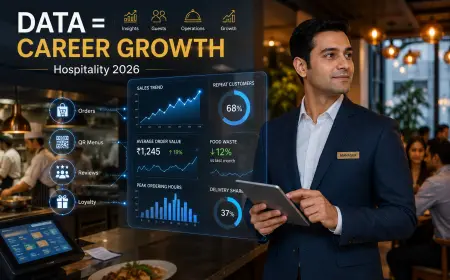
Data Is Becoming A Competitive Advantage
Restaurants generate more data than many operators realise.
Sales reports. Delivery performance. Customer preferences. Loyalty programme activity. Menu popularity. Staffing trends.
The challenge isn't collecting information anymore.
It's knowing what to do with it.
Restaurant analytics platforms help operators identify patterns they would likely miss otherwise. A promotion that works on rainy weekends. A menu item that's popular but not profitable. Delivery orders that spike at unusual times.
Tiny insights. Bigger decisions.
Contactless Payments Are Here To Stay
This may be the least exciting trend on the list.
It's also one of the most successful.
Digital wallets, tap-to-pay systems, and contactless transactions have become standard expectations for many diners. People rarely think about payment technology until it stops working.
Then suddenly it's the most important thing in the restaurant.
Cloud Kitchens Continue To Push Innovation
Cloud kitchens operate under different rules.
Without dining rooms, ambience, or traditional guest interactions, efficiency becomes the primary focus. Automation, integrated ordering systems, and delivery management tools help these businesses process large volumes of orders consistently.
Technology isn't an advantage for many cloud kitchens.
It's the foundation.
Sustainability Technology Is Gaining Attention
Sustainability conversations are becoming more practical.
Restaurants are using technology to monitor energy consumption, reduce food waste, improve purchasing decisions, and track environmental performance. In many cases, these efforts lower operating costs at the same time.
That combination tends to encourage adoption much faster than environmental messaging alone.
Traditional Operations vs Technology-Driven Operations
|
Traditional Operations |
Technology-Driven Operations |
|
Manual stock tracking |
Real-time inventory visibility |
|
Reactive decisions |
Predictive planning |
|
Paper-based workflows |
Digital systems |
|
Limited customer insights |
Detailed analytics |
|
Higher administrative workload |
Automated operational support |
Technology is changing how restaurants operate.
What it isn't changing is the reason people visit restaurants in the first place.
Guests still care about good food. Friendly service. Consistency. Comfort. Technology can support those things, but it can't replace them.
At least not yet.
What Restaurant Technology Trends Mean For 2026
Looking ahead, restaurant technology will probably become less visible rather than more noticeable.
AI systems are improving. Inventory forecasting is becoming more accurate. Customer-facing tools feel smoother than they did even a few years ago.
The best technology often fades into the background.
Most diners couldn't tell you what software their favourite restaurant uses. They just know when service feels effortless and when it doesn't.
That's where many of these innovations are headed.
Not toward replacing hospitality, but toward making hospitality easier to deliver.
Pro Tip
The most successful restaurants aren't necessarily the ones adopting every new technology trend. They're usually the ones solving specific operational problems first.
A simple inventory system that reduces waste can create more value than an expensive AI platform with no clear purpose. Likewise, a kitchen management tool that improves communication often delivers stronger results than flashy customer-facing technology that nobody asked for.
When evaluating restaurant technology, focus on outcomes rather than features. Faster service, lower waste, smoother operations, and better guest experiences will almost always generate a stronger return than chasing trends simply because competitors are doing it.
Frequently Asked Questions
What is the biggest restaurant technology trend in 2026?
AI-powered ordering systems and predictive analytics are among the fastest-growing restaurant technology trends, particularly in quick-service restaurants and cloud kitchen operations.
Are restaurants replacing staff with technology?
Most restaurants use technology to automate repetitive tasks and improve efficiency rather than replace hospitality professionals entirely.
How do smart kitchens improve restaurant performance?
Smart kitchens provide real-time operational visibility, helping managers monitor preparation times, identify bottlenecks, and improve workflow efficiency.
Why are QR menus still popular?
QR menus allow restaurants to update information instantly, reduce printing costs, and provide guests with convenient access to menu details and ordering options.
Will restaurant technology continue growing after 2026?
Industry experts expect continued growth in AI, automation, analytics, digital ordering, and operational technology as restaurants seek greater efficiency and flexibility.
Read more: Dining Out Trends 2026: Why People Prefer Dining Out Over Cooking More Than Ever
Rise of Experience-Based Restaurants: Why Are They Taking Over Dining?