Neer Dosa Recipe (Soft Rice Crepes)
Learn how to make Neer Dosa, soft and lacy Mangalorean rice crepes with no fermentation needed a quick, gluten-free, vegan breakfast.
 RUKAIYA KADIWAL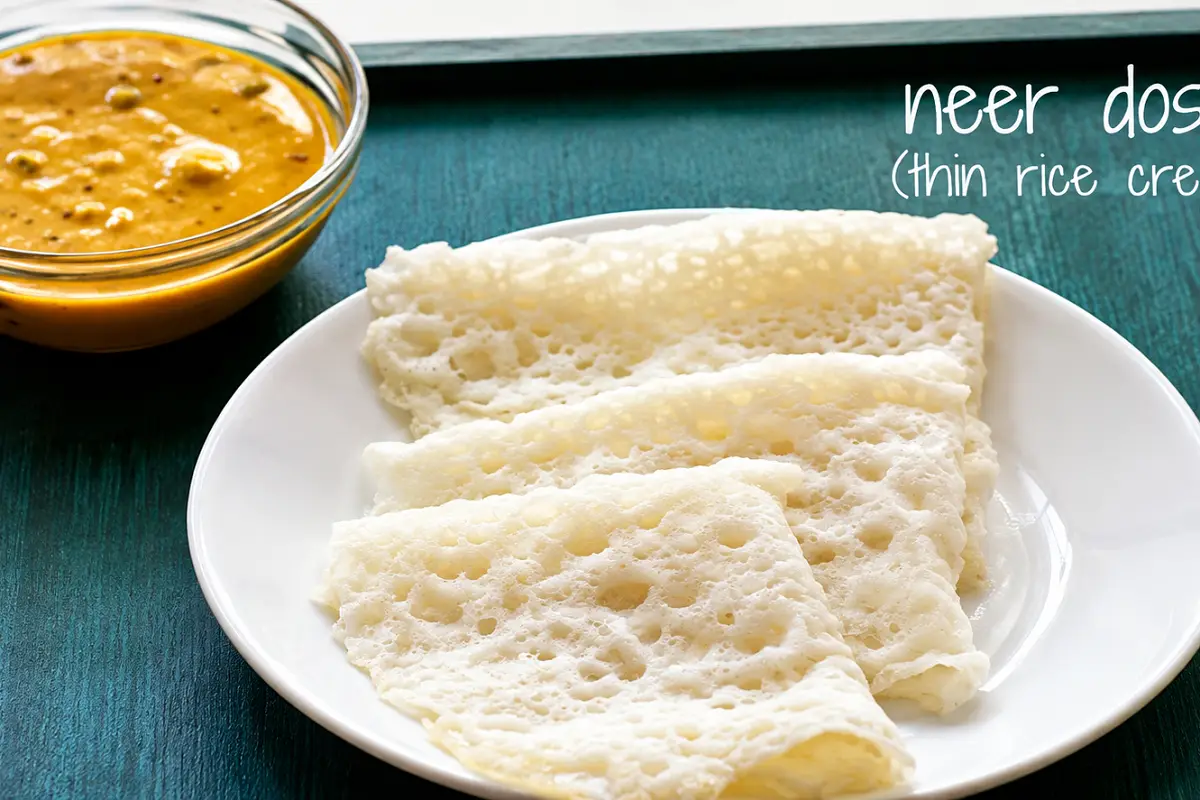
Neer dosa is a soft, thin, lacy rice crepe that originates from Mangalorean cuisine and is made from just rice, water, and salt. The name comes from the Tulu word for water, referring to the thin, watery consistency of the batter used to make this Neer Dosa Recipe. Unlike most dosa varieties, this one skips fermentation entirely, the rice simply needs a few hours of soaking before being ground into a smooth batter, making it a quick option for breakfast or a lunchbox.
The batter should be thin, watery and easy to pour, and a little water can be added if it turns out too thick, while a little rice flour helps if it's too thin. Cooking on a medium to medium high heat on a well heated tawa helps achieve the lacy texture, and a well seasoned cast iron pan or a non stick pan both work well. The batter should be stirred before making each dosa since the rice tends to settle at the bottom, and 2 to 3 tablespoons of grated coconut can be added while grinding for extra flavour. Sona masuri, surti kolam, ponni or basmati rice can all be used. The dosas should not be stacked while hot as they may stick together, but once cooled they can be stacked or kept with parchment paper between each one, and they remain soft even after cooling down.
Suggestions
Neer dosa pairs well with coconut chutney and can also be served with Veg Sagu, Vegetable Kurma or Potato Kurma. For kids, it is often served with coconut milk or milk sweetened with some jaggery or sugar. Since they remain soft, they also make a good option to pack in a tiffin box or lunch box.
Expert Tips
If the batter is too thick the dosa may crack, so a little water should be added to thin it out, while a batter that is too thin can cause the dosa to break while lifting, in which case a little rice flour helps thicken it slightly. Rice flour can also be used instead of whole rice by soaking it in water for 30 minutes to 2 hours, or overnight at room temperature for a slightly fermented taste. If the tawa is too hot, the lacy texture may not form properly, so sprinkling a little water on a cast iron pan or briefly removing a non stick pan from heat can help. The batter can also be stored in the refrigerator for 1 to 2 days in an airtight container, and a little water can be added if it thickens after refrigeration.
For more authentic south indian breakfast ideas straight from the source, check out Vegrecipesofindia's collection of Indian breakfast recipes.
If you enjoyed this gluten free, vegan rice crepe, you'll also love our South Indian Mysore Masala Dosa recipe, another crispy and flavourful breakfast favourite from South India.
Ingredients
- 1 cup or (200 grams) rice – surti kolam or parmal rice or sona masuri
- water as required for soaking rice
- ¼ to ⅓ cup water to grind or blend
- 1.5 to 2 cups water to be added later
- salt as required
- oil as required
Nutritional Information
- Calories: 55kcal
- Carbohydrates: 8g
- Protein: 1g
- Fat: 2g
- Saturated Fat: 1g
- Polyunsaturated Fat: 1g
- Monounsaturated Fat: 2g
- Sodium: 68mg
- Potassium: 12mg
- Fiber: 1g
- Sugar: 1g
- Vitamin B1 (Thiamine): 1mg
- Vitamin B2 (Riboflavin): 1mg
- Vitamin B6: 1mg
- Vitamin E: 1mg
- Vitamin K: 1µg
- Calcium: 4mg
- Vitamin B9 (Folate): 1µg
- Iron: 1mg
- Magnesium: 3mg
- Phosphorus: 12mg
- Zinc: 1mg
Directions
How to Make Neer Dosa Step by Step
Making Neer Dosa Batter
Rinse the rice grains a few times. Soak them in enough water for 4 to 5 hours or overnight. Later drain the soaked rice and add them in a blender or a mixer-grinder. Add water for grinding or blending the rice. Do not add a lot of water as then you won't be able to grind the rice finely. Grind to a smooth and fine batter and then transfer the batter to another bowl or pan. Add water again to get a thin, flowing, runny and watery consistency. I added 2 cups of water. The addition of water depends on the quality and kind of rice. So add water as needed. Then add salt as required and mix well.
Making Neer Dosa
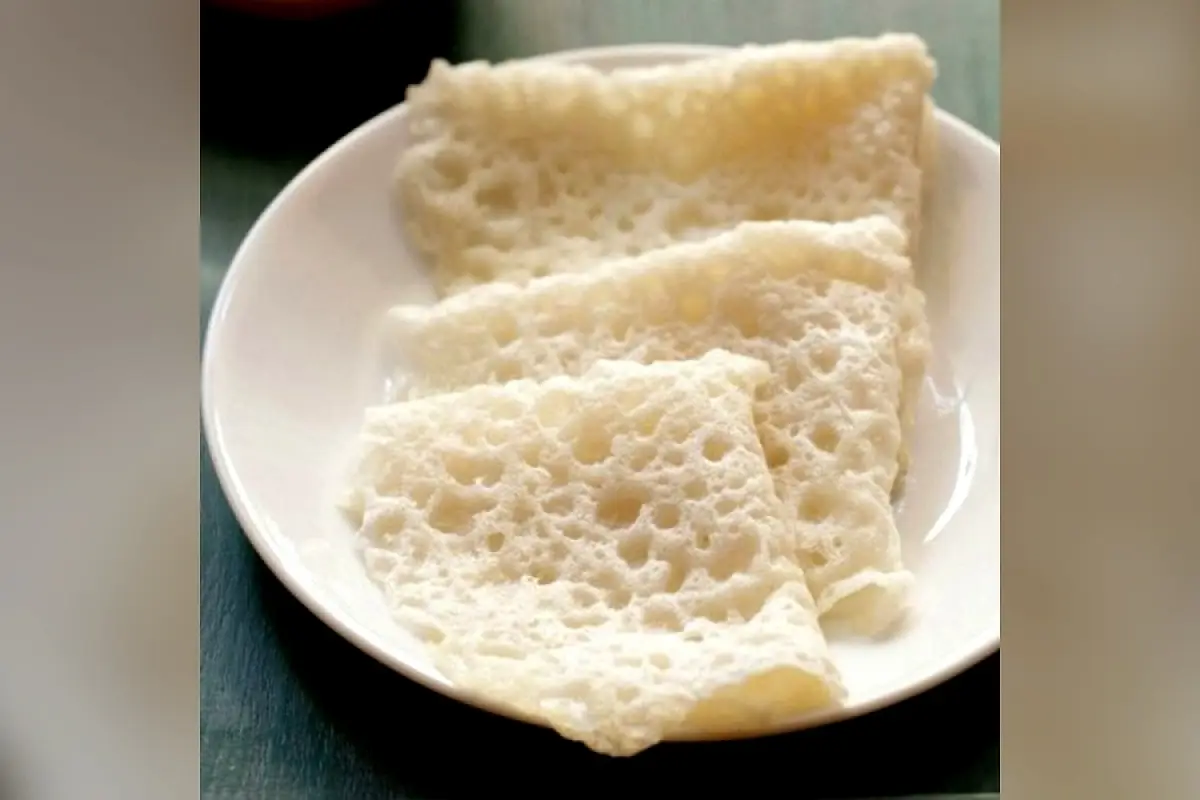
Heat a cast iron pan or a non stick pan on medium to medium-high heat. Drizzle ½ teaspoon of oil. Just spread the oil all over with a spoon or small piece of cotton kitchen napkin or with half of an onion. Stir the batter in the bowl with the ladle. Then fill the ladle with the batter. Pour the batter moving outwards to inside like the way we do for rava dosa. Fill in the large gaps too with some of the batter. Cover with a lid and cook the dosa till the batter firms up. Don't brown it or flip it. The edges will also separate when the dosa is cooked. You can drizzle a bit of oil on the top of neer dosa if you prefer. Make a triangular fold on the tawa itself. Then remove the dosa and place it in a plate. Make neer dosa this way and place them separately without them touching each other in a plate. Serve neer dosa hot or warm with coconut chutney, veg sagu, veg korma.
Rate this Recipe
User Reviews
No reviews yet. Be the first to share your thoughts!