Dim Sum Recipe That Steams Up Silky, and Restaurant-Worthy at Home
Make restaurant-style dim sum at home with this complete recipe guide. Soft steamed dumplings, juicy fillings, perfect pleating SOP included.
 Tripti Srivastava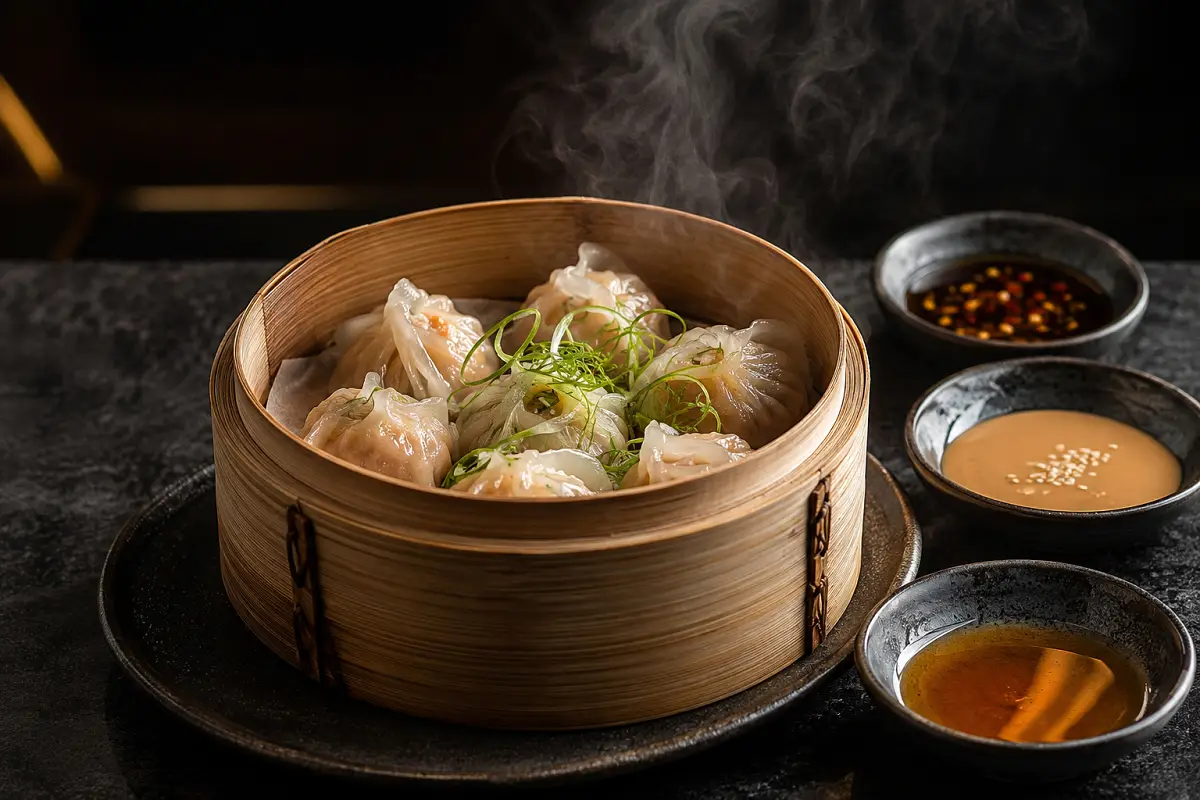
There is a particular kind of satisfaction that comes from lifting the lid of a bamboo steamer and watching the fragrant cloud of steam rise to reveal a tray of perfectly pleated dim sum each dumpling glistening, holding its shape, the wrapper translucent at the edges where the filling shows through. It is the kind of moment that makes a home kitchen feel, just briefly, like a Cantonese teahouse.
Dim sum which translates loosely from Cantonese as "touch the heart" is one of the great shared eating traditions of Chinese cuisine. Originating in the teahouses of Guangdong province as small bites to accompany tea during yum cha (drinking tea), it has evolved into one of the most beloved food cultures in the world. And while professional dim sum chefs spend years mastering every fold and pleat, the home version is genuinely achievable with the right guidance and the results are deeply rewarding.
This recipe gives you everything you need: a from-scratch wrapper dough with a ready-made wrapper shortcut for when time is short, three filling options (chicken and ginger, pork and prawn, and a fully vegetarian mushroom and tofu), the complete pleating SOP with the classic four-pleat fold, three cooking methods (steamed, pan-fried gyoza-style, and boiled), and a presentation guide that covers the bamboo steamer table service that makes dim sum so visually distinctive.
What Makes This Dim Sum Recipe Special
Home dim sum recipes often produce dumplings that are too thick-skinned, too dense in filling, too wet, or too pale after steaming. This recipe is built to address all of those issues specifically:
- The hot water dough technique: Using hot water (just off the boil) rather than cold water to make the wrapper dough partially cooks the starch in the flour, producing a wrapper that is significantly more pliable, easier to pleat, and becomes translucent and silky when steamed the visual hallmark of a great dim sum wrapper. Cold water dough produces a tougher, more opaque wrapper that is harder to work with.
- The fat-and-liquid balance in the filling: Dim sum fillings must have exactly the right moisture content juicy enough to be succulent but not so wet that they make the wrapper soggy from the inside. This recipe uses a specific technique of seasoning the filling and chilling it before wrapping, which firms the proteins and controls moisture release during steaming.
- The sesame oil and oyster sauce base: Every filling in this recipe is seasoned with the same aromatic base sesame oil, oyster sauce, light soy, ginger, and white pepper which gives all three filling options a coherent, authentic Cantonese flavour profile while allowing their individual main ingredients to shine.
- Parchment paper lining for the steamer: A common reason home-steamed dumplings stick to the bamboo steamer and tear when lifted is an unlined basket. Perforated parchment paper circles (or lettuce leaves) let steam circulate while preventing sticking the single most practical technique tip in this entire recipe.
- The pleating SOP: A detailed, step-by-step pleating guide with a simple four-pleat fold that produces a beautiful, professional-looking dumpling without requiring years of practice. Even imperfect pleats hold perfectly well during steaming the technique improves naturally with repetition.
Ingredients Overview
The wrapper dough is made from plain flour and hot water with a small amount of salt. The ratio of flour to water determines the dough's workability too much water and the dough is sticky and tears; too little and it cracks when folded. The ratio in this recipe has been tested to produce a dough that rolls thin without tearing and steams to a beautiful, slightly translucent finish. If you are short on time, good quality fresh dumpling wrappers from an Asian grocery store are an excellent substitute look for round, thin wrappers labelled "dumpling skin" or "gyoza wrappers," not the thicker wonton wrappers.
For the fillings, chicken filling uses minced chicken thigh not breast, which dries out during steaming. The mince should be freshly ground or minced at home for the best texture pre-packaged chicken mince is often too fine and produces a dense, paste-like filling rather than the textured, juicy interior that good dim sum should have.
The pork and prawn filling is the most classic Cantonese dim sum filling the fatty pork mince provides juiciness and flavour while the chopped prawns add a sweet, bouncy texture contrast. Use raw prawns, not cooked the texture of pre-cooked prawns in a steamed dumpling is rubbery and unpleasant. The technique of making great dim sum at home has been studied closely by food scientists the filling texture and wrapper thickness are the two variables that matter most.
The vegetarian filling uses finely diced shiitake mushrooms and firm tofu as the base. Shiitake mushrooms provide the umami depth that the meat fillings get from pork fat and prawn, and firm, well-pressed tofu provides body and a neutral canvas for the aromatics. Water chestnuts finely diced add the characteristic crunch that distinguishes a well-made vegetarian dim sum from a dense, homogeneous filling.
Also Read: Chilli Chicken Recipe
How to Make It
Make the dough, rest it, and roll thin. Prepare your chosen filling, season it precisely, and chill for 20 minutes. Roll the dough into thin rounds, fill each wrapper with a precise amount (one full teaspoon not more), pleat and seal, then steam in a lined bamboo steamer over boiling water for exactly 8–10 minutes. Rest for 1 minute before serving and plate directly in the bamboo steamer at the table.
The first batch of pleating will take longer than you expect allow approximately 3–4 minutes per dumpling. By the tenth dumpling, you will be moving at roughly half that speed. By the twentieth, the fold feels natural. Dim sum is one of those rare recipes where the second time is dramatically better than the first, and the third time is genuinely impressive.
Tips for Best Results
- Rest the dough for at least 30 minutes. Resting allows the gluten to relax, which makes the dough significantly more pliable and easier to roll thin without springing back. Rushed dough tears at the edges during pleating and does not steam to the same translucent finish.
- Roll each wrapper to 2mm thickness maximum. Thick wrappers steam unevenly the outer dough is overcooked and gummy while the filling is just right. Use a thin rolling pin and apply even, consistent pressure from the centre outward.
- Do not overfill. One level teaspoon of filling per wrapper is the correct amount for a 7–8cm diameter wrapper. Overfilling stretches the dough at the pleats, which is where dumplings burst during steaming.
- Keep unused wrappers and dough covered under a damp cloth at all times. Exposed dough dries out in minutes and becomes impossible to work with. The damp cloth is not optional it is the difference between a smooth, productive wrapping session and a frustrating one.
- Do not let the dumplings touch each other in the steamer. They swell during steaming and will stick together and tear if placed too close. Leave at least 2cm between each piece.
- Steam over rapidly boiling water, not simmering. Insufficient steam leads to uneven cooking and the wrappers take longer to become translucent. Bring the water to a full rolling boil before placing the steamer on top, and maintain that boil throughout cooking.
Serving Suggestions
Dim sum is a shared table experience serve multiple steamer baskets at once with a selection of dipping sauces so guests can mix and match. The classic pairing is light soy sauce with fresh ginger julienne and a splash of rice vinegar for the steamed dumplings, and chilli oil for the pan-fried version. A bottle of Chinese black vinegar (Chinkiang vinegar) on the table is the mark of a properly considered dim sum spread its deep, malty acidity cuts through the richness of the pork and prawn filling beautifully.
For a full yum cha experience at home, pair the dim sum with jasmine or pu-erh tea served throughout the meal, and add a simple dish of stir-fried green vegetables with garlic and oyster sauce alongside. The combination of delicate steamed dumplings, fragrant tea, and clean green vegetables is the authentic yum cha format that has been served in Cantonese teahouses for over a century.
For a party spread, fill two or three different steamer baskets with different fillings and stack them the visual of a three-tier bamboo steamer arriving at the table is one of the most impressive and conversation-starting presentations in all of home entertaining.
Storage and Reheating
Store cooked dim sum in an airtight container in the fridge for up to 2 days. To reheat, return to the lined bamboo steamer and steam for 4–5 minutes until heated through the wrappers will return to their silky, tender texture. Alternatively, pan-fry in a little oil with a splash of water and a covered lid for 3–4 minutes for a crispy-bottomed reheated version.
Uncooked, assembled dumplings freeze exceptionally well and are one of the great batch-cook freezer staples. Arrange on a lined tray in a single layer, freeze until solid (1–2 hours), then transfer to zip-lock bags. They keep for up to 3 months frozen. Cook directly from frozen steam for 12–14 minutes (2–4 minutes longer than fresh) or pan-fry from frozen with a covered lid and water for the steam phase. Do not thaw before cooking as the wrappers become sticky and tear.
Variations and Substitutions
- Pan-fried (potsticker style): Heat oil in a flat pan over medium-high heat. Place dumplings flat-side down in a single layer. Fry undisturbed for 2–3 minutes until the bases are golden brown. Add 3 tablespoons of water to the pan and immediately cover with a lid it will spit vigorously. Steam for 4–5 minutes until the water evaporates and the wrappers are cooked through. Remove the lid and fry for 30 seconds to re-crisp the bases. This produces the classic potsticker with a crispy bottom and tender, steamed top.
- Open-topped siu mai style: Do not pleat the top of the dumpling closed instead, gather the wrapper up around the filling and press lightly to form an open-topped cup that exposes the filling at the top. Place a single prawn, a dot of fish roe, or a pea at the centre for colour. Steam for 8 minutes. This is the classic siu mai format that requires almost no pleating skill and produces a visually beautiful result.
- Crystal wrappers (har gow style): Replace 30% of the plain flour in the dough with wheat starch (tang mian flour) for a more translucent, silkier wrapper that is the defining characteristic of har gow. Wheat starch is available at Asian grocery stores. Use a Chinese cleaver to press and roll the wrappers rather than a rolling pin for the authentic thin, round shape.
- Fully vegan dim sum: Use the mushroom and tofu filling. Replace oyster sauce in the filling with mushroom oyster sauce. All other filling and dough ingredients are already plant-based. The vegan version steams identically to the meat versions.
- Baked dim sum (siu bao style): Enrich the dough with a small amount of butter and baking powder. Fill with the chicken or pork filling, seal completely, and bake at 180°C for 18–20 minutes until golden. This produces a soft, slightly pillowy baked bun rather than a steamed dumpling a different format but equally rewarding.
Preparation Method
Make the dough first combine flour, salt, and hot water, knead for 8–10 minutes until smooth and elastic, then cover with a damp cloth and rest for 30 minutes. While the dough rests, prepare your chosen filling: finely mince or chop all filling ingredients, season with the aromatic base, mix thoroughly, and refrigerate for 20 minutes to firm up.
Divide the rested dough into four equal portions. Keep three covered while you work with one. Roll into a log, cut into even pieces (approximately 12g each), and roll each piece into a thin circle approximately 7–8cm in diameter. Keep the rolled wrappers covered as you work. Fill, pleat, and place in the lined steamer work through one steamer basket at a time so the assembled dumplings go from wrapper to steam without sitting out and drying.
Standard Operating Procedure (SOP)
Step 1 Make the dough: Combine 250g plain flour and ½ teaspoon salt in a bowl. Pour 130ml of just-boiled water in a thin stream, stirring with chopsticks or a fork. When cool enough to handle, knead by hand for 8–10 minutes until smooth, soft, and slightly elastic. Cover with a damp cloth. Rest 30 minutes.
Step 2 Make the filling: Prepare all filling ingredients. Combine with the aromatic seasoning base. Mix well use your hand to mix, pressing the filling against the bowl until it has a slightly sticky, cohesive texture (this is called "throwing" the filling in Chinese cooking and develops the protein structure for a juicy, bouncy texture). Cover and refrigerate 20 minutes.
Step 3 Prepare the steamer: Line each bamboo steamer basket with perforated parchment paper circles or large lettuce leaves. Fill the wok with 5–6cm of water. Bring to a full rolling boil.
Step 4 Roll the wrappers: Divide dough into 24–28 equal pieces (approx. 12g each). Keep covered. Roll each piece into a thin circle 7–8cm in diameter and approximately 2mm thick. Keep edges slightly thinner than the centre this helps the pleats fold cleanly without a thick seam.
Step 5 Fill: Place one wrapper in the palm of your non-dominant hand. Add exactly 1 level teaspoon of chilled filling to the centre. Do not overfill.
Step 6 Four-pleat fold (classic dumpling pleat): Fold the wrapper in half over the filling to form a half-moon shape. Pinch the centre of the top edge together firmly. Working left from the centre: pinch a small fold of the front wrapper toward the centre seal, press firmly. Repeat once more to the left edge. Working right from the centre: repeat the same two folds to the right. Press the entire seal firmly between thumb and forefinger to ensure it is completely closed with no gaps. The completed dumpling should have 4 pleats on the front face and a smooth back, and should stand upright on its flat base.
Step 7 Steam: Place assembled dumplings in the lined steamer basket, leaving 2cm between each piece. Stack baskets and place over the boiling wok. Cover and steam for 8–10 minutes for fresh dumplings (12–14 minutes from frozen) until the wrappers are translucent and the filling is fully cooked. Check by cutting one dumpling open the filling should be cooked through with no pink remaining.
Step 8 Rest: Remove from heat. Rest covered for 1 minute before serving this allows the wrappers to firm up slightly and prevents them from tearing when lifted.
Step 9 Serve in the steamer: Bring the bamboo steamer basket directly to the table. Remove the lid at the table for the full dramatic steam effect. Serve dipping sauces alongside.
Garnish and Presentation
Dim sum's presentation is built into its format the bamboo steamer basket is both the cooking vessel and the serving vessel, and there is no more beautiful or authentic way to serve these dumplings than directly from the basket they were steamed in. The pale, slightly translucent wrappers, the visible filling showing through the thinnest parts of the dough, and the faint golden colour where the pleats overlap are the natural garnish of a well-made dim sum.
For a garnish that adds both colour and flavour, place a small bundle of julienned spring onion and fresh red chilli in the centre of the steamer basket between the dumplings. A few thin slices of fresh ginger tucked around the edges add the authentic teahouse visual cue. For the siu mai (open-top) variation, place a single dot of chilli oil, a whole blanched edamame, or a small amount of flying fish roe (tobiko) at the centre of each open dumpling these three garnish options give different visual characters: casual, fresh, or luxurious.
The dipping sauce presentation matters as much as the dumplings themselves. Use small, individual ceramic sauce dishes not ramekins and pour each sauce separately: light soy with ginger julienne in one, chilli oil in another, and Chinese black vinegar in a third. Arrange these in a tight triangle at the edge of the steamer basket for a composed, intentional presentation.
Plating and Serving Tips
For a home yum cha table, stack two or three bamboo steamer baskets of different sizes in the centre of the table with a tea pot alongside. Each basket contains a different filling label them with a small folded card tucked under the lid if you are serving guests who may not know which is which. This stacked steamer centrepiece is immediately recognisable and creates a genuinely festive, celebratory atmosphere.
For individual plating at a sit-down dinner, arrange 4–5 dumplings in a shallow ceramic bowl with a small puddle of seasoned soy sauce at the base. Lay a few strands of julienned spring onion across the tops of the dumplings, add a drop of chilli oil at the rim of the bowl, and finish with a single slice of ginger pressed against the inside edge. This presentation is simple, elegant, and allows the dumplings themselves to be the entire focus.
For a dramatic table moment at a party, bring the stacked steamers to the table sealed, and lift the lids sequentially from the bottom basket upward the steam from the lower basket billows upward through each successive basket as you open them, creating a cascading cloud of fragrant steam that is one of the most theatrical and genuinely exciting food presentation moments you can create in a home dining setting. It costs nothing and requires no special equipment just the bamboo steamer, boiling water, and perfect timing.
Made these dim sum at home? Every fold you make gets better than the last I promise. Leave a star rating and a comment below, it genuinely helps other readers find this recipe. Share your bamboo steamer shots on Instagram and tag us nothing makes my day more than seeing a stack of handmade dumplings on someone's kitchen table.
Ingredients
- 250g plain flour (all-purpose flour)
- ½ teaspoon salt
- 1 teaspoon neutral oil (added after initial mixing helps elasticity)
- 24–28 fresh round dumpling wrappers (7–8cm diameter)
- 1-inch piece fresh ginger, finely grated
- 1 tablespoon oyster sauce
- 1 tablespoon light soy sauce
- 1 teaspoon sesame oil
- 2 cloves garlic, finely minced
- 2 spring onions, very finely minced
- 130ml just-boiled water300g boneless chicken thigh, freshly minced or finely chopped
- 50g water chestnuts (canned), finely diced
Nutritional Information
- Calories: 286 kcal
- Protein: 18g
- Carbohydrates: 34g
- Fat: 8g
- Fiber: 105g
- Sodium: 580mg
- Sugar: 2g
Directions
1. MAKE THE WRAPPER DOUGH
1. Combine 250g plain flour and ½ teaspoon salt in a large mixing bowl. Make a well in the centre.
2. Measure 130ml of just-boiled water. Pour it in a slow, steady stream into the flour well while stirring continuously with chopsticks or a fork. The mixture will look shaggy and uneven at first — this is correct.
3. Once the dough is cool enough to handle (approximately 2 minutes), turn out onto a clean, lightly floured surface. Knead firmly for 8–10 minutes until the dough is smooth, soft, and slightly elastic. It should not stick to your hands or the surface. Add the neutral oil after the first 3 minutes of kneading and work it in.
4. Shape into a ball, place in a clean bowl, and cover tightly with a damp cloth or cling film. Rest at room temperature for 30 minutes minimum — 45 minutes is better.
2. PREPARE YOUR CHOSEN FILLING
5. Combine all filling ingredients in a large bowl. Mix together well, then use your hand to slap and fold the mixture against the sides of the bowl for 2–3 minutes. This "throwing" technique develops the protein structure of the filling, producing the bouncy, cohesive texture characteristic of authentic dim sum rather than a loose, crumbly filling.
6. The filling should become slightly sticky and hold together when pinched between two fingers. Taste a small amount (cook a tiny portion in the microwave for 20 seconds) and adjust seasoning if needed.
7. Cover the bowl with cling film and refrigerate for 20 minutes. The cold filling is significantly easier to portion and hold in the wrapper.
3. PREPARE THE STEAMER AND DIPPING SAUCES
8. Line each bamboo steamer basket with perforated parchment paper circles or large lettuce leaves. Set aside.
9. Fill the wok with water to a depth of 5–6cm. Do not bring to the boil yet — wait until you have assembled enough dumplings to fill the first steamer basket.
10. Prepare all three dipping sauces by combining their respective ingredients. Pour into individual small ceramic sauce dishes. Set on the table.
4. ROLL THE WRAPPERS
11. Remove the rested dough from the bowl. Knead briefly for 1 minute — it will feel noticeably more pliable than before resting.
12. Divide the dough into four equal portions. Keep three portions covered under the damp cloth and work with one at a time.
13. Roll the portion into a long log approximately 2cm in diameter. Cut the log into equal pieces — each piece should weigh approximately 12g. You should get 6–7 pieces per portion, 24–28 total.
14. Keep all cut pieces covered. Take one piece and flatten it with your palm on a lightly floured surface. Using a small rolling pin, roll from the centre outward, rotating the wrapper 45 degrees between each roll. Aim for a circle approximately 7–8cm in diameter and 2mm thick — with edges slightly thinner than the centre.
15. Place the rolled wrapper on a lightly floured tray and cover immediately. Repeat for all pieces, keeping all wrappers covered at all times.
5. FILL AND PLEAT FOUR-PLEAT FOLD
16. Place one wrapper in the palm of your non-dominant hand, cupped slightly.
17. Add exactly 1 level teaspoon of the chilled filling to the centre of the wrapper. Do not exceed this amount — overfilling is the most common cause of burst dumplings.
18. Fold the wrapper in half over the filling to form a half-moon shape. Pinch the very centre of the top edge firmly together between thumb and forefinger.
19. Left side of the pleat — working from the centre toward the left edge: with the front face of the wrapper toward you, use the thumb and forefinger of your dominant hand to pinch a small fold of the front wrapper layer (approximately 5mm wide) toward the centre seal and press firmly. Repeat once more, moving slightly further left. You have now made 2 pleats on the left side.
20. Right side of the pleat — repeat the same two folds moving from the centre toward the right edge. You now have 4 pleats total, two on each side of the centre.
21. Run your thumb and forefinger firmly along the entire sealed edge from left to right to ensure there are no gaps. The seal must be completely closed — any gap will cause the dumpling to burst during steaming.
22. The completed dumpling should stand upright on its flat base with a curved, pleated top. Place seam-side up in the lined steamer basket, leaving at least 2cm between each dumpling.
23. Repeat until the steamer basket is full. A 25cm basket holds 10–12 dumplings comfortably.
6. STEAM THE DIM SUM
24. Bring the wok water to a full rolling boil over high heat.
25. Place the filled steamer basket on the wok. If stacking multiple baskets, place the basket with the largest or thickest dumplings on the bottom (closest to the heat) and the smaller pieces on top.
26. Cover with the bamboo steamer lid. Steam over high heat (maintaining a vigorous boil throughout) for 8–10 minutes for fresh dumplings.
27. Check one dumpling at the 8-minute mark: the wrapper should be completely translucent and feel firm, not doughy, when pressed lightly. Cut the largest dumpling open — the filling should be cooked through with no pink remaining (for meat fillings) or piping hot throughout (for vegetarian filling).
28. For frozen dumplings cooked directly from frozen: steam for 12–14 minutes, checking at 12 minutes.
7. REST BEFORE SERVING
29. Remove from heat. Keep the lid on and rest for 1 full minute before serving. This brief rest allows the wrappers to firm up slightly, preventing them from tearing when lifted with chopsticks.
8. SERVE
30. Bring the bamboo steamer basket(s) directly to the table. Remove lids sequentially from bottom to top for the cascading steam effect.
31. Serve immediately with the three dipping sauces alongside.
Rate this Recipe
User Reviews
No reviews yet. Be the first to share your thoughts!