Air Astana Expects GTF Groundings to End by 2027
Air Astana is targeting zero Pratt & Whitney GTF groundings by summer 2027 after engine-related groundings fell 60% in the first half of 2026.
 Jishan Khan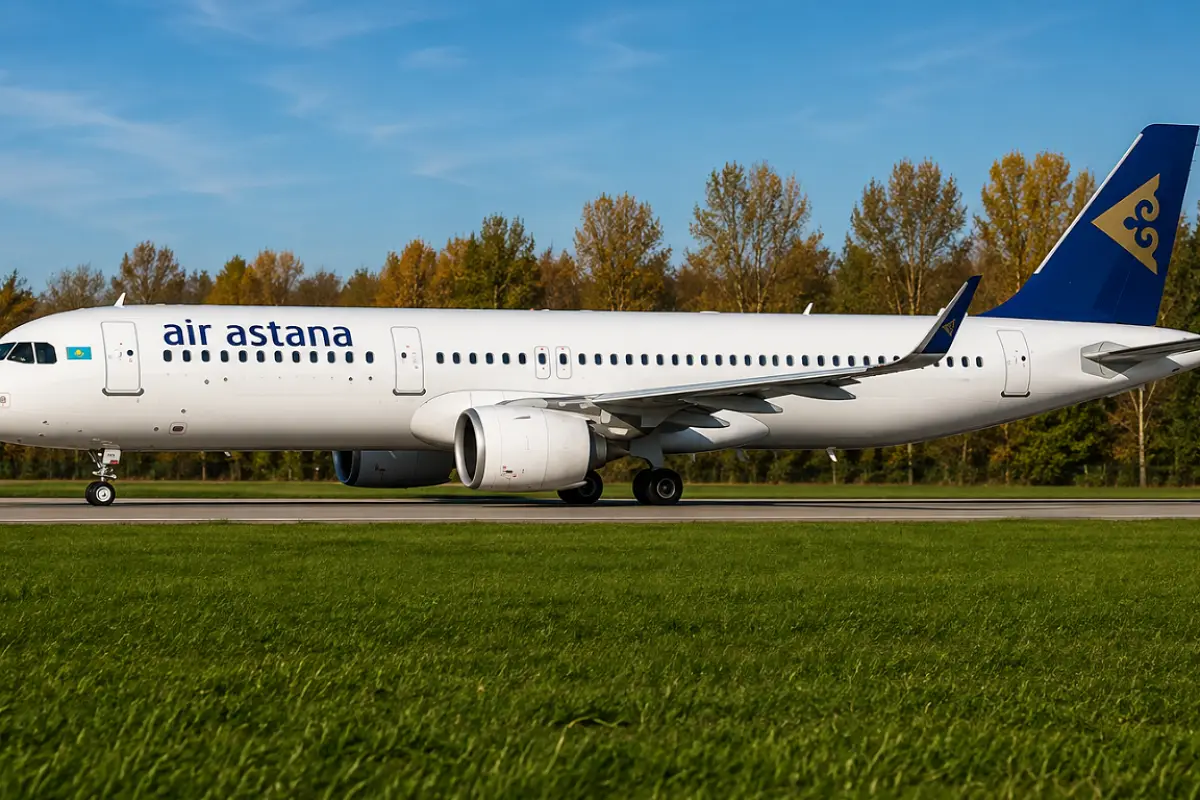
Air Astana Just Called the GTF Crisis an Inflection Point, Nine Years After Taking Its First Affected Aircraft
Air Astana reported zero Pratt & Whitney PW1100G groundings as its target for summer 2027 on August 6, 2026, after groundings fell 60% year-on-year in the first half of 2026. The group secured 11 additional engines in H1 2026 and expects more than three times the engine inductions completed in all of 2025. The word Air Astana's CEO used was "inflection point." That word choice is careful, it means the curve has turned, not that the problem is over.
Air Astana took its first A320neo in October 2016. Its outgoing CEO Peter Foster told journalists in October 2025 that the airline was looking at "a 12-year problem minimum." Nine years of contaminated powdered metal, accelerated inspections, grounded aircraft and lost revenue, all from an engine family that was supposed to give Air Astana a competitive cost advantage.
What the Numbers Actually Show
Revenue grew 16.1% to USD 763.9 million in H1 2026. EBITDAR fell 9.7% to USD 141.7 million. Net loss widened to USD 21.2 million. An airline growing revenue at double digits while posting wider losses is an airline paying the GTF tax in real time, higher fuel costs from the Iran conflict, a strengthening tenge making dollar costs more expensive, and engine-related expenses all running faster than the top line can absorb them. The airline's capacity remained largely unchanged despite 18.3% revenue growth in Q2, with RASK up 18.5%, meaning Air Astana is earning significantly more per available seat than a year ago but cannot add many more seats because its aircraft are still being grounded.
That constraint is precisely what makes the 2027 zero-groundings target commercially significant. Every aircraft currently sitting on the ground awaiting engine work is revenue Air Astana cannot earn. To manage the gap, the airline has leased five additional A320ceo aircraft, older variants unaffected by the GTF issue, to maintain minimum network coverage. Paying lease rates on substitute aircraft while owning grounded neo-family jets is the clearest illustration of what the GTF crisis actually costs an operator beyond the engine bills themselves.
Why 2027 Is Achievable When 2025 Was Not
EASA certified the more durable GTF Advantage engine variant on the A320neo family in April 2026, and Pratt & Whitney is offering a Hot Section Plus retrofit that folds most of that durability improvement into existing PW1100G engines during routine shop visits, rather than requiring airlines to wait for entirely new engines. Those two developments together change the repair economics. PW1100G MRO output was up 26% in 2025 over 2024, with similar growth projected for 2026, and Pratt & Whitney's Columbus Engine Center opened a USD 70 million 81,000-square-foot expansion increasing annual capacity by more than 25%. More shop capacity plus faster turnaround times plus more durable replacement components is the combination that produces the 60% grounding reduction Air Astana has already seen, and the zero-grounding summer the airline is now projecting for 2027.
RTX previously warned that up to 650 aircraft would sit idle during the peak of the inspection programme. Lessor Avolon indicated more than 150 GTF-powered aircraft were expected to return to service across 2026. Air Astana's improvement is real but not unique, it is part of an industry-wide recovery curve that is finally bending in the right direction after years of running the wrong way.
The Expansion That Was Waiting Behind the Groundings
While managing the engine crisis, Air Astana realigned capacity toward China, where seat capacity rose 81% year-on-year in Q2 2026. India capacity also grew significantly as the airline positioned itself to capture Central Asia's fastest-growing international traffic flows. Two Boeing 787 Dreamliners are due by year-end 2026, followed by a third in early 2027, enabling retirement of the airline's three aging Boeing 767-300ERs. An additional order for up to 15 more Dreamliners was confirmed last month.
An airline with zero GTF groundings, two 787s in service and China capacity up 81% year-on-year looks fundamentally different from the one posting losses on the back of substitute leases and grounded A320neos. CEO Ibrahim Canliel described the current period as the "New Normal" for Gulf operations, volatile, requiring rapid schedule adjustments, but singled out the engine situation as the one variable where visibility has genuinely and substantially improved.
The inflection point is here. The payoff arrives in summer 2027.