Alliance Airlines Raises Capital After 70% Value Loss
Alliance Airlines is raising AUD 40 million and selling up to AUD 75 million in assets after a flawed Qantas contract helped drive a 70% share price collapse.
 Jishan Khan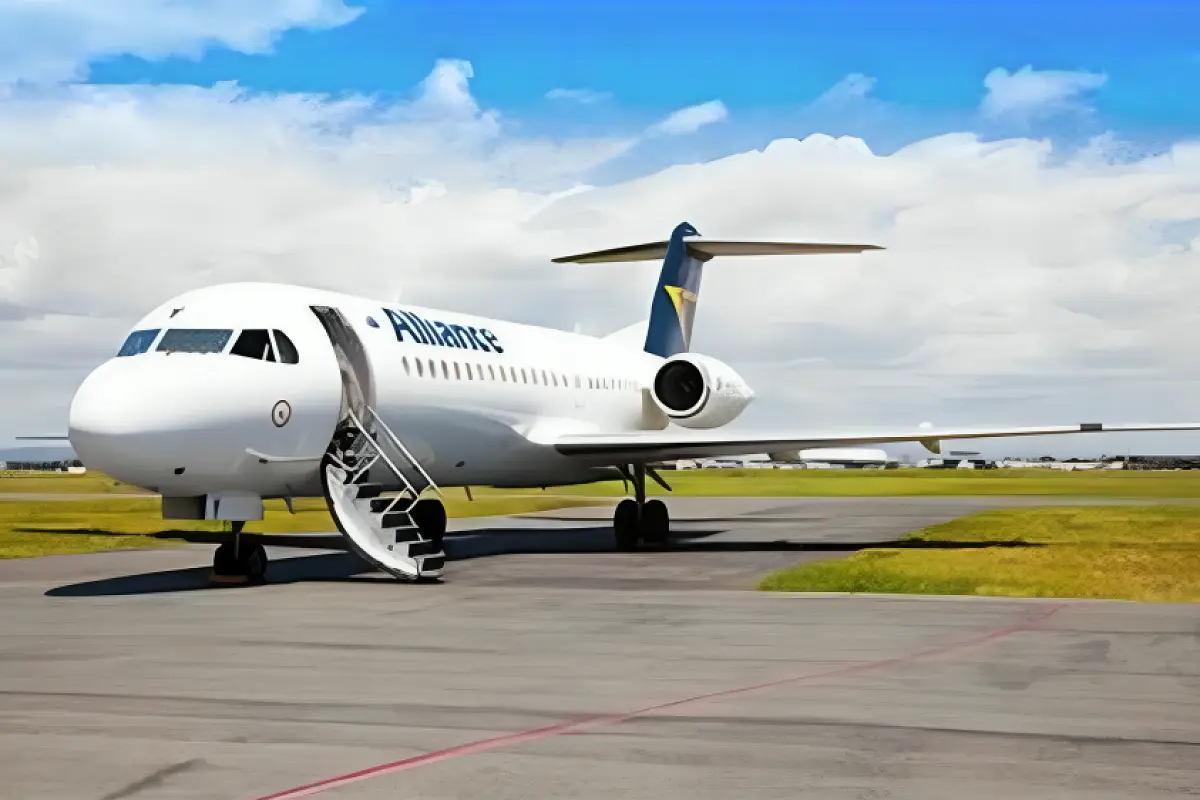
Alliance Airlines Stock Crashed 70% on a Contract That Was Never Meant to Bleed It Dry, Now It's Raising Capital to Finish the Repair Job
Alliance Aviation Services requested a trading halt on August 25, 2026, ahead of confirming a fully underwritten AUD 40 million equity raise alongside a target of AUD 60-75 million in additional asset sales during FY27, the latest and most concrete step in what management calls a formal "transformation program." The raise follows a AUD 105.8 million loss in the back half of 2025 and a share price that had already shed roughly 70% of its value over the preceding twelve months before a single Qantas contract renegotiation triggered a 30% single-day share price jump in early August. This is not a company scrambling for survival capital. It is a company that already found its fix and is now raising money to fund the transition into it.
How a "Perfect" Qantas Wet-Lease Deal Turned Into a $105 Million Problem for Alliance Airlines
To understand why Alliance needs this capital raise now, you have to understand exactly how a wet-lease arrangement works, and why one clause buried in a 2021 contract quietly became the single biggest threat to the company's financial health. Under Alliance's agreement to wet-lease up to 30 Embraer E190 jets to Qantas Group for QantasLink services, passengers boarding what looks like a Qantas regional flight are, in every commercial sense, flying an Alliance-operated aircraft. Alliance bears the crew costs, the maintenance costs, the operating costs, while Qantas pays a contracted rate for the capacity. That structure is genuinely lucrative when the contracted rate keeps pace with rising costs. It becomes financially punishing the moment it does not.
That is precisely what happened. Alliance managing director Stewart Tully was blunt about the mechanism in February, "The repricing mechanisms in this contract are not sufficient to reflect industry-wide cost inflation and have resulted in Alliance absorbing the impacts of significant increases in wages, operating expenses and maintenance capital expenditure that would typically be passed on to the customer." In plain terms, Alliance's costs climbed sharply through 2025 while the rates it could charge Qantas for the same 30 aircraft did not move to match, a structural pricing failure baked into the contract's own escalation formula, not a one-off cost shock the company could absorb and move past.
The Fokker Write-Down That Made a Bad Year Worse
The wet-lease pricing problem did not arrive alone. Alliance simultaneously wrote down the value of its ageing Fokker 70 and Fokker 100 fleet, aircraft the company has operated since its earliest days, originally built around servicing Australia's resources sector fly-in fly-out charter market from Western Australia and Queensland. Those Fokkers are decades-old airframes, and as their remaining useful economic life shortened and maintenance costs climbed, Alliance's accountants were forced to recognise a substantial non-cash impairment that compounded directly with the QantasLink pricing shortfall to produce the AUD 105.8 million half-year loss.
Two separate problems, one a genuine structural pricing failure in an active commercial contract, the other an ageing-fleet accounting reality that management had signalled was coming, landed in the same reporting period and combined to look, from the outside, like a company in crisis. The market reaction reflected exactly that reading: a 70% share price collapse over twelve months is not the market pricing in a temporary setback. It is the market pricing in genuine doubt about the business model.
Why the Qantas Contract Reset Changed Everything
The turning point came when Alliance and Qantas renegotiated the wet-lease agreement, announced in early August 2026. The revised terms include a meaningful price increase effective from July 1, 2026, a genuinely revised annual escalation mechanism designed to actually track future cost inflation rather than lag behind it, and, critically, a staged reduction in the Qantas-dedicated fleet from 30 aircraft down to 23 over the course of FY27. Tully's own framing captured the shift precisely: "This agreement improves the expected returns and cash flow for Alliance and demonstrates the strength of our partnership with Qantas," describing it as "an important early step in our transformation program."
That fleet reduction from 30 to 23 aircraft is not a retreat, it is a deliberate release of capital. Every Embraer E190 no longer committed to the QantasLink contract becomes an asset Alliance can redeploy into higher-margin charter work, resource-sector FIFO contracts, or entirely different commercial opportunities where the company retains full pricing control rather than operating under a fixed-rate wet-lease structure that had proven vulnerable to exactly the cost inflation Australia experienced through 2025 and 2026. Management is explicit that reducing committed capital and freeing aircraft for "alternative opportunities elsewhere in its operations" is a core objective of the broader transformation program, not merely a side effect of the Qantas renegotiation.
What the AUD 40 Million Alliance Airlines Capital Raise and AUD 60–75 Million in Asset Sales Actually Fund
The equity raise and the asset disposal target work in tandem to solve two distinct problems simultaneously. The AUD 40 million in fresh equity capital, fully underwritten, provides immediate balance sheet strength and liquidity headroom during the FY27 transition period when the reduced 23-aircraft QantasLink fleet is still ramping toward its improved economics and the freed-up seven aircraft have not yet been fully redeployed into new revenue-generating contracts. The AUD 60-75 million in planned asset sales, surplus aircraft, hangars, engine cores and parts inventory, consistent with the phase-out of the Fokker fleet that management has been signalling since the write-down, converts assets Alliance no longer needs at their current scale into cash that directly reduces net debt.
Alliance's own stated target of reducing net debt to underlying EBITDA from 2.7x down to 2.1x by June 2027 is the single number that ties this entire transformation program together. That ratio is the standard measure lenders and equity investors use to judge whether a company's debt load is sustainable relative to its ongoing earnings power, and 2.7x sitting against a backdrop of a AUD 105.8 million half-year loss and a collapsing share price was precisely the combination that made the market nervous enough to punish the stock by 70%. Bringing that ratio down to 2.1x through a combination of fresh equity, asset sales and a genuinely repriced flagship contract is management's roadmap for convincing the market the crisis is actually over, not merely paused.
Why Qantas's 19.7% Stake Makes Alliance Aviation Services' Transformation More Than an Ordinary Corporate Turnaround
Qantas holds a 19.7% shareholding in Alliance Aviation Services, a stake dating back to the airline group's long-standing strategic interest in Alliance's Fokker fleet and its ability to serve resources-sector charter customers efficiently in Western Australia and Queensland, alongside its role as Alliance's single largest wet-lease customer through the QantasLink arrangement. That dual relationship, significant shareholder and largest commercial customer simultaneously, means Qantas has a direct financial stake in Alliance succeeding through this transformation, not merely a commercial counterparty's interest in getting a fair contract price.
That alignment likely explains why the wet-lease renegotiation resolved as constructively and as quickly as it did once Alliance signalled the arrangement had become "commercially unviable." A pure arm's-length counterparty with no equity stake might have taken considerably longer to agree to a meaningful price increase and a genuinely improved escalation mechanism. Qantas, watching its own 19.7% equity position decline in step with Alliance's collapsing share price, had a direct financial incentive to fix the underlying contract economics rather than simply extract maximum value from its position as the customer.
What Comes Next for Alliance Airlines Australia
Alliance reaffirmed FY26 underlying profit-before-tax guidance at the midpoint of its previously flagged AUD 35 to 40 million range, and management has said it will provide more detail on the anticipated group-wide financial impact of the revised Qantas agreement when it releases full FY26 results on August 25, 2026, the same window in which the capital raise itself has now been confirmed. The genuinely difficult work, actually redeploying the seven aircraft freed from the QantasLink contract into commercially viable alternative uses, completing the Fokker phase-out without further impairment surprises, and proving the revised escalation mechanism holds up against whatever cost pressures FY27 brings, is still ahead. But for a stock that lost 70% of its value on fears the business model itself was broken, a fully underwritten capital raise paired with a repriced flagship contract and a concrete debt-reduction target is the first coherent signal in over a year that Alliance's board believes the company's core structure is sound and simply needed its economics repaired, not replaced.