ASKY Airlines Delays Boeing 787 Plans to 2028
ASKY Airlines has pushed its planned Boeing 787 operations to late 2027 or early 2028, citing high costs, aircraft shortages and its dependence on Ethiopian Airlines.
 Jishan Khan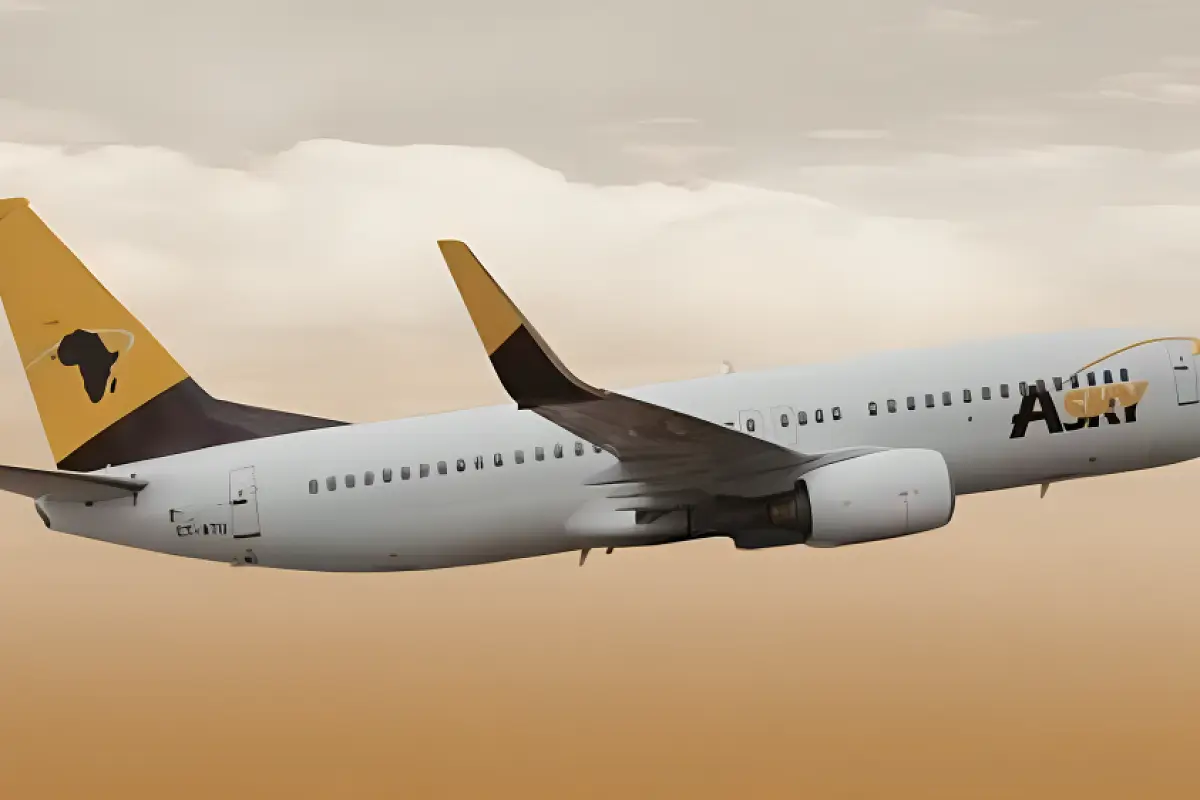
ASKY's Own CEO Just Admitted the Widebody Plan He Announced in December Was Already Wrong by June. "The Cost Is Biting Very Hard"
ASKY Airlines CEO Esayas Woldemariam Hailu confirmed at the African Airlines Association's annual meeting that the Togo-based carrier is pursuing a $350 million, five-year modernisation programme targeting a doubled fleet of 30 aircraft, a rebuilt Lomé hub, and Boeing 787 Dreamliner service to Paris, London, Dubai and Mumbai. But the timeline behind that plan has already moved once, publicly, in the space of roughly six months and Hailu's own words explain exactly why. In December 2025, he told Aviation Week ASKY aimed to introduce two widebodies "by the end of 2026," with the 787-8 the preferred aircraft to inaugurate Paris. By mid-2026, the same CEO was telling the same trade publication something considerably more cautious: "We have tried to delay our intercontinental and widebody operation, like to the end of 2027, beginning of 2028. We need a more stable environment."
That is not a rounding error in a press release. It is a full-year-plus slip in a carrier's own headline strategic commitment, publicly acknowledged by the CEO himself within a single reporting cycle. and the reasons he gave for it connect directly to the same global aircraft supply squeeze this feed has now documented crippling fleet plans from Honda Aircraft's Echelon to Airbus's A350F programme.
Why "The 787 Is Very Hard to Get" Is Not ASKY's Problem Alone
Hailu's own diagnosis was specific and unambiguous: "The cost is biting very hard, and also the 787 Dreamliner is very hard to get because now, in general, there is a shortage of fleets all over the globe." That single sentence places ASKY's delay inside a genuinely global supply constraint this feed has tracked across nearly every major aircraft programme in 2026, Spirit AeroSystems' supply chain disruption pushing Airbus's A350F delivery to late 2027, Bombardier acquiring MHI Canada Aerospace specifically to secure its own wing production against exactly this kind of external supplier risk, and Boeing's own production bottlenecks contributing to Vietravel's and Avianca's multi-year forward delivery slots.
What makes ASKY's position genuinely harder than most of the carriers this feed has covered facing similar delays is scale. A smaller West African carrier competing for scarce 787 delivery slots against airlines with vastly larger order books, Riyadh Air's 67 firm Dreamliners, Philippine Airlines' 15-aircraft commitment, Qatar Airways' hundreds already in service, occupies a genuinely weak negotiating position in a market where manufacturers and lessors are rationing capacity toward their largest, most established customers first. That structural disadvantage is precisely why ASKY's entire widebody strategy depends so completely on a single relationship the airline cannot operate without.
Why Ethiopian Airlines Is Not Simply an Investor in ASKY, It Is the Mechanism That Makes Everything Else in This Plan Possible
Ethiopian Airlines Group holds a 24.9% equity stake in ASKY, but Hailu's own description of the relationship reveals something considerably deeper than passive shareholding: "Asky and Ethiopia have a deep commercial cooperation. When we pass through Ethiopian Airlines, we have better access to financing, better creditworthiness evaluation, as well as better unit cost for us to lease aircraft." ASKY currently obtains its entire fleet exclusively on sublease from Ethiopian, not direct manufacturer orders, not independent lessor relationships, but aircraft Ethiopian itself leases and then subleases onward to ASKY, explicitly because, as Hailu put it plainly, "they have better financial muscle and creditworthiness than us."
That arrangement extends well beyond aircraft supply. Ethiopian holds a management contract with ASKY and currently provides the bulk of the smaller carrier's maintenance support, including line maintenance and heavier shop visits performed in Addis Ababa. For a widebody programme specifically, this dependency becomes existential rather than merely convenient: ASKY's stated plan to bring in Boeing 787s "would come through strategic partner and shareholder Ethiopian Airlines" meaning ASKY's entire path to intercontinental flying runs through Ethiopian's own fleet planning, financing capacity and lessor relationships, not through any independent acquisition ASKY could execute on its own. Ethiopian Airlines Group CEO Mesfin Tasew, who also sits on ASKY's board, confirmed the dependency runs in the other direction too, ASKY's own growth partly depends on airport construction funded by the Togolese government, meaning the plan requires two separate external parties, a much larger airline group and a national government, to each deliver their piece before ASKY's own fleet ambitions can be realised.
Why the $100 Million MRO Facility Is the Quiet Foundation Underneath Everything Else
Beyond aircraft and routes, ASKY and Ethiopian are jointly pursuing a $100 million maintenance, repair and overhaul facility in Lomé, with the Togolese government having already allocated land for the project and Boeing having completed a feasibility study. That detail matters enormously for understanding whether ASKY's 30-aircraft, intercontinental ambitions are actually operationally sustainable long-term, rather than simply financeable in the short term. This feed has documented repeatedly throughout 2026 how maintenance dependency becomes a genuine operational crisis when it fails, Uganda Airlines' Rolls-Royce TotalCare dispute grounding both its A330-800s for nearly eighteen months, SriLankan Airlines promoting its own Head of Engineering to CEO specifically because technical reliability had become the airline's most visible credibility problem. ASKY currently relies on Ethiopian for the bulk of its maintenance, performed in Addis Ababa rather than at its own Lomé hub, a workable arrangement at ASKY's current 17-aircraft scale, but one that would create genuine logistical and cost friction at a 30-aircraft, dual-fleet, intercontinental scale if it were never brought closer to home. A Lomé-based MRO joint venture, still at the feasibility-study stage rather than under construction, is the infrastructure piece that would actually let ASKY reduce that Addis Ababa dependency over time, assuming the facility itself gets built on anything resembling the same timeline as the fleet and route ambitions it is meant to support.
Why "Double Banking" Is the Unglamorous Detail That Actually Determines Whether Any of This Works
The single most operationally sophisticated element of ASKY's entire plan is the one that generates no headlines: restructuring Lomé's flight schedule around a "double banking" system, introducing a second wave of arrivals and departures, including night operations, specifically to create the connecting-passenger traffic flows a genuine international hub requires. This is precisely the same "bank" scheduling logic this feed has covered at scale with Doha, Dubai and Istanbul, an airport becomes valuable as a connecting hub only when its schedule is deliberately structured so that inbound flights from multiple regional origins land within a tight window, giving connecting passengers a short transfer before a second wave of outbound flights departs toward their final destinations.
ASKY's current network is built primarily around point-to-point regional West and Central African routes rather than genuine banked connectivity. Introducing a night wave specifically to feed future European services is ASKY explicitly re-engineering its entire domestic and regional schedule around a long-haul ambition that has not yet actually launched, betting that African passengers connecting through Lomé toward Paris will generate enough volume to justify restructuring dozens of existing regional flights around their convenience, months or years before the first Dreamliner to Paris actually exists to receive them. That schedule restructuring is targeted for establishment by mid-2027, deliberately positioned ahead of the currently planned late-2027-to-early-2028 intercontinental launch, meaning ASKY intends to prove its hub scheduling actually works on regional traffic first, before adding the far higher-stakes, far more expensive widebody layer on top of it.
Why Paris Is Getting Two Separate Launches, Not One
The most recent reporting reveals a detail that resolves the apparent contradiction between ASKY's original 787-first plan and its scaled-back timeline: rather than waiting for widebody capacity to launch Paris at all, ASKY now intends to open the route in late 2027 using a Boeing 737 MAX fitted with lie-flat business class seats, before upgrading the same route to a genuine 787 Dreamliner by late 2028. That is a materially different, considerably lower-risk strategy than the original plan implied. A single-aisle 737 MAX configured with premium seating can technically operate the Lomé-Paris distance, giving ASKY a functioning, revenue-generating European route roughly a year before it would otherwise have anything flying there at all, while the harder, more capital-intensive widebody transition happens separately and later, once the 787 supply situation Hailu described as "very hard to get" has hopefully eased.
That sequencing, narrowbody first, widebody upgrade later, mirrors closely the strategy this feed covered with Sun PhuQuoc Airways bridging a five-year Boeing 787 production wait using discounted ex-American Airlines A330s, and with United and American both deploying A321XLRs specifically to open thin international routes that would never justify a widebody commitment on day one. ASKY appears to be applying the same underlying principle in reverse: using an aircraft type it already flies and already understands operationally to prove Paris demand exists commercially, before committing the far larger capital and operational risk a genuine widebody launch requires.
What the Fleet Numbers Actually Show Happening Right Now, Independent of the Long-Term Plan
Away from the widebody headline, ASKY's near-term fleet growth is proceeding steadily and verifiably: the airline took delivery of two new Boeing 737 MAX 8s in July 2026, registered ET-BCJ and ET-BCK, each configured with 16 business and 144 economy seats, bringing the total fleet to 17 aircraft including 8 MAX 8s, and immediately used the added capacity to launch a new Lomé-Kano route in Nigeria on August 5. That incremental, regional narrowbody growth is happening on a considerably more reliable and predictable timeline than the widebody ambitions further out, precisely because it does not depend on the same globally constrained 787 supply chain, and because it draws on aircraft ASKY can access through its established Ethiopian sublease arrangement rather than a still-unresolved separate widebody acquisition process.
Togo's own Minister of Transport, Comla Kadje, framed that narrower growth explicitly within the national ambition underneath ASKY's entire strategy: positioning Lomé as "the leading air transport hub in West Africa," aligned directly with President Faure Gnassingbé's stated vision. That government-level backing, land allocation for the MRO facility, explicit ministerial endorsement of ASKY's fleet growth, and Ethiopian's deep institutional partnership all pointing in the same coordinated direction, gives ASKY's plan a level of structural support that pure private-sector fleet ambition often lacks. Whether that support is sufficient to overcome a genuinely global 787 shortage that has already pushed ASKY's own CEO to publicly revise his own delivery promise once within six months remains the open question this five-year plan will spend the next eighteen months actually answering.