American Airlines Route Announcement Comes Two Days After United’s
American Airlines adds seven international routes for summer 2027, including Vienna and Porto, as its A321XLR strategy faces comparison with United.
 Jishan Khan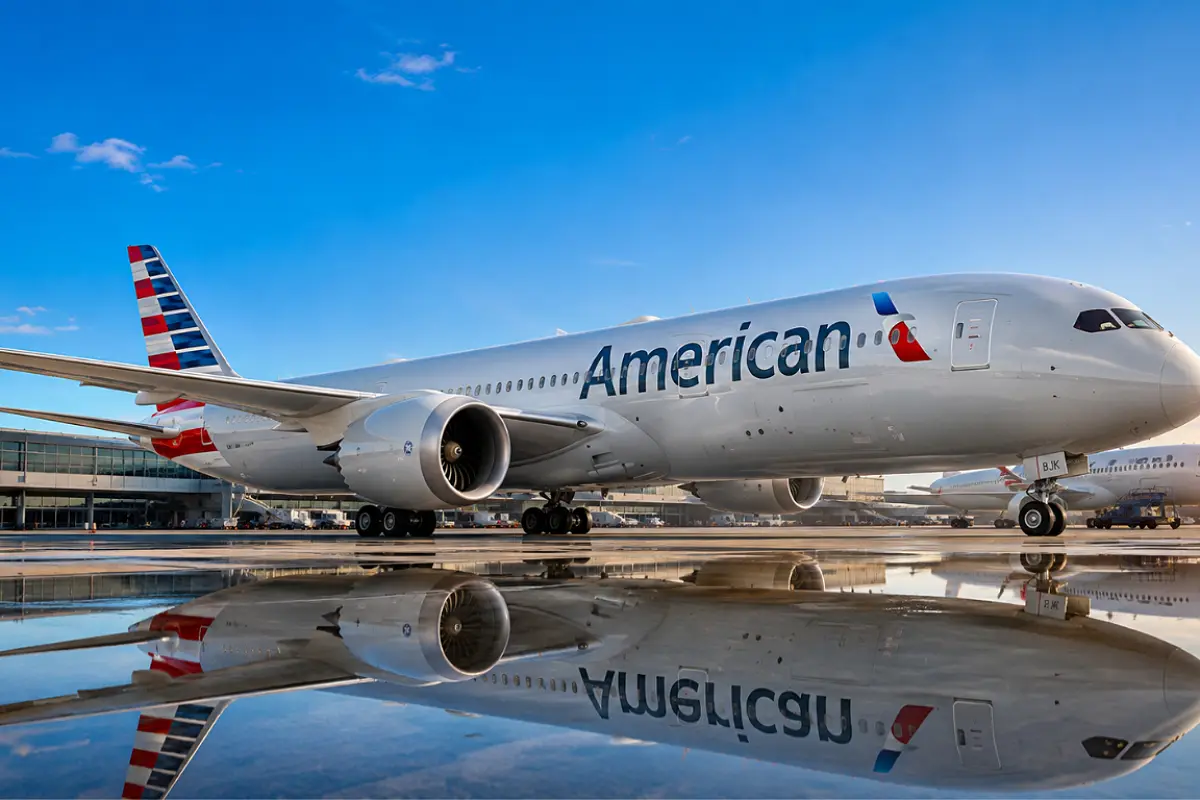
American's Route Announcement Landed Two Days After United's, and the Comparison Is Not Flattering
American Airlines unveiled seven international routes for summer 2027 on August 27, 2026, headlined by first-ever service to Vienna and Porto and a return to Reykjavik after a seven-year absence. Four of those routes will fly on the Airbus A321XLR. The timing was not American's choice to control, the announcement landed just two days after United revealed its own 10-route international expansion at a splashy hangar event in Newark, and industry coverage has been blunt about the contrast: American's "route drop," as one outlet called it, generated a fraction of the buzz United's did.
That comparison matters because it reveals something more interesting than either airline's press release alone: two US carriers with the same new aircraft type are using it for almost opposite strategic purposes.
American Airlines Vienna Is the One Genuinely Uncontested Win in the American Airlines New Routes Announcement
Philadelphia-Vienna, launching May 6, 2027, makes American the only US airline flying nonstop to the Austrian capital, a distinction the airline has repeated in every version of its own messaging because it is the single cleanest competitive claim in the entire seven-route package. Vienna slots into a Central European network American has been quietly building since 2026, when it added Prague and Budapest, meaning American is now the only US carrier connecting Philadelphia directly to all three of those Habsburg-era capitals. The route runs on a 155-seat A321XLR configured with 20 business-class suites, 12 premium economy seats and 123 coach seats, a genuinely premium-heavy layout for a market this size, and, notably, is the only one of the seven new routes with a defined seasonal end date, running through early January 2028 specifically to capture Vienna's Christmas market season rather than disappearing at the typical end-of-summer cutoff most seasonal European routes follow.
That extended season is a small but telling detail. American is not treating Vienna as a pure summer leisure play, it is betting the route can sustain demand into the distinctly different travel pattern of winter holiday tourism, which requires a different marketing and pricing strategy than a typical June-through-September seasonal European route.
The Detail Buried in Industry Commentary That American Airlines Own Press Release Does Not Mention
The most substantive strategic critique of this announcement is not coming from American's competitors, it is coming from aviation commentators reading the aircraft deployment choices against how the American Airlines A321XLR was originally supposed to be used. One widely circulated observation from aviation enthusiast forums, picked up across coverage, draws a sharp distinction: United is deploying its XLRs on routes that otherwise would not exist at all, Ljubljana, the Azores, Sardinia, genuinely thin markets that could never support a widebody and had no prior US nonstop service of any kind. American, by contrast, is putting XLRs on JFK-Amsterdam and JFK-Nice, markets where Delta already operates heavy widebody competition with substantial connecting feed at both ends.
The counter-argument, also present in that same discussion, is that American simply has far less connecting feed at JFK than United or Delta do, meaning for American specifically, JFK-Amsterdam is a pure origin-and-destination route with minimal onward connections regardless of aircraft type, which is arguably still consistent with how the XLR was designed to be used: serving point-to-point markets that cannot be economically justified with a bigger aircraft, just for different structural reasons than United's approach. Whether JFK-Amsterdam on a 155-seat premium-configured narrowbody can out-compete Delta's widebody service on one of the transatlantic's most heavily contested corridors is a genuinely open commercial question that American's route announcement does not resolve, it only reveals which bet the airline is making.
Why Philadelphia Just Became the Center of American Airlines' European Strategy
Three of the seven new routes, Vienna, Porto and Reykjavik, all originate from Philadelphia, reinforcing a pattern this feed has tracked across the industry all year: airlines increasingly building international expansion around a specific hub's underlying economics rather than spreading new routes evenly across their network. Philadelphia already operates year-round Lisbon service, meaning Porto becomes American's second Portuguese destination from the same hub, a deliberate doubling-down on Portugal specifically as a growth market, consistent with the broader European carrier interest in Portugal covered in this feed's recent reporting on the Air France-KLM and Lufthansa contest for a stake in TAP Air Portugal, where Lisbon's Americas and Africa connectivity has become a genuinely contested strategic prize between Europe's largest airline groups.
Reykjavik's return is a smaller but symbolically interesting piece of the Philadelphia buildout. American originally launched Dallas-Reykjavik back in 2018, shifted the route to Philadelphia before the pandemic, then never resumed it after 2019, meaning this relaunch is effectively American picking back up a route the pandemic interrupted mid-transition, six years later, on the airline's now-clearly-established Philadelphia international base rather than reconsidering Dallas as the origin point at all.
The American Airlines A321XLR Is Becoming the Instrument Through Which Every Major US Carrier Refights the Same Battle
Reading American's announcement directly against United's, revealed in this feed's own prior coverage of United's 10-city expansion, makes clear that both airlines are using functionally the same aircraft to pursue distinctly different network philosophies. United is explicitly avoiding markets any competitor already serves, deliberately chasing the Ljubljanas and Terceiras of Europe specifically because no rival can undercut a route nobody else is flying. American's approach is more mixed, genuine exclusivity in Vienna, direct competition with Delta in Amsterdam, and incremental frequency additions in already-served markets like Barcelona and Nice rather than new city pairs altogether. Both companies are betting the XLR's specific economics, narrowbody operating costs paired with genuinely long-haul range, can make either strategy work, and the two competing bets will be tested in the same summer 2027 booking cycle, on overlapping calendars, watched by exactly the kind of frequent transatlantic flyer who will ultimately decide which philosophy actually pays off.
How American Airlines Porto Fits Into the Carrier's European Expansion
The most interesting sentence buried in the coverage of this entire American-versus-United story is not about either airline directly, it is the observation that Delta's own summer 2027 route reveal has not yet happened, and industry commentators are already asking whether Delta can "match the buzz" both of its rivals have generated. Delta remains the dominant carrier on the JFK-Amsterdam route specifically, the exact market where American is now deploying a premium-configured A321XLR in direct competition. How Delta responds, whether with additional widebody frequency, its own narrowbody deployment, or simply confidence that its existing feed and schedule advantage renders American's XLR gambit a non-threat, will be the piece of this three-way transatlantic contest that actually determines whether American's bet on contested European markets pays off, or whether Vienna ends up being the only genuinely uncontested win in the entire seven-route package.