United Airlines Expands Internationally With A321XLR Jets
United Airlines is using the Airbus A321XLR to launch nonstop flights to smaller European cities that cannot support traditional widebody service.
 Jishan Khan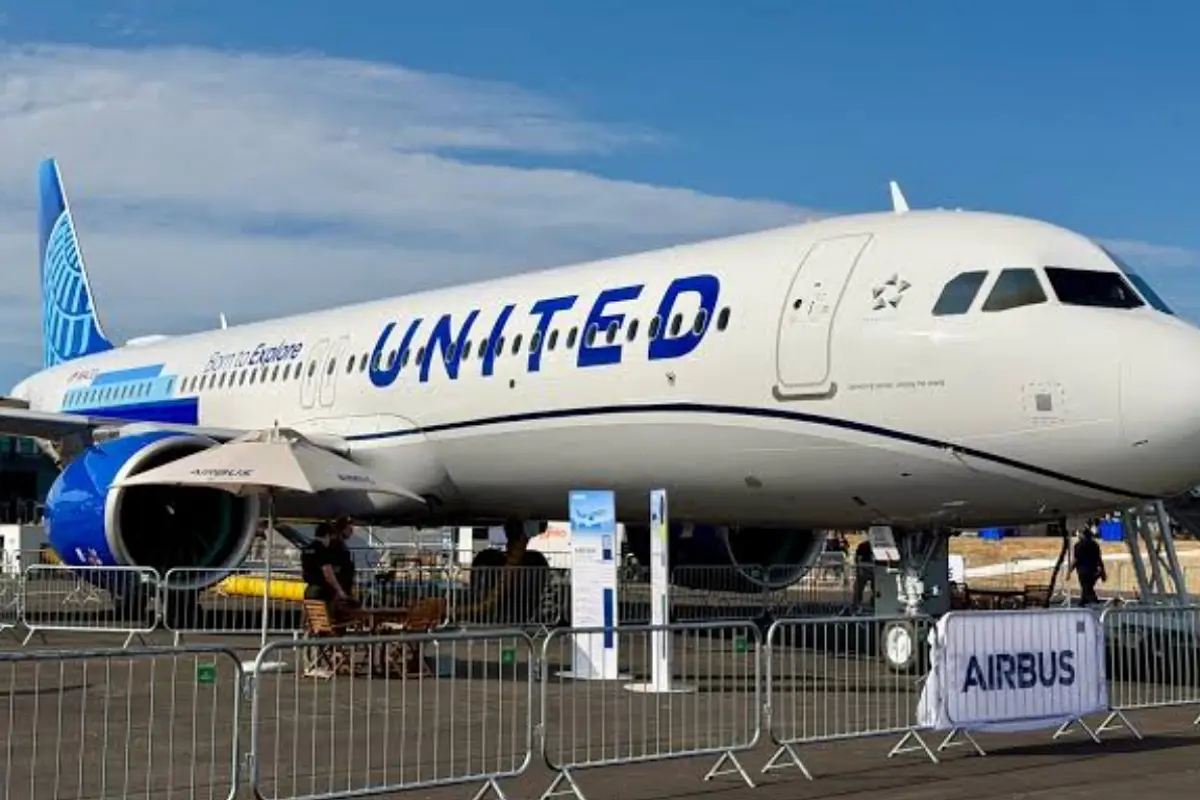
United's "Largest Expansion Ever" Is Really a Bet That the A321XLR Can Do What Widebodies Never Could, Fly Profitably to Places Too Small For Them
United Airlines unveiled what it calls the largest international network expansion in company history on August 25, 2026, adding 10 new cities across Europe and Asia starting as early as March 2027, alongside three additional routes to existing destinations and the international debut of its new "Born to Explore" Airbus A321XLR. Eight of the ten new cities, Toulouse, Marseille, Luxembourg City, Ibiza, Valencia, Terceira, Ljubljana and Olbia, will have no nonstop US carrier competition whatsoever. This is not United chasing bigger gateway cities. It is United deliberately avoiding them.
Why the Cities Nobody Else Flies to Are the Entire United Airlines International Expansion Strategy
The pattern across this announcement is impossible to miss once you list the destinations together: Ljubljana, Slovenia. Terceira in Portugal's Azores. Olbia in Sardinia. Catania in Sicily. These are not cities that support a daily Boeing 777 or 787 widebody service, the passenger volume simply is not there to fill 250-plus seats profitably, year-round, on a single route. That is precisely why no major US carrier has ever attempted nonstop service to most of them. But it is also precisely why the A321XLR exists.
The XLR is fundamentally a re-engineered narrowbody with extended fuel tanks, giving it genuinely long-haul range, up to roughly 4,700 nautical miles, while carrying the passenger economics of a much smaller aircraft, roughly 130 to 150 seats rather than 250-plus. That capacity difference changes the entire calculus of which routes become viable. A city that could never fill a widebody consistently can often fill a well-configured narrowbody consistently, particularly when it is the only nonstop option in the market and can capture premium demand from travelers currently connecting through London, Paris or Frankfurt to reach the same final destination.
The Boeing 757 Replacement Angle Matters More Than It Sounds
United has explicitly positioned the A321XLR as the replacement for its ageing Boeing 757-200 fleet, an aircraft type that, despite being decades old, has remained essentially irreplaceable for exactly this kind of thinner, longer transatlantic route because no newer aircraft matched its specific range-and-capacity profile until now. Airlines across the industry have kept 757s flying transatlantic routes years longer than their originally planned retirement precisely because Airbus and Boeing had no direct modern successor, a gap the A321XLR was purpose-built to close. United retiring 757s in favor of A321XLRs on routes like Newark-Luxembourg or Dulles-Toulouse is not simply a fleet modernization story. It's the first time in over a decade that airlines have had a genuinely new tool for exactly this route category, and United is moving fastest and most aggressively to use it.
Why Newark's Dominance in the United Airlines New Routes Announcement Is Deliberate, Not Incidental
Eight of the ten new destinations depart from Newark specifically, reinforcing CEO Scott Kirby's explicit framing of Newark as "the best Atlantic gateway in the country," a claim he backed by noting it has been the most on-time airport in the New York City area this year. That matters competitively because Newark has spent recent years fighting a reputation for chronic delays and air traffic control staffing shortfalls that periodically disrupted the entire Northeast corridor. United doubling down on Newark as its primary launch point for this expansion, rather than diversifying more evenly across its hub network, is a direct statement of confidence in the airport's operational recovery, and a bet that concentrating this much unique international inventory in one hub creates a stickier value proposition for United's most loyal New York-area customers than spreading thinner offerings across multiple cities.
The Loyalty and Credit Card Economics Driving the United Airlines A321XLR Strategy
United's own commercial leadership has been explicit that this expansion strategy connects directly to co-branded credit card enrollment and customer loyalty, international routes, particularly to destinations no competitor serves nonstop, are disproportionately effective at driving premium credit card sign-ups and MileagePlus engagement compared to adding frequency on already-competitive domestic or major international routes. A traveler who wants to visit Ljubljana or the Azores and discovers United is the only nonstop option has a powerful incentive to book directly with United and enroll in its loyalty ecosystem rather than shop connecting itineraries across multiple carriers. That dynamic, network breadth as a loyalty-program acquisition tool, not merely a passenger revenue play, has become increasingly central to how major US carriers evaluate thin, exclusive routes that would not otherwise pencil out on point-to-point economics alone.
What Happens to the Routes That Already Existed
The expansion is not purely additive. United previously flew several summer 2026 European routes, Split in Croatia, Bari in Italy, Glasgow in Scotland and Santiago de Compostela in Spain, that are returning for summer 2027 rather than being upgraded to year-round service, indicating United is treating a meaningful share of its thinner European network as seasonal rather than committing to it permanently. That distinction matters: the ten new cities announced this week are being positioned with more permanence and investment (dedicated A321XLR aircraft, Newark hub concentration, explicit "no competitor" framing) than the returning seasonal routes, suggesting United's own internal data has already sorted its expanding European network into tiers of confidence.
Why Denver-Paris Is the One Widebody Story Inside a Narrowbody Announcement
Buried inside the broader XLR-driven expansion is a single conventional widebody route that generated its own dedicated speculation cycle among aviation watchers before the announcement: daily, year-round Denver-Paris service beginning May 27, 2026, operated on a Boeing 787-9. This is United using its Mountain West hub strength to justify a genuine widebody commitment to one of Europe's largest markets, a market big enough to fill a 787 consistently, unlike the niche XLR destinations surrounding it in this announcement. It's a reminder that United's expansion strategy isn't purely about niche narrowbody routes; it's about matching aircraft type precisely to each market's actual demand ceiling, deploying widebodies where volume justifies them and XLRs everywhere else that volume alone never would.
The Bigger Number Behind the Announcement
United has added 58 international destinations since 2017 and will now serve more than 160 international destinations in total, a scale of international network growth that, over roughly a decade, represents one of the most aggressive expansion campaigns of any global carrier during a period that included a global pandemic that grounded international aviation entirely for the better part of two years. That context makes this week's announcement less a single dramatic pivot and more the latest and largest instalment in a strategy United has been running consistently since the pandemic recovery began, using every new aircraft type at its disposal, from 787 widebodies to now the A321XLR, to keep finding city pairs that nobody else has bothered to connect directly.