Philippine Airlines 50-Year Franchise Bid Moves Ahead
Philippine Airlines 50-year franchise renewal is being sought as the airline prepares for a 24-aircraft widebody order shaping its fleet through the 2030s.
 Jishan Khan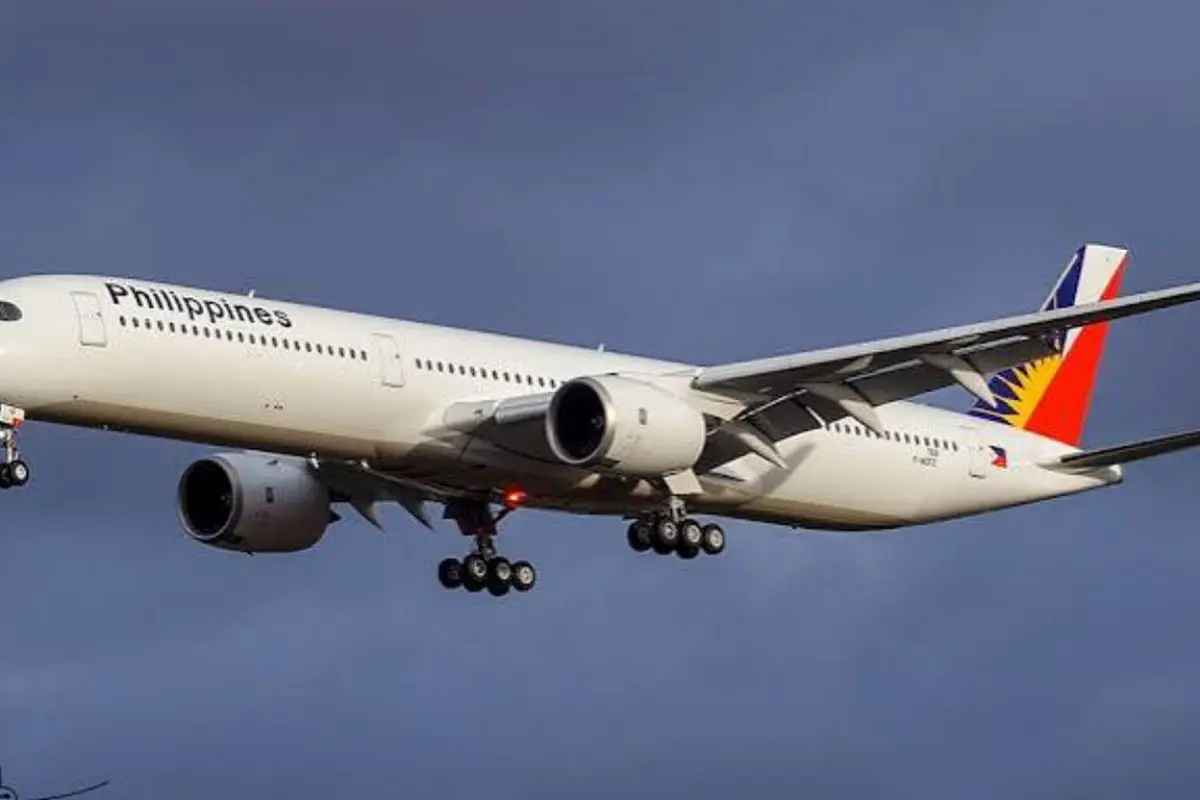
Philippine Airlines 50-Year Franchise Bid Could Clear Congress Before Its 24-Aircraft Order Even Delivers Its First Jet
The Philippine House of Representatives approved House Bill 10545 on second reading on August 24, 2026, advancing Philippine Airlines toward a renewed 50-year congressional franchise that would replace its existing charter under Presidential Decree 1590, a decree dating to 1978 that is due to expire in 2028. The bill could reach third and final reading as early as the following week, according to reporting at the time. It still requires Senate passage and presidential signature before becoming law. The timing is not incidental: this feed's own reporting from July documented PAL's Farnborough commitment to 15 Boeing 787-10s plus nine additional Airbus A350-1000s, a combined 24-aircraft widebody order that will not finish delivering until well into the 2030s. A carrier making fleet commitments that stretch a decade past its current franchise's own expiry date has an obvious structural reason to want that franchise question resolved now rather than later.
Why a 1978 Decree Was Never Built for Philippine Airlines 2026 Fleet Expansion
PD 1590 has functioned as PAL's foundational legal charter for nearly five decades, but it was written for an airline operating in an entirely different regulatory and financial environment, a period before airline privatization, before PAL's own 1990s deregulation-era struggles, and long before the kind of multi-decade aircraft financing structures that underpin a modern widebody order. House Committee on Legislative Franchises Chairman Jeffrey Ferrer's sponsorship remarks made the practical logic explicit: "A stable 50-year franchise will provide our national flag carrier with the certainty and confidence necessary to undertake long-term investments, modernize its fleet, expand its domestic and international routes and develop the infrastructure and capabilities necessary to meet the country's growing aviation needs."
That is not abstract political language, it describes a genuine financing mechanism. Aircraft lessors, engine manufacturers and export credit agencies financing widebody purchases typically want assurance that the airline signing 12-to-15-year lease or loan agreements will retain its legal right to operate for the full term of that financing. A franchise expiring in 2028, while PAL is simultaneously taking delivery of Boeing 787-10s scheduled to arrive well into the 2030s under the Farnborough order this feed covered, creates exactly the kind of regulatory overhang that can complicate or add risk premium to aircraft financing negotiations, a friction a clean 50-year extension to 2076 removes entirely.
The Specific Powers Being Written Into the PAL Congressional Franchise Matter as Much as the Duration
HB 10545 is not a simple time extension of PAL's existing terms, it restructures the underlying legal relationship between the airline and the state in ways directly relevant to how PAL can operate going forward. The bill authorizes PAL's continued use of government-owned landing and airport facilities, subject to national security considerations, while reciprocally allowing government use of PAL facilities. It grants PAL eminent domain powers, a notable authority for a nominally private, though historically state-adjacent, airline to hold. It explicitly prohibits any transfer of the franchise without direct congressional approval, a safeguard against the kind of ownership change that could otherwise occur without legislative oversight. And it grants the Philippine President the authority to temporarily take over PAL's facilities during war, rebellion, natural calamity or other emergencies, with due compensation, while separately holding PAL liable for indemnifying national and local governments against accidents or injuries arising from its operations.
Ferrer's committee also framed PAL's continued role explicitly around routes the market alone would not sustain: "PAL serves routes that may not always be commercially attractive but are important in connecting our islands, our communities and our people. Its role therefore goes beyond business. PAL also performs as an important public service." That framing matters because it positions the franchise renewal not purely as a commercial enabler for PAL's international widebody ambitions, but as continued formal recognition of PAL's obligation to serve the Philippines' famously difficult inter-island domestic network, a public-service dimension that has historically justified the kind of regulatory privileges, tax treatment and government facility access this bill preserves and updates.
Why the Path From Here Is Not Automatically Smooth for the PAL Franchise Renewal
Philippine legislative history offers a cautionary and directly relevant precedent for how franchise renewals can stall even after clearing the House. This feed's research surfaced the case of ABS-CBN, the major Philippine media network, whose application for a 25-year broadcast franchise renewal was denied outright at the House legislative franchises committee level in 2020 after years of process, a decision that ultimately cost an estimated 11,000 jobs when the network went off air. That case became a specific point of political comparison when a separate 50-year franchise bill for San Miguel Corporation's Bulacan airport project cleared the House in a strikingly fast single month, prompting Gabriela Representative Arlene Brosas to publicly contrast the speed of that approval against ABS-CBN's years-long, ultimately unsuccessful process.
How the PAL Boeing 787-10 and PAL Airbus A350-1000 Fit Into Philippine Airlines' Fleet Expansion
PAL's HB 10545 does not appear to be facing anything resembling that level of controversy, it passed second reading via a simple voice vote with no reported opposition, and Ferrer's sponsorship speech reflects committee consensus rather than contested debate. But the ABS-CBN precedent is a genuine reminder that Philippine legislative franchises, even ones that appear procedurally straightforward, are not purely technical rubber-stamp exercises, they remain subject to the same political dynamics, presidential relationships and congressional priorities that can accelerate or stall any piece of legislation, and PAL's bill still requires both Senate passage and presidential signature before the 50-year extension becomes binding law.
What the Philippine Airlines 24 Aircraft Order Means for the PAL Franchise Renewal
The most consequential unanswered question in this story is what happens to PAL's operating authority if HB 10545 does not complete the full legislative process, Senate passage, reconciliation with any Senate amendments, and presidential signature, before PD 1590 expires in 2028. Philippine legislative history includes precedent for franchise bills "lapsing into law" without a presidential signature specifically when the President fails to act on a bill within the constitutionally mandated window, as happened with PAL Express's own 25-year franchise renewal in 2022 after then-President Duterte did not sign it in time. That mechanism offers PAL a degree of protection even in a slow-moving presidential approval scenario, but it does not eliminate the underlying uncertainty that a two-year runway between now and 2028 creates for an airline simultaneously trying to finalize aircraft financing on a 24-jet widebody order extending well beyond that date.
What Happens if the PAL Franchise Renewal Does Not Clear in Time
PAL's chief domestic rival, Cebu Pacific, faces no equivalent franchise cliff, different Philippine carriers operate under different franchise instruments with different expiry structures, meaning PAL's 2028 deadline is specific to its own legal history rather than a shared industry constraint. A clean, uncontested 50-year renewal, secured well ahead of expiry and running concurrent with its major fleet investment cycle, would give PAL a form of long-term regulatory certainty that becomes a genuine, if underappreciated, competitive asset, the kind of stability that supports favorable aircraft financing terms, long-horizon infrastructure investment decisions, and the confidence to make the sort of multi-decade network commitments this feed has already documented PAL pursuing, from its oneworld Alliance entry to its Boeing return after nearly two decades. Whether HB 10545 clears the Senate and receives presidential approval before PD 1590's 2028 deadline will determine whether that regulatory certainty arrives with room to spare, or under exactly the kind of last-minute pressure the bill's own sponsors are explicitly trying to avoid.