Saudia Cargo Builds Dhaka-Frankfurt Air Bridge
Saudia Cargo's new Dhaka-Frankfurt freighter route is part of a wider Saudi cargo strategy linking Asia, Europe and the Kingdom through two cargo airlines.
 Jishan Khan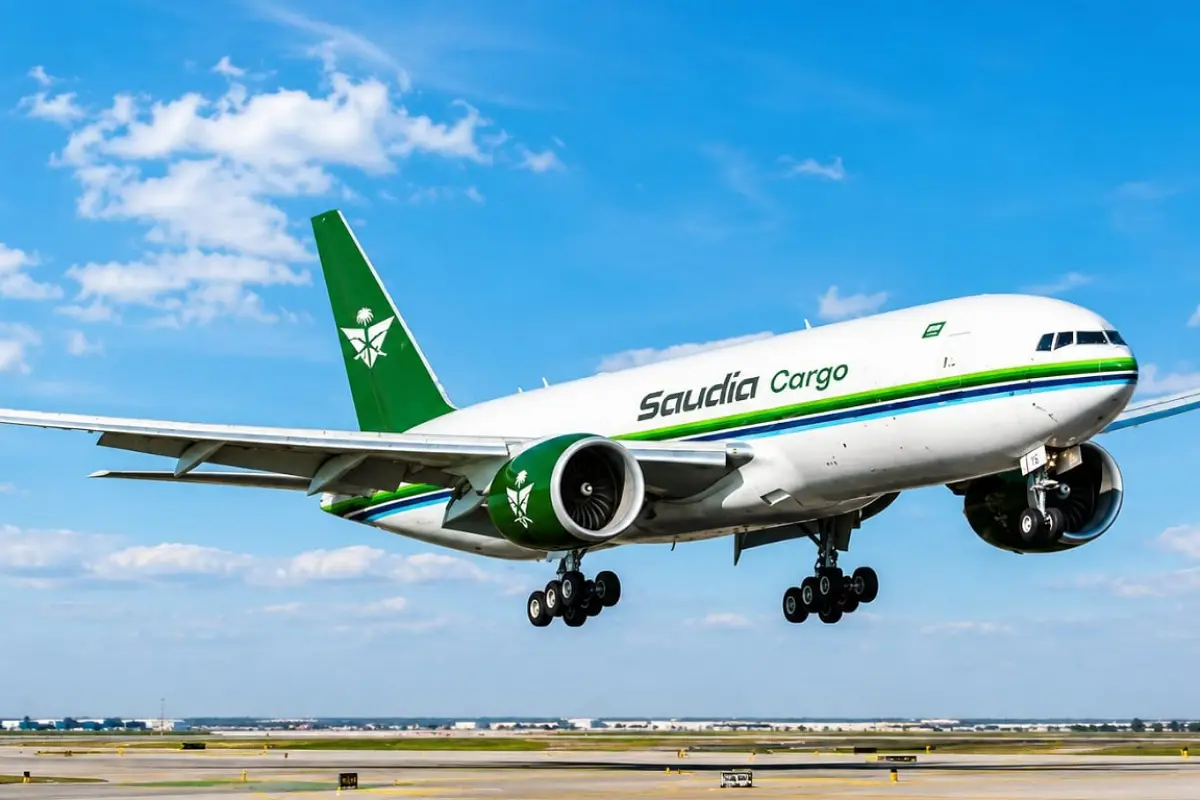
Saudia Cargo Just Connected Two Airlines Under Two Different Names to Build a Single Asia-Europe Bridge, Dhaka to Frankfurt Is Only the First Visible Piece
Saudia Cargo launched a twice-weekly Boeing 777 freighter service between Dhaka and Frankfurt on August 14, 2026, its second major route announcement in a month following a new Riyadh-Melbourne freighter service and coming days after a formal interline agreement with sister carrier Riyadh Cargo. That sequencing is the part of this story that matters more than any single route. Saudia Cargo is not opening a Bangladesh-Germany corridor in isolation. It is stitching together a two-brand Saudi cargo network designed to make Riyadh and Jeddah the connecting points for freight moving between Asia's manufacturing base and Europe's distribution hubs, and Dhaka-Frankfurt is the visible proof of concept for a strategy that has been assembling for months.
Why Dhaka Is the Manufacturing Hub Every Cargo Carrier Wants a Direct Line Into
Bangladesh's position in global garment manufacturing is not a marginal cargo opportunity, it is one of the largest and most consistently growing air freight demand bases in Asia. The country is the world's second-largest ready-made garment exporter after China, and unlike bulk commodity trade that can tolerate slower sea freight, the fast-fashion supply chains that dominate Bangladesh's textile exports depend on air cargo specifically because European and North American retailers need seasonal collections moving on tight timelines that ocean freight cannot match. Layer onto that base a growing pharmaceutical and e-commerce export sector, and Dhaka generates precisely the kind of high-value, time-sensitive freight volume that justifies a dedicated widebody freighter service rather than relying on belly-hold capacity from passenger flights.
That demand previously had to connect through intermediate hubs, typically Dubai, Doha or Istanbul, before continuing on to European gateways, adding transit time and handling risk at every connection point. A direct Dhaka-Frankfurt freighter removes an entire connection from that chain, and for shippers moving perishables or pharmaceutical products with strict cold-chain requirements, eliminating one additional cargo transfer point meaningfully reduces both transit time and the risk of temperature excursions or damage.
Why Frankfurt, Specifically, Is the European End of the Bridge
Frankfurt is not simply "a European city" in this equation, it is the specific gateway that gives Bangladeshi exporters what Dubai or Istanbul connections cannot: direct integration into continental Europe's road and rail freight distribution network from one of the world's most sophisticated cargo-handling airports. Frankfurt Airport's cargo facilities are built around exactly the kind of onward trucking connectivity that lets a shipment arriving from Dhaka disperse to retail distribution centres across Germany, France, the Benelux countries and beyond within hours of customs clearance, rather than requiring a further intra-European flight leg. For time-sensitive garment shipments feeding into European retail calendars, that road-freight integration is often more commercially valuable than the flight itself.
The Fleet Investment That Makes This Network Expansion Credible
None of this route expansion would carry much weight without the capacity to sustain it, which is precisely why Saudia Cargo's parallel agreement to acquire four new-build Boeing 777-200 freighters matters as much as any individual route launch. The 777F remains one of the most capable freighter types in service, carrying over 100 tonnes of payload with the range to operate genuinely long-haul city pairs like Dhaka-Frankfurt without requiring a technical stop, and Saudia Cargo delivered over 570,000 tonnes of cargo across more than 90 international destinations in its most recent annual performance, giving the airline the operational scale to justify committing new-build aircraft rather than relying entirely on converted freighters. New Boeing 777-200 freighters, still in production rather than passenger-to-freighter conversions, also come with modern engine efficiency and lower maintenance burden than the ageing widebody freighter fleets, including, notably, the kind of converted A340s that collapsed European Cargo's business model entirely, a contrast this feed covered in the same reporting window.
Why the Riyadh Cargo Interline Agreement Is the Structural Piece Nobody Is Talking About
The most strategically significant development sitting alongside the Dhaka-Frankfurt launch is not a route at all, it is the interline agreement Saudia Cargo signed with Riyadh Cargo in July 2026, extending cargo connectivity between the two carriers and giving customers access to more international markets through Saudi Arabia as a connecting point. Riyadh Cargo's own stated destination plan explicitly includes Mumbai, Kuala Lumpur and Dhaka as it works toward serving more than 100 destinations by 2030, meaning Dhaka is not just a Saudia Cargo route, it is a named target in Riyadh Cargo's separate expansion plan too.
That dual targeting is not a coincidence or duplication. It reflects a coordinated Saudi state cargo strategy operating across two distinct commercial brands simultaneously, Saudia Cargo building direct long-haul freighter routes like Dhaka-Frankfurt and Riyadh-Melbourne, while Riyadh Cargo builds out its own destination network with an interline agreement now linking the two together. A shipper moving freight from Kuala Lumpur or Mumbai can, through that interline arrangement, connect onward through Saudi Arabia using either carrier's network as though it were a single integrated system, precisely the kind of connectivity depth that transforms a country from "a place with a national cargo airline" into "a genuine logistics hub" in the way Gulf competitors Dubai and Doha have spent two decades building.
How This Fits the Same National Playbook This Feed Has Tracked All Year
The structural logic here mirrors almost exactly what this feed has documented across Riyadh Air's aggressive widebody ordering, flynas's fleet expansion to 235 firm Airbus jets and its new Riyadh training centre, and the National Aviation Strategy's stated targets of 330 million annual passengers and vastly expanded cargo capacity by 2030. Saudi Arabia is not building one dominant national carrier and calling its aviation ambitions complete, it is simultaneously building passenger capacity through Saudia and Riyadh Air, training infrastructure through flynas's Riyadh facility, and now cargo connectivity through the coordinated Saudia Cargo-Riyadh Cargo interline network, each piece reinforcing the others toward the same stated national goal of positioning the Kingdom as the connecting point between Asia, Africa, Europe and the Americas.
Dhaka-Frankfurt, on its own, is a single twice-weekly freighter route connecting a garment-manufacturing capital to a European logistics gateway. Read against the interline agreement, the four incoming 777 freighters, and Riyadh Cargo's stated 100-destination-by-2030 target, it is one confirmed data point in a Saudi cargo strategy that is being built with the same national coordination and long time horizon that has defined every other piece of the Kingdom's aviation buildout this year.