SCAT Airlines Plans 16 Boeing 737 MAX Deliveries by 2028
SCAT Airlines will add 16 Boeing 737 MAX aircraft by 2028 as the Kazakh carrier expands its fleet and strengthens its international network.
 Jishan Khan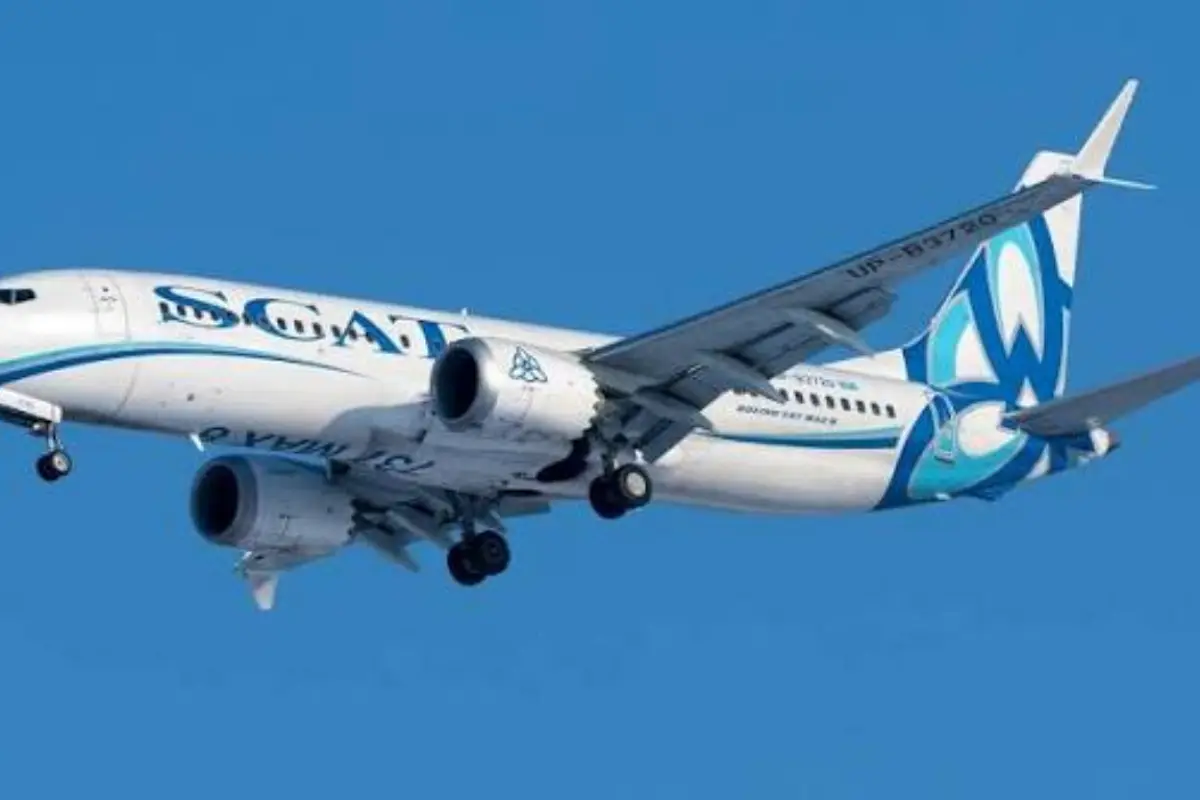
Kazakhstan's SCAT Airlines Is Building the Most Ambitious Fleet in Central Asian History, and Almost Nobody Has Noticed
SCAT Airlines signed a lease agreement with AIP Capital for two Boeing 737-8s at Farnborough, with deliveries in November 2027. The deal is the latest move in a fleet expansion programme that will see Kazakhstan's largest private carrier add 16 Boeing 737 MAX jets across 2027 and 2028 alone, transforming an airline that operated legacy narrowbodies into one of the most modern MAX-focused fleets in the region.
SCAT was the first airline in Central Asia to operate the 737 MAX. It has spent the past three years making sure it stays the one with the most of them.
What SCAT's Fleet Actually Looks Like Now
SCAT currently operates nine Boeing 737-8s and five 737-9s alongside more than a dozen previous-generation Boeing 737 variants. The incoming pipeline runs like this, two 737-8s and two 737-9s arriving in 2027 from existing orders, the two additional 737-8s from the AIP Capital lease arriving in November 2027, and five 737-9s scheduled for 2028. In April 2026 SCAT also firmed up a previously unidentified order for five additional 737-9s and converted five existing 737-8 commitments to the larger variant, a move that simultaneously increased the incoming fleet's seat count and range in a single transaction.
The result is an airline that entered 2023 with three 737 MAX jets and will exit 2028 with more than 30, having retired most of its older narrowbody inventory in the process. In five years, SCAT's entire mainline narrowbody fleet will be MAX family aircraft.
The Prague to Sanya Flight That Explains the 737-9 Pivot
SCAT recently launched a Prague-Sanya service with a technical stop in Bishkek, Kyrgyzstan, a journey of more than 14 hours connecting the Czech Republic with southern China. That route does not fit the profile of a domestic Kazakh carrier finding its feet on regional hops. It is a seventh-freedom operation, flying between two countries that are neither of SCAT's home market, using the 737-9's 3,300 nautical mile range and 220-seat capacity to position Shymkent as a transit point on a China-Europe corridor.
SCAT is explicitly planning to pioneer seventh-freedom routes from Central Asia across Europe and Asia using its expanded 737-9 fleet. For an airline based in Shymkent, a city of 1.2 million people that most aviation professionals outside Central Asia could not locate on a map, that ambition is extraordinary. But it is also commercially logical. Central Asia sits geographically between two of the world's most active aviation markets, and an airline with a modern, long-range narrowbody fleet and low cost base is positioned to capture traffic flows that currently route around the region rather than through it.
The Leasing Model That Makes This Possible
The AIP Capital deal highlights how SCAT is funding the expansion, through a combination of direct Boeing orders and operating leases, rather than a single procurement approach. Operating leases with an established US lessor give SCAT access to new aircraft on terms that preserve capital flexibility, allow fleet adjustment if market conditions change, and do not require the full equity commitment of an outright purchase. For a privately-owned airline in a market where aircraft financing from local banks carries limited depth, that structure is not a preference, it is a necessity.
The AIP Capital agreement is described as incremental to SCAT's existing acquisition programme, not a replacement for it. The airline is running parallel tracks, direct orders with Boeing for the fleet backbone and lessor deals for supplemental capacity, exactly the mixed financing model that IndiGo, Air Arabia and other fast-growing private carriers used to scale quickly without overextending their balance sheets.
Kazakhstan's aviation market grew 40% to 18.1 million passengers in 2025, the fastest growth rate of any major aviation market globally per IATA's latest data. SCAT is building the fleet to capture that growth, and the route network to go well beyond it. The two AIP Capital jets arriving in November 2027 are the most recent instalment of that strategy. They will not be the last.