Four World Aviation Festival Finalists Target Airline Efficiency
Four World Aviation Festival finalists are targeting fare prediction, AI brand accuracy, paid upgrades and boarding efficiency instead of reinventing the airline.
 Jishan Khan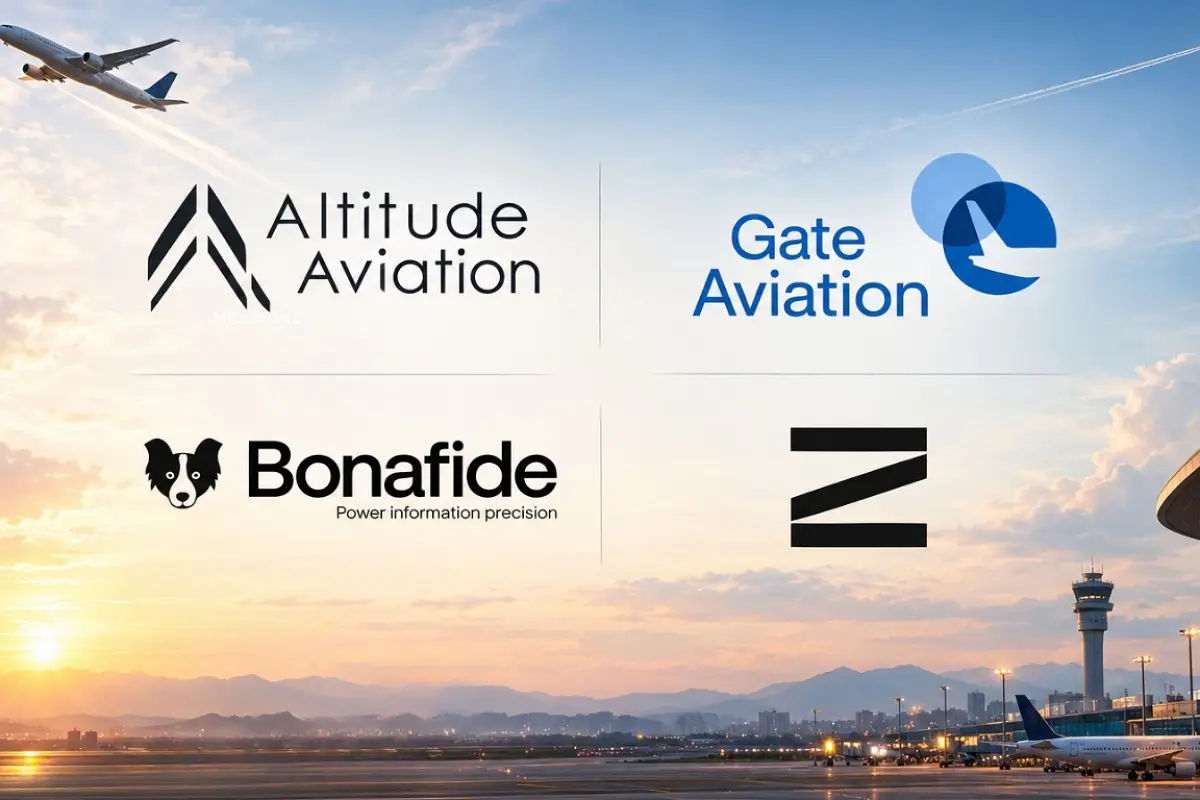
Four Start-Ups, Four Narrow Problems: What the World Aviation Festival Finalists Say About Where Airline Tech Money Is Going
Zerolook, Bonafide, Altitude and Gate Stream will pitch live at FIL Lisbon on October 13, the opening day of the World Aviation Festival, which runs October 13 to 15 and expects more than 4,500 senior aviation and travel executives. The four were selected from 84 entries. The judging panel includes Iberia's Head of Innovation, Design & Research, IBM's Global Head of Consumer, Travel & Transportation Industries, and investors from Thayer Investment Partners and Oxford Innovation Finance, so the audience is as much about who might fund or adopt these companies as about the prize itself. The competition is hosted by Irra Ariella Khi, co-founder and CEO of Zamna.
What makes this shortlist worth reading closely is not any single company. It is that none of the four is trying to reinvent the airline. Each targets one specific, measurable commercial or operational gap.
Zerolook: Predicting Fares Instead of Fetching Them
Zerolook describes itself as "low-cost flight shopping infrastructure for the AI era," and its core technical idea is worth understanding because it attacks an economics problem most travellers never see. Every fare search normally triggers a live query to an airline or distribution system, which costs the airline money. As AI travel assistants begin generating far more searches than human shoppers ever did, with agents comparing dozens of itineraries in the background before a person sees any answer, the cost of answering all those live queries can balloon. Zerolook's approach is to use a machine learning model that predicts fares rather than fetching them live, so online travel agencies and airlines can serve metasearch and agent traffic at a fraction of the cost per query.
The commercial logic is clear: if AI shopping agents multiply search volume, whoever can serve that volume cheaply controls a chokepoint. The open question is accuracy. A predicted fare that differs from the live fare at booking creates a conversion problem, so the model's accuracy is the whole product.
Bonafide: Making Sure AI Describes Your Airline Correctly
Bonafide is an "AI alignment platform that builds context layers to help AI systems understand and accurately represent the brand's business." The problem it targets is the flip side of Zerolook's. If passengers increasingly ask AI assistants which airline to book, what a fare class includes, or what a loyalty programme offers, the answers those assistants generate effectively become the airline's shopfront. An AI that confidently misstates baggage rules or upgrade eligibility creates real customer friction and brand damage the airline never authored. Bonafide's pitch is that airlines need a structured way to feed accurate, brand-approved context into those systems rather than leaving it to whatever the models scraped.
That connects to something this feed has already covered from the airline side. Qatar Airways built Q Search and an Infinite Awards assistant on its own properties, and Air India Express's Tia resolves over 75% of queries on its own channels. Those are airlines controlling the AI experience where they own the interface. Bonafide targets the harder case: AI experiences the airline does not own at all.
Altitude: Selling Upgrades After the Booking
Altitude is a platform helping airlines "unlock incremental ancillary revenue through paid premium cabin upgrades," letting passengers with an existing booking check available upgrade opportunities. This is the most conventional commercial wedge of the four, and also the one with the clearest revenue logic. A premium seat that departs empty earns nothing, while a paid upgrade monetises inventory that already exists at near-zero marginal cost. Several carriers this feed has covered, from United's new Economy Plus row on the A321XLR to Virgin Atlantic's partnership work, are investing in differentiated seat products. Altitude's value depends on how well it surfaces and prices that unsold premium inventory at the right moment, rather than on creating new inventory.
Gate Stream: Turning Boarding Into a Managed Process
Gate Stream combines "a predictive algorithm with proprietary gate signage to turn boarding into a competitive advantage." Boarding is one of the oldest unsolved friction points in air travel, with persistent crowding at gates and delays that eat into aircraft turnaround time. A predictive algorithm paired with physical signage directing passengers is a modest-sounding intervention, but turnaround time is the same lever this feed examined when covering SAS's punctuality streak, where faster, more consistent turnarounds were credited as the operational discipline behind the airline's rankings. If a boarding system shaves even a minute or two off turnaround across thousands of daily departures, the cumulative effect on punctuality and aircraft utilisation is real.
The Pattern: Narrow Wedges, Not Platforms
Read together, the four share one trait: each defines a specific problem with a measurable outcome. Search cost per query. Brand accuracy in AI answers. Incremental ancillary revenue. Boarding time. That is notably different from the way this feed has seen aviation technology criticised. Luis Felipe Oliveira, the former ACI Director General, warned this month that airports risk wasting money on technology bought without clearly defined requirements, where vague procurement produces systems that do little for passengers or revenue. These finalists are built the other way round: start from a defined problem, measure whether it is solved.
AI appears in different places across the four rather than as a single idea, which supports the view that the commercial value may sit in specific use cases rather than in AI as a general layer. That makes it a useful corrective to the most expansive claims made about aviation AI.
What the Past Shows About How This Competition Works
The competition's own history is instructive. The 2024 final, held in Amsterdam, featured companies such as Traveldax (AI pricing data for airlines and online travel agencies), PRM Assist and myPlane, and was won by Interlnkd, a virtual shopping mall concept. A winning pitch does not guarantee commercial traction, and the more telling outcome is which finalists secure airline pilots and investment afterwards. The 2026 finalists are also self-described early-stage companies, so claims about performance reflect what the companies say about themselves ahead of the event rather than independently verified results.
The winner will be announced after the pitches on October 13. The more useful test comes later: which of these four converts a stage presentation into a signed airline deployment.