British Couple’s Indian Rail Journey With Infant Wins Praise Online
A British couple travelling across India with their infant son has gone viral after praising Indian Railways and the country’s hospitality towards children.
 nishathapa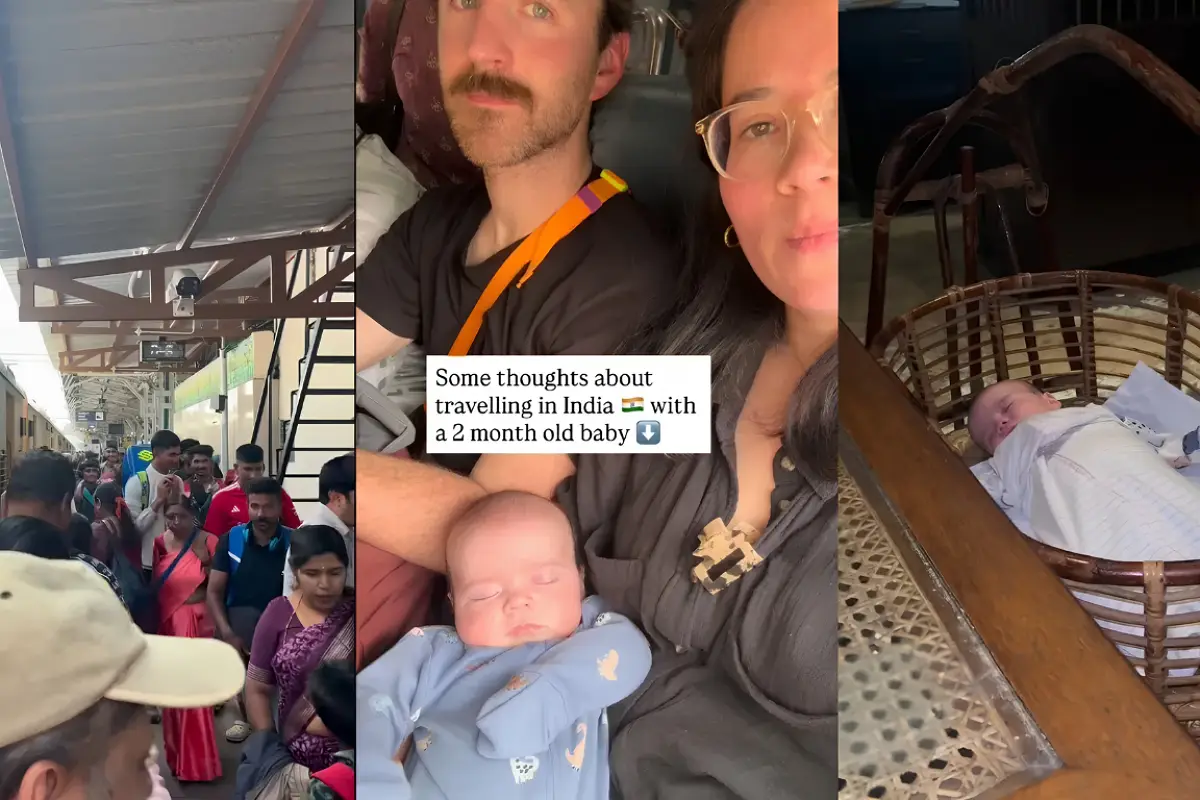
New Delhi, May 18, 2026: For an industry obsessed with five-star check-ins, it’s a two-month-old baby on a train that’s quietly rewriting the script on how India sells itself to the world.
A British couple travelling across India with their infant has gone viral after sharing a sharply positive account of their journey, putting a spotlight on Indian Railways and the country’s instinctive hospitality towards families.
The couple documented their trip across social media, describing cross-country train journeys with their son Alexander as smooth, accessible and, at times, unexpectedly easy. The video has picked up traction fast, feeding into the ongoing global conversation about what travel in India actually feels like on the ground.
Train travel emerges as key highlight of India journey
Train travel wasn’t just part of the trip. It became the backbone of it. The couple said India’s rail network allowed them to move between cities without friction, even with a newborn in tow. And that matters in a country where intercity logistics can make or break a trip. They flagged mobile booking as simple and efficient. Most services, they said, ran on time. Not perfect.
Stations were crowded in places. But elevators and porter services helped them handle luggage and movement with a child. And that balance, chaotic edges with functional support, stood out. For them, trains weren’t just transport. They were one of the most enjoyable parts of the journey. It’s a reminder that rail still does the heavy lifting for tourism movement in India, quietly, and at scale.
Positive hospitality experiences shape perception
But it wasn’t just infrastructure doing the work. It was people. The couple said their infant son drew constant warmth from locals. Strangers approached, smiled, interacted. And that human layer changed the tone of the trip. Restaurants and hotels stepped in too, arranging makeshift sleeping setups during meals, adjusting service without being asked. Small moves. Big impact. These aren’t policies. They’re instinctive gestures. And they shape how international travellers remember a place far more than standard service scripts.
Contrasting narratives around India travel continue online
The timing of the story is telling. Online narratives around India travel are split, often sharply. One side talks about culture, warmth, diversity. The other points to congestion, infrastructure gaps, hygiene issues. Both are real. And both show up across social media every day. This couple’s experience cuts through that noise, not by denying the challenges, but by highlighting what worked. Especially in a scenario many would assume to be difficult: travelling with a newborn.
Family travel insights resonate with global audiences
The couple also tracked how their child adapted to the pace of India. Surprisingly well. The infant slept through journeys, adjusted to movement, and handled daily transitions without issue. But they didn’t ignore cultural differences. They pointed out the constant attention from strangers, something future travellers with children should expect. And be ready for. The story has spread quickly online, with users calling it a refreshing counterpoint to the usual narratives.
Because it shifts the focus. From logistics to lived experience. From systems to how people behave. As India continues to pull in international visitors, stories like this don’t just travel, they shape perception. And sometimes, they do it better than any campaign ever could.