Saksham Platform India Calls for F&B Safety and Compliance
Saksham platform India highlights need for safety, sustainability, and compliance as F&B and hospitality sectors face rising costs and evolving regulations.
 nishathapa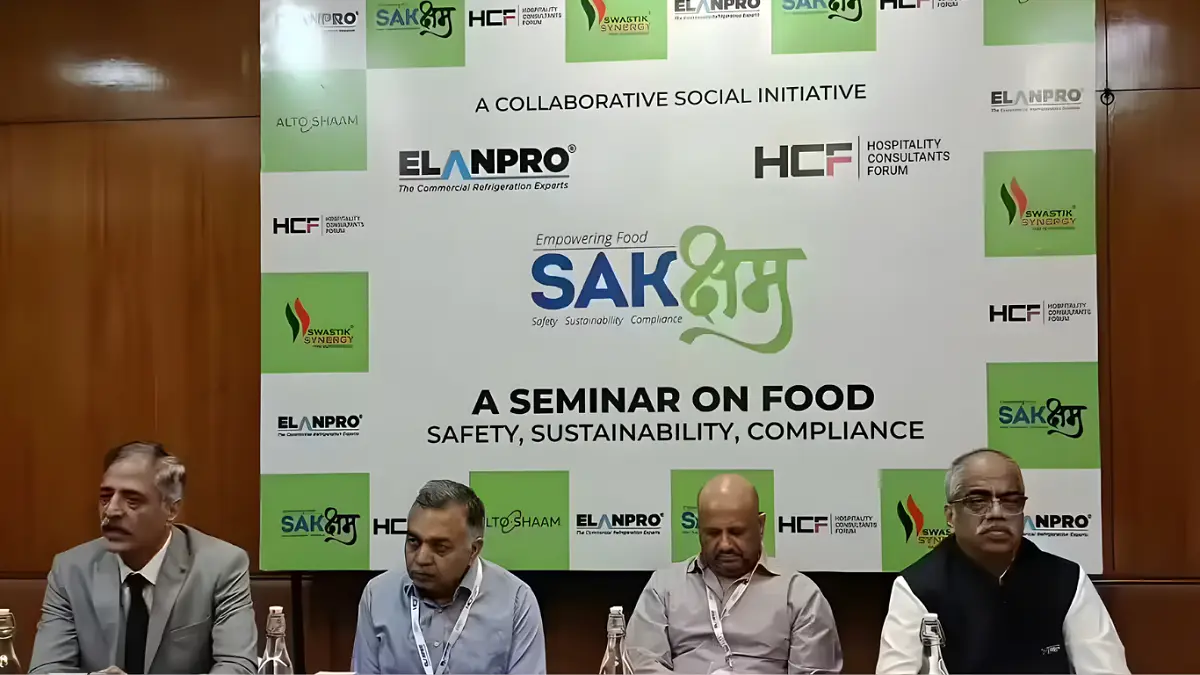
New Delhi, April 2026: Industry experts have emphasised the need for food business operators (FBOs) to prioritise safety, sustainability, and compliance as the operating environment becomes increasingly complex and challenging.
The discussion took place at ‘Saksham’, a knowledge-led industry platform designed to address evolving regulatory expectations and operational challenges in India’s food and hospitality sector. Experts highlighted that the industry must adapt to a shift from enforcement-driven compliance to a more voluntary, system-led approach.
Industry calls for stronger focus on safety and compliance
Stakeholders from across the hospitality and food service ecosystem gathered in New Delhi to deliberate on the growing importance of structured compliance frameworks, particularly in the context of global uncertainties and operational disruptions.
Experts noted that rising challenges—including cost pressures, supply chain disruptions, and regulatory changes—are making it critical for businesses to maintain strict adherence to safety and sustainability standards.
The Saksham platform has been developed as a multi-city initiative aimed at sensitising the HoReCa (Hotel, Restaurant, Catering) ecosystem to the importance of compliant and responsible business practices.
Shift from enforcement to system-led compliance
Industry leaders highlighted a significant shift in regulatory expectations, where compliance is increasingly moving away from being enforcement-driven to becoming a core operational system embedded within businesses.
Pawan Agarwal, former CEO of the Food Safety and Standards Authority of India (FSSAI) and current CEO of Food Future Foundation, emphasised that licensing should not be viewed merely as a regulatory requirement but as a foundational element for ensuring quality and safety.
This transition is expected to drive long-term improvements in operational consistency, risk management, and overall industry standards.
Rising costs add to operational challenges
Participants at the Saksham platform pointed out that the food service sector is facing mounting pressures due to rising input costs, energy expenses, and operational complexities. These factors are making it increasingly difficult for businesses to maintain both profitability and compliance.
In certain cases, regulatory relaxations—such as allowing alternative fuel sources—have raised concerns around safety and environmental sustainability, further reinforcing the need for disciplined operational practices.
Industry leaders stressed that businesses must remain responsible in balancing cost management with adherence to safety and compliance norms.
Need to organise a largely fragmented sector
The discussions also highlighted the largely unorganised nature of India’s food service industry, which continues to present challenges in standardisation and compliance enforcement.
Rahul Singh, Founder and CEO of The Beer Café and Trustee of the National Restaurant Association of India (NRAI), noted that initiatives like Saksham are essential to drive the sector towards greater organisation and professionalism.
With India’s food service market projected to become one of the largest globally in the coming years, strengthening compliance frameworks is seen as critical to sustainable growth.
Saksham to expand across multiple cities
The Saksham initiative, conceived by the Hospitality Consultants Forum (HCF) and supported by Elanpro, aims to build a nationwide knowledge-sharing platform for the industry.
Having already hosted events in cities such as Bengaluru, Pune, and New Delhi, the platform plans to expand to several more locations, including tier II and III cities, in the coming months.
As part of its outreach, the initiative is also offering consultancy support to operators, including diagnostic audits focused on safety, compliance, and sustainability.
Industry experts believe that such collaborative platforms will play a crucial role in shaping a more structured, resilient, and compliant food service ecosystem in India.