Hilton Plans to Double Lifestyle Hotel Portfolio Across EMEA Amid Rising Demand
Hilton aims to double its lifestyle hotel portfolio across Europe, the Middle East, and Africa, driven by growing demand for experience-led hospitality.
 Pratyaksha Singh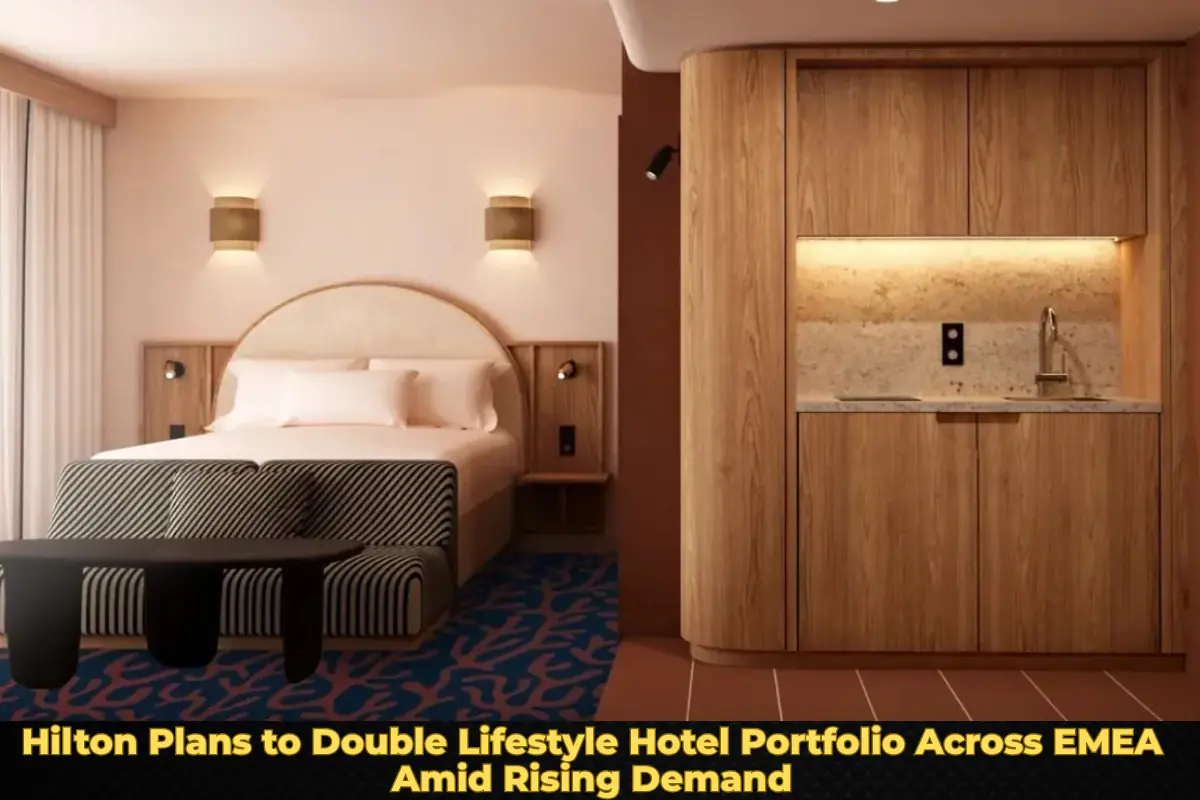
Hilton Plans to Double Lifestyle Hotel Portfolio Across EMEA Amid Rising Demand
Hilton has announced plans in 2026 to double its portfolio of lifestyle hotels across Europe, the Middle East, and Africa (EMEA), as the global hospitality group seeks to capitalize on rising demand for experience-driven stays. The expansion will focus on key urban and resort destinations across the region, reinforcing Hilton’s strategy to grow its presence in high-demand lifestyle segments.
The initiative reflects changing traveler preferences, with guests increasingly seeking unique, design-led properties that offer personalized experiences rather than traditional hotel formats. Hilton aims to meet this demand by accelerating development across its lifestyle brands, targeting both established and emerging markets within EMEA.
Strategic Focus on Lifestyle Segment
Hilton’s expansion underscores the growing importance of the lifestyle hotel segment, which has become one of the fastest-growing categories in the hospitality industry. Lifestyle hotels typically combine contemporary design, local cultural elements, and vibrant social spaces, appealing particularly to younger travelers and experience-focused guests.
The company’s strategy involves scaling its existing lifestyle brands while introducing new properties that align with evolving guest expectations. By doubling its portfolio, Hilton aims to strengthen its competitive position in a segment that continues to attract strong investor interest.
The move reflects a broader industry shift toward more personalized and immersive hospitality offerings.
Expansion Across Key EMEA Markets
The planned growth will span multiple markets across Europe, the Middle East, and Africa, with a focus on major cities, leisure destinations, and emerging tourism hubs. Hilton is targeting locations with strong travel demand, favorable economic conditions, and opportunities for long-term growth.
Urban centers are expected to play a central role in the expansion, given their appeal to both business and leisure travelers. At the same time, resort destinations are being prioritized to capture demand for experiential and leisure-focused travel.
This geographic diversification is intended to enhance Hilton’s resilience and broaden its customer base.
Asset-Light Growth Strategy
The expansion will be driven by Hilton’s asset-light model, which emphasizes management agreements and franchise partnerships rather than direct property ownership. This approach allows the company to scale rapidly while minimizing capital investment.
By collaborating with local developers and investors, Hilton can leverage regional expertise and accelerate project timelines. The asset-light strategy has been a key driver of the company’s global growth and is expected to play a central role in achieving its EMEA expansion goals.
The model also provides flexibility in adapting to changing market conditions.
Rising Demand for Experience-Led Travel
The growth of lifestyle hotels is closely linked to increasing demand for experience-led travel, where guests prioritize authenticity, design, and social engagement. Travelers are seeking accommodations that reflect local culture and offer unique experiences, from curated events to distinctive food and beverage concepts.
This trend has been particularly strong among younger demographics, including millennials and Gen Z travelers, who value personalization and community-driven spaces. Lifestyle hotels are designed to meet these preferences, combining hospitality with elements of entertainment and lifestyle.
Hilton’s expansion aims to capture this growing segment of the market.
Strengthening Brand Portfolio
Hilton’s lifestyle brands are expected to play a key role in the expansion, contributing to the company’s broader portfolio diversification. By strengthening its presence in this segment, Hilton can cater to a wider range of travelers and enhance its overall brand positioning.
The company is focusing on delivering consistent quality while allowing individual properties to reflect local identity. This balance between brand standards and uniqueness is a defining characteristic of lifestyle hotels.
The expansion is also expected to boost brand recognition across the EMEA region.
Investor Interest and Development Pipeline
The lifestyle hotel segment has attracted significant interest from investors, driven by its strong growth potential and ability to command premium pricing. Hilton’s expansion plans are supported by a robust development pipeline, with multiple projects in various stages of planning and construction.
Developers are increasingly partnering with established brands to capitalize on market demand and leverage operational expertise. Hilton’s global reputation and distribution network make it an attractive partner for such collaborations.
This investor confidence is expected to support the company’s ambitious growth targets.
Competitive Landscape in EMEA
The EMEA hospitality market is becoming increasingly competitive, with several global hotel groups expanding their lifestyle offerings. Companies are focusing on innovation, design, and guest experience to differentiate themselves in a crowded market.
Hilton’s decision to double its lifestyle portfolio reflects the need to stay competitive and capture market share in this rapidly evolving segment. The company will need to continuously innovate to maintain its position.
Competition is likely to drive further development and elevate industry standards.
Integration of Technology and Sustainability
Technology and sustainability are key components of Hilton’s lifestyle hotel strategy. The company is integrating digital solutions to enhance guest experiences, including mobile check-ins, personalized services, and smart room features.
Sustainability initiatives, such as energy efficiency and responsible sourcing, are also being incorporated into new developments. These factors are increasingly influencing traveler choices and investment decisions.
Hilton’s focus on these areas aligns with broader industry trends.
Challenges and Market Conditions
Despite strong growth prospects, the expansion faces challenges including rising construction costs, economic uncertainties, and geopolitical risks that may impact travel demand. Market conditions vary across the EMEA region, requiring tailored strategies for different locations.
Operators must also navigate regulatory requirements and ensure consistent service quality across diverse markets. Addressing these challenges will be critical to the success of Hilton’s expansion plans.
The company’s experience in global markets is expected to support its ability to manage these complexities.
Future Outlook
Hilton’s plan to double its lifestyle hotel portfolio in EMEA highlights its long-term commitment to the region and its confidence in the segment’s growth potential. The company is expected to continue identifying opportunities in both established and emerging markets.
As travel demand evolves, lifestyle hotels are likely to play an increasingly important role in shaping the hospitality landscape. Hilton’s expansion positions it to capitalize on these trends and strengthen its global footprint.
The initiative reflects ongoing transformation within the industry.
Conclusion
Hilton’s plan to double its lifestyle hotel presence across EMEA underscores the growing demand for experience-led hospitality, with the company accelerating expansion to capture opportunities in one of the industry’s fastest-growing segments.