Hilton Middle East Hotel Expansion: A Bold Wartime Rebound
The Hilton Middle East hotel expansion pushes forward with 85 new Saudi Arabia hotels, even as regional revenues dropped 30% amid wartime disruption.
 RUKAIYA KADIWAL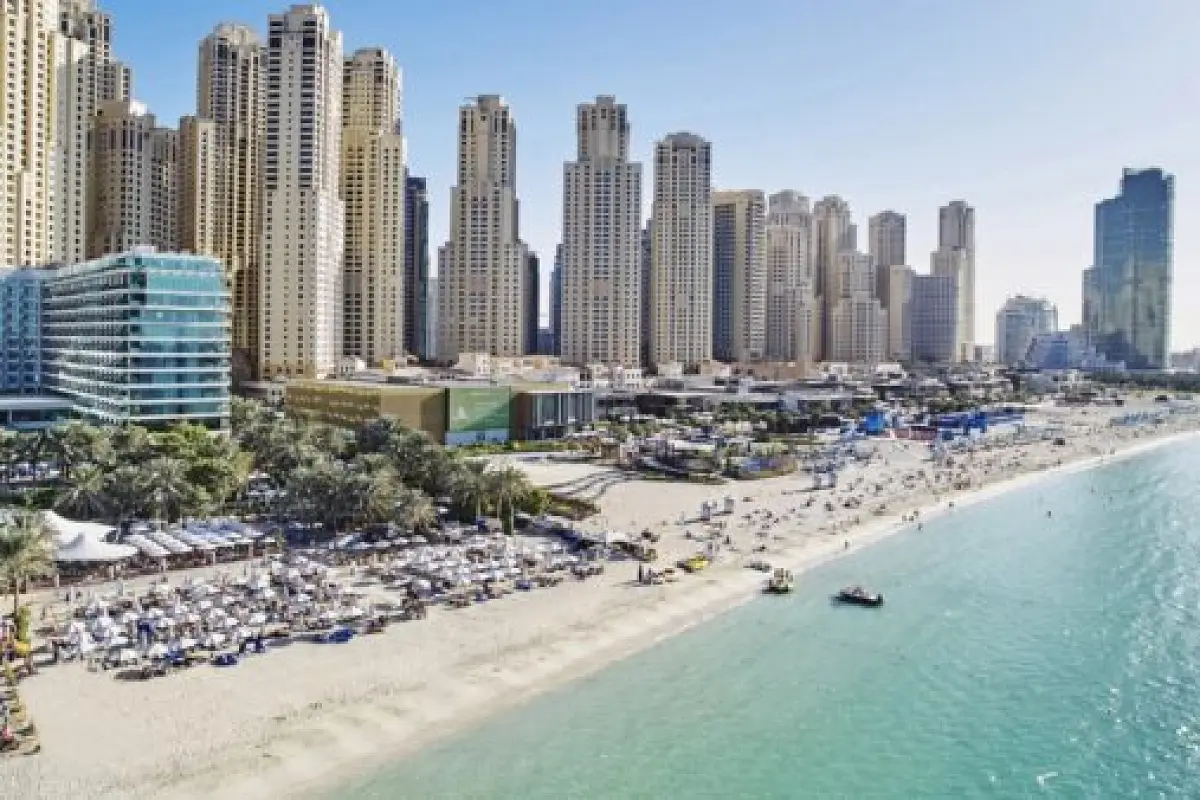
From the upper floors of Hilton Dubai Jumeirah, the view stretches across a shoreline crowded with sun loungers, jet skis cutting white lines through turquoise water, and a skyline of towers that seemed, only months ago, to be operating at a fraction of their usual hum. That quiet has begun to lift. The Hilton Middle East hotel expansion now underway signals something rarer than a simple return to business, it marks a company willing to bet heavily on a region still working its way back from a difficult stretch, a story detailed by The Circuit this week.
The numbers behind that bet are not small. Hilton's regional revenues fell by roughly 30 percent in the second quarter of this year, a sharp decline tied directly to wartime disruption across parts of the Middle East. Yet rather than pulling back in response, the hospitality giant is pushing forward, building toward what it expects will be a return to prewar performance levels within the next year.
An Aggressive Bet on Saudi Arabia
At the centre of this strategy sits an unusually large pipeline: 85 new hotels planned across Saudi Arabia alone. That figure represents one of the most concentrated expansion efforts by a single international hotel brand in the region's recent history, and it reflects a broader confidence among global hospitality operators that Saudi Arabia's tourism and business travel ambitions will continue accelerating regardless of near term volatility elsewhere in the Middle East.
For a market still developing much of its hospitality infrastructure from the ground up, a commitment of this scale carries weight beyond Hilton's own balance sheet. Construction pipelines like this typically ripple outward into local employment, supply chains, and training programmes, positioning Saudi Arabia as a proving ground for how quickly a hospitality sector can scale when demand and government backed tourism strategy move in the same direction.
Recovery Measured in Occupied Rooms, Not Just Headlines
What makes this expansion notable is the timing. Announcing an 85 hotel pipeline during a quarter marked by a 30 percent regional revenue decline is not the cautious move many companies might choose under similar pressure. It suggests Hilton's leadership views the current downturn as a temporary disruption rather than a structural shift in regional demand, a distinction that matters enormously for how investors and industry observers interpret the company's confidence.
That confidence is not without risk. Wartime disruption in any region tends to affect travel patterns unevenly, business travel often recovers faster than leisure tourism, while international arrivals can lag behind domestic and regional guests who resume movement more quickly once conditions stabilise. Hilton's own projection of a return to prewar revenue levels next year assumes a relatively smooth continuation of that recovery curve, an assumption that regional analysts have described as plausible but not guaranteed.
What Expansion Means for Guests and Staff Alike
Behind the financial figures sit properties like Hilton Dubai Jumeirah, where staff have spent recent months adjusting service levels to match fluctuating occupancy, scaling operations up and down as regional travel confidence shifts week to week. That kind of operational flexibility, while rarely discussed publicly, has become a defining skill for hospitality teams across the Middle East over the past several quarters, as properties learn to manage uncertainty without compromising the guest experience that international travellers expect from a brand like Hilton.
For guests returning to the region, the visible signs of recovery are often simple, fuller beach clubs, busier lobbies, restaurants operating at capacity rather than reduced hours. Each of those small indicators feeds into the larger recovery narrative that companies like Hilton are betting will hold through the coming year.
A Regional Pattern of Renewed Investment
Hilton's expansion does not exist in isolation. International hospitality operators have shown renewed willingness to invest in regions previously considered high risk, provided the underlying tourism fundamentals remain strong, a pattern echoed across markets recovering from disruption of different kinds, including the steady resilience shown by long established hospitality institutions such as those explored in Edmonton's oldest businesses that have weathered a century of change. In both cases, the underlying lesson is similar: hospitality brands that commit to a region during its most uncertain moments often emerge with a stronger foothold once stability returns.
Betting on What Comes After Uncertainty
Whether Hilton's projected recovery arrives precisely on schedule remains to be seen, and much will depend on factors far beyond any single hotel group's control. What is clear, standing on a terrace overlooking a beach slowly filling back up with travellers, is that the company has chosen to read the current moment as temporary rather than permanent. The Hilton Middle East hotel expansion is, in the end, a wager on patience, that a region capable of building 85 hotels amid wartime disruption will also be capable of filling them once the disruption finally passes.