New Phishing Campaign Tricks Hotel Staff With Fake Booking Emails, Deploys Malware
Cybercriminals are using fake Booking.com reservation emails to lure hotel staff into malware traps, risking system access and guest data theft.
 Ahmed Mainul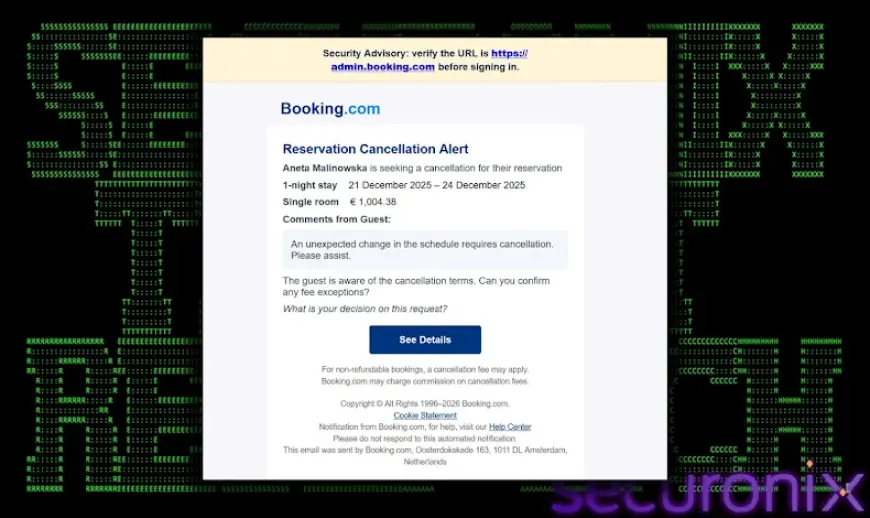
Cybersecurity researchers have uncovered a sophisticated phishing campaign targeting the hospitality sector, in which attackers use fake reservation emails to trick hotel staff into executing malicious code that compromises their systems.
The scheme begins with fraudulent emails impersonating a well-known online travel platform, warning recipients of unexpected booking cancellations or urgent reservation confirmations. These emails include what appear to be legitimate reservation details, creating a sense of urgency that tempts hotel employees to click embedded links.
Once staff engage with the link, they are redirected through multiple staged pages that mimic legitimate service interfaces. At a critical point, victims encounter a counterfeit page designed to prompt further action, such as solving a fake security challenge. Following this, malware is delivered onto the system through deceptive means that exploit normal administrative tools.
The implanted malware establishes persistence on the compromised endpoint, disables or circumvents built-in security safeguards, and opens remote access for threat actors. Once inside, attackers can harvest credentials, monitor activity, steal sensitive data, and potentially extend access deeper into booking platforms and hospitality infrastructure.
Security specialists analysing the campaign note that the attackers leverage trusted system binaries and scripted commands to execute their payloads, a tactic known as “living-off-the-land,” which helps evade detection by conventional security tools.
The use of realistic reservation details, including room information and dates, enhances the credibility of the phishing emails, making them more likely to be acted upon by busy hotel teams who routinely process large volumes of bookings.
Industry observers warn that such campaigns can have far-reaching consequences if hotel management systems are compromised, including exposure of guest personal information, payment data, and internal network access. The threat underscores the growing importance of robust cybersecurity practices in hospitality, including staff training on phishing detection, strict validation of unexpected communications, and layered system defenses.
With travel and hospitality increasingly reliant on digital systems for reservations and guest interactions, IT leaders are advising heightened vigilance and rapid response protocols to mitigate the rising risk of cyberattacks that exploit human and technical vulnerabilities.