IGBC Green Hospitality Summit 2026 Highlights Green Growth
The IGBC Green Hospitality Summit 2026 in Kolkata sets a net zero roadmap and honours 13 projects including Lemon Tree Hotels, The Leela and IBIS.
 nishathapa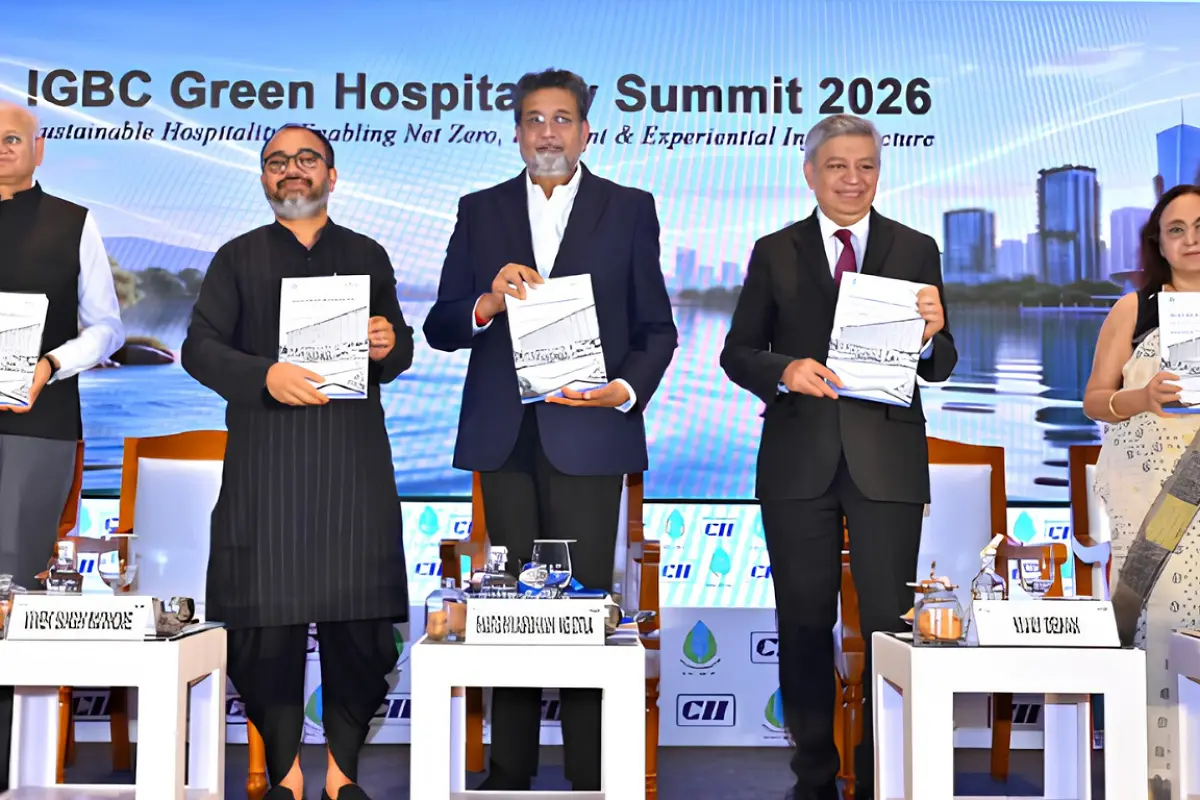
KOLKATA, June 1, 2026: The Indian Green Building Council, operating under the Confederation of Indian Industry, convened the IGBC Green Hospitality Summit 2026 in Kolkata under the theme "Sustainable Hospitality: Enabling Net Zero, Resilient & Experiential Infrastructure." The gathering brought together hospitality leaders, policymakers, architects, developers and sustainability specialists to address how India's rapidly expanding hotel sector navigates the combined pressures of growth, resource efficiency and the accelerating global expectation of environmental accountability. Thirteen hospitality projects received recognition through the IGBC's "Walking the Talks" Awards during the event.
The choice of Kolkata as host city for this edition of the summit carries its own significance. The city's hospitality market has been growing steadily, a combination of corporate demand, leisure tourism, pilgrimage circuit proximity and a rising events economy, and it represents the kind of mid-tier market where sustainable infrastructure decisions made today will shape the sector's environmental footprint over the next decade. Getting those conversations happening in Kolkata rather than exclusively in the metros where sustainability discourse already has momentum is the right instinct.
IGBC Green Hospitality Summit 2026 Opens With Climate Urgency and Sectoral Responsibility
Harshvardhan Neotia, Chairman of the Ambuja Neotia Group and Chairman of the CII Suresh Neotia Centre of Excellence for Leadership, set the tone for the gathering without softening what is at stake.
"Climate change is one of the most critical challenges our generation is facing, and the hospitality sector has a significant responsibility in shaping a more sustainable future. Sustainability must become an integral part of how we design, build and operate hospitality assets."
— Harshvardhan Neotia, Chairman, Ambuja Neotia Group and Chairman, CII Suresh Neotia Centre of Excellence for Leadership
The hospitality sector's environmental footprint is not a marginal concern. Hotels are among the more energy-intensive categories of commercial building, operating 24 hours a day, 365 days a year, with energy-heavy functions across HVAC, hot water, kitchens, laundry and lighting running continuously regardless of occupancy levels. As India's hotel pipeline expands toward 630,000 branded rooms by 2030, the cumulative energy, water and carbon implications of how those rooms are designed and built will be substantial. What gets specified in the design brief today cannot easily be corrected once a building is operational.
Sushil Mohta on Sustainability Moving From Compliance to Competitive Advantage
Sushil Mohta, Immediate Past Chairman of IGBC Kolkata and Chairman of the Merlin Group, offered a reading of the sector's recent evolution that is both more honest and more commercially grounded than most sustainability rhetoric in Indian hospitality tends to be.
"The hospitality industry has undergone a remarkable transformation over the last decade. Sustainability has moved beyond compliance and is now an integral component of operational efficiency, asset resilience and long-term value creation."
— Sushil Mohta, Immediate Past Chairman, IGBC Kolkata and Chairman, Merlin Group
That shift, from compliance-driven sustainability to efficiency-driven sustainability, is the one that actually changes hotel operators' behaviour. A hotel that invests in solar generation, efficient HVAC systems and water recycling because it reduces its energy and water bill is making a different kind of decision from one that does so to satisfy a certification requirement. Both decisions produce the same environmental outcome, but the second one is more durable because the financial incentive and the environmental outcome are aligned rather than in tension.
The Summit's Technical Agenda Covered the Water-Energy Nexus and Decarbonisation Pathways
Vivek Singh Rathore, Chairman of the IGBC Kolkata Chapter and Founder and Principal of The Salient, provided context on where the practical work of sustainable hospitality infrastructure is concentrated right now, in resource efficiency and climate resilience as the sector expands.
The panel discussions and technical sessions at the summit covered ground that goes well beyond the headline sustainability commitments that hotel brands typically publish. The water-energy nexus in hotel operations, specifically in the functions that consume the most resources, including HVAC systems, commercial kitchens and laundry operations, received dedicated attention. These are not glamorous parts of a sustainability conversation, but they are where the majority of a hotel's operational carbon and water footprint actually resides.
Decarbonisation pathways, net-zero operations and renewable energy integration were explored in technical sessions alongside sustainable building materials, the upstream decisions in design and procurement that determine how much carbon a building embeds during construction before it serves a single guest. The inclusion of both operational and embodied carbon discussions in the same event reflects a more sophisticated understanding of the full lifecycle of a hotel asset than was typical in sustainability conversations even five years ago.
Thirteen Projects Recognised Through IGBC's Walking the Talks Awards
The "Walking the Talks" Awards recognised 13 hospitality projects for their adoption of green building practices, a title that is more pointed than a standard sustainability award because it implies the others are still just talking. The organisations recognised included Lemon Tree Hotels Limited, Apeejay Surrendra Park Hotels Limited, The Leela Palaces, Hotels and Resorts, InterGlobe Hotels Pvt Ltd. for the IBIS Portfolio, Kolkata Hotels Ltd. for the Holiday Inn Express Kolkata Airport, and Pravat Hospitality Pvt Ltd.
The range of organisations recognised is telling. Lemon Tree and Apeejay Park Hotels have both built sustainability into their brand identity at the operational level, Lemon Tree through its Aurika-led green credentials and ASPHL through the LEED certifications at multiple Park properties. The Leela's inclusion reflects the luxury segment's growing engagement with green building standards. The IBIS Portfolio and Holiday Inn Express entries represent the mid-scale and economy segments — a meaningful signal that green building practices are no longer confined to the properties whose guests are most likely to ask about them.
The Real Test Is Whether Summit Conversations Become Construction Briefs
Sustainability summits in the hospitality sector have a long history of producing thoughtful conversations that do not translate into the specifications written when the next hotel project is commissioned. The IGBC's focus on practical, technical content, the water-energy nexus, decarbonisation pathways, sustainable building materials, rather than aspirational positioning is an attempt to close that gap by giving developers, architects and operators the technical language and frameworks they need to act differently rather than just commit differently.
The "Walking the Talks" Awards create a peer accountability dynamic that is more useful than pure recognition, they make visible which organisations are actually making the capital and operational commitments that sustainability requires, which creates competitive pressure on those who are not. Whether that pressure is sufficient to move the bulk of India's 250,000-plus rooms in the development pipeline toward genuinely lower-impact specifications is the question that will take a decade of results to answer. The IGBC Green Hospitality Summit 2026 is one of the mechanisms trying to move that answer in the right direction.